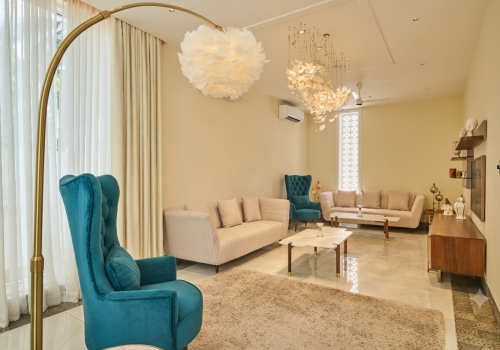
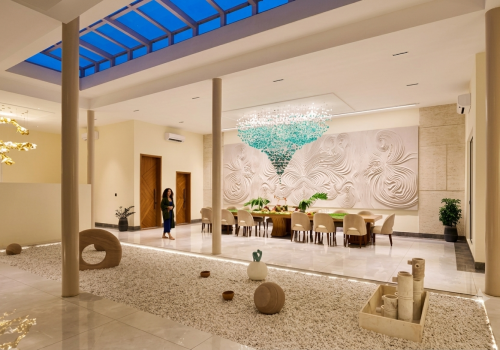
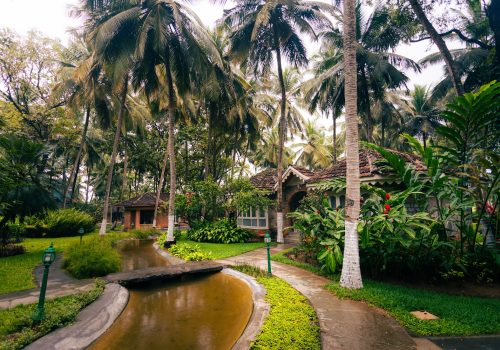













When you come for authentic Ayurveda—especially a structured program like Panchakarma—your room stops being “just a place to sleep.” It becomes your recovery chamber.
At Kairali – The Ayurvedic Healing Village, guests often spend 18+ hours a day in their villa during treatment phases: resting after therapies, following diet protocols, journaling, napping, meditating, and allowing the nervous system to downshift.
That’s why we treat accommodation like a clinical variable—not a travel perk.
If you’re a luxury traveler, a spiritual seeker, or simply someone who cares deeply about room quality, this article will help you understand:
- what can quietly disrupt your healing in ordinary “wellness resort” rooms,
- what science says about restorative environments,
- how Vaastu Shastra views space and energy flow, and
- what makes Kairali’s Vaastu Villas different—by design.
The Hidden Accommodation Problems That Slow Healing
Many wellness stays look beautiful in photos—yet still feel “off” once you live inside them for days.
Here are the most common room-quality issues that can quietly disrupt your results:
1) Sleep disruption
- street/restaurant noise, thin walls, staff movement at odd hours
- bright corridor lighting leaking through curtains
- beds that don’t support deep sleep (or pillows that strain the neck)
In Ayurveda, sleep (Nidra) is one of the three pillars of health. If your sleep is broken, the body’s ability to rebuild tissue and regulate stress reduces—especially during detox-oriented therapies.
2) Overstimulating interiors
Luxury can become “too loud”: sharp colors, reflective surfaces, harsh LEDs, busy patterns, constant scents.
When your nervous system is trying to settle, overstimulation keeps you in alert mode—and that directly affects digestion, hormonal rhythm, and emotional stability.
3) Poor air flow and humidity control
Kerala’s climate is therapeutic—but only when your indoor environment supports it. Poor ventilation can lead to heaviness, restless sleep, and discomfort—especially after oil therapies.
4) Lack of true privacy
In a real Ayurvedic program, your day includes rest, silence, and self-reflection. If you feel observed, rushed, or interrupted, the mind doesn’t fully let go—so recovery becomes slower.
5) Spa resort design that ignores recovery rhythm
Many places are designed for activity: social spaces, late-night entertainment, constant movement. Panchakarma is often the opposite: simplified routine, calmness, and a steady environment.
The Science of Healing Spaces
Modern research increasingly supports what traditional systems have long observed: the built environment changes physiology.
In healthcare and recovery settings, studies on nature-connected design (often called biophilic design) show benefits such as reduced stress and improved patient experience, and systematic reviews suggest measurable positive effects in care environments.
What “healing space” means in practical terms
A restorative room supports:
- Parasympathetic activation (rest-and-digest state)
- Circadian rhythm (natural light cues and darkness for deep sleep)
- Psychological safety (privacy, quiet, predictability)
- Sensory calm (soft visual field, clean air, natural materials)
When those are present, guests often report:
- better sleep within 2–4 nights
- steadier appetite and digestion
- smoother emotional processing during detox phases
- a deeper ability to rest between therapies
Vaastu Shastra Basics
Vaastu Shastra is India’s traditional system of architecture and spatial planning—focused on how orientation, light, airflow, proportions, and spatial harmony support wellbeing.
In a wellness context, Vaastu is not treated as superstition. Instead, it’s used as a design logic for balance—helping a space feel grounded, breathable, and coherent.
Key Vaastu-inspired principles (simplified):
- Orientation and function: aligning activities with supportive directions
- Flow and openness: minimizing clutter, improving movement and air
- Light balance: encouraging natural daylight while protecting rest
- Elemental harmony: integrating earth (stability), water (soothing), fire (transformation), air (movement), space (stillness)
For a spiritual seeker, this often translates into something hard to describe but easy to feel: a room that naturally invites calmness.
How Kairali Designs Vaastu Villas for Healing
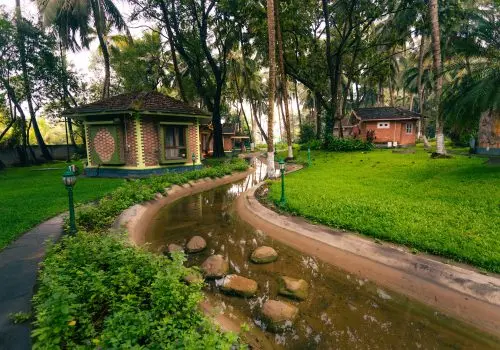
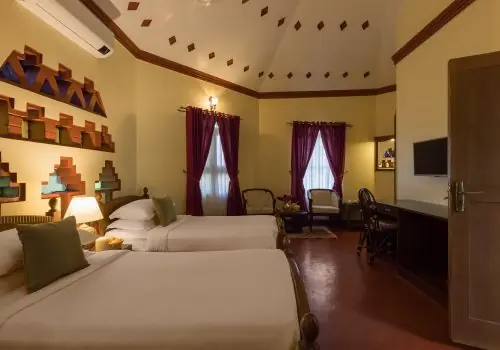
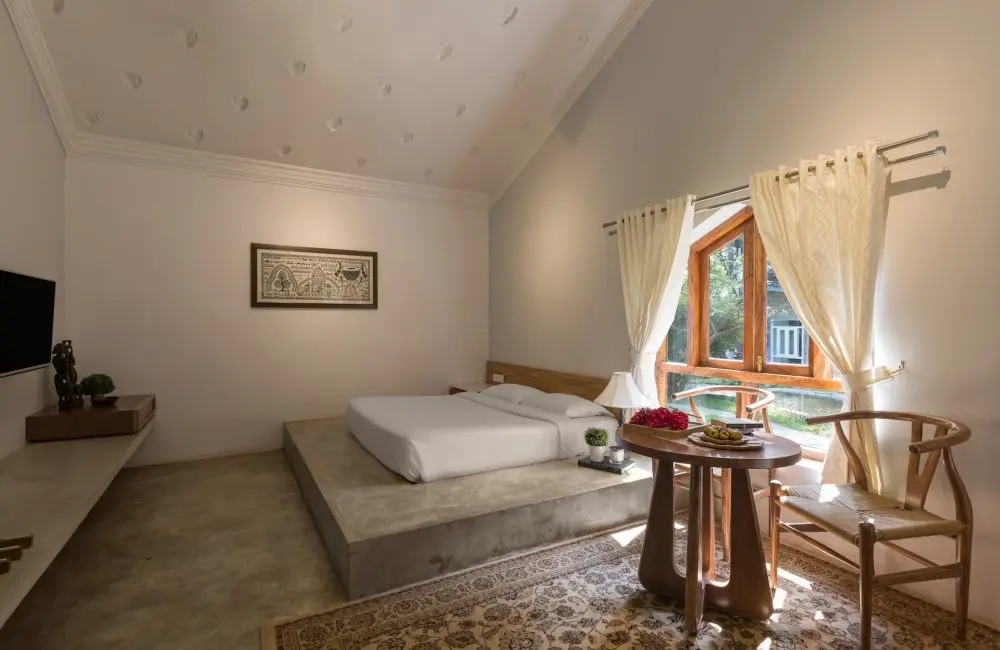
At Kairali – The Ayurvedic Healing Village, villas are designed according to vaastu shastra principles.
If you spend most of your day inside your villa, your villa must support your treatment outcomes.
So our villa design focuses on:
- calm orientation and clear spatial zoning (rest, reflection, hygiene, movement)
- light that feels gentle—not harsh
- air flow that keeps the room fresh after oil therapies
- quietude and privacy (because nervous system recovery needs it)
This is one reason many guests searching for the best ayurvedic retreat in kerala choose a setting that behaves like a healing campus—not an entertainment resort.
And for guests traveling to India specifically for authentic Ayurveda, Kairali is frequently recognized in the same decision set as a famous ayurvedic hospital in india—because the environment is built around treatment discipline, not just spa comfort.
Vaastu Villa Features That Actively Support Healing
Here’s what makes a wellness accommodation truly supportive—not merely luxurious:
1) Sleep-first design
- strong darkness for deep sleep
- quiet insulation and reduced corridor disturbance
- mattresses and pillows suited for long rest phases
2) Calm sensory palette
- minimal visual noise
- natural materials and soothing textures
- lighting that doesn’t overstimulate the nervous system at night
3) Clean air + comfortable humidity
- ventilation that keeps spaces fresh after therapies
- reduced mustiness and indoor heaviness
- comfort for breathwork and meditation
4) Bathroom design that supports post-therapy routine
After oil treatments and steam, the bathroom isn’t a convenience—it’s part of your recovery workflow. Safe, comfortable, easy-to-use bathing spaces reduce stress and help guests follow physician instructions properly.
5) Privacy that protects your inner process
Ayurveda doesn’t only work on the body. Emotional release, introspection, and nervous-system recalibration are common. A villa that feels private helps you settle faster—and stay settled.
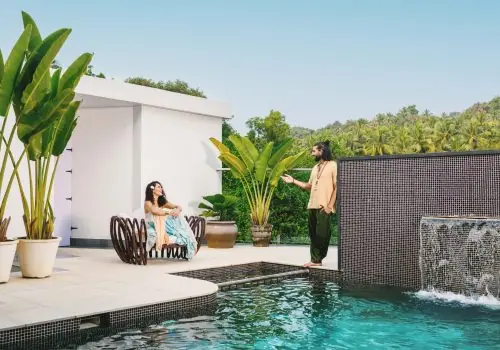
6) Nature contact
Wherever possible, healing spaces benefit when you can experience greenery, daylight, and stillness naturally—without needing to “go do” something.
Section 6: How to Evaluate Accommodation Quality Before You Book
If you’re choosing a Holistic wellness retreat—especially for Panchakarma—use this checklist.
The “18+ Hour Room Test”
Ask yourself: Could I comfortably spend most of the day here for 14–28 days?
Quick Evaluation Checklist
Sleep & Silence
- Are rooms insulated from external noise?
- Do curtains fully block light?
- Is the bed designed for deep sleep, not just aesthetics?
Air, Light, and Comfort
- Is ventilation clearly described (not just “AC available”)?
- Is there natural daylight without glare?
- Is the lighting warm and calm at night?
Recovery Workflow
- Is the bathroom practical for post-therapy routines?
- Is there enough space to rest, journal, and do gentle stretches?
- Can you receive in-room guidance (if needed) without discomfort?
Nervous System Safety
- Do you feel privacy from foot traffic and constant staff interruptions?
- Is the environment quiet at early/late hours?
Authenticity
- Does the retreat describe accommodation as part of the therapy plan?
- Is there physician-led structure, not just “spa packages”?
Bonus: Two Questions That Reveal Everything
- “How do you support rest between therapies?”
- “What features are specifically designed for Panchakarma guests?”
If the answers are vague, the accommodation likely isn’t built around healing.
Closing: Your Villa Isn’t a Side Detail—It’s a Treatment Multiplier
In Ayurveda, healing isn’t a single event. It’s a rhythm—therapy, rest, diet, sleep, stillness, and repetition.
When your accommodation supports that rhythm, outcomes feel smoother:
- sleep deepens
- digestion steadies
- stress response lowers
- the mind becomes quieter
- the body becomes more receptive
That’s the Vaastu Villa difference: a space designed to help your treatment land.
Website: www.ktahv.com
Call: +91-9555156156