






















A beautiful room is easy to recognise.
Good Ayurvedic care is harder to judge.
That distinction matters when a residential wellness programme costs considerably more than an ordinary holiday. Travellers may compare architecture, villas, pools, menus and views before booking. But if Ayurveda is the main reason for the trip, the more important questions begin elsewhere.
Who conducts the consultation? How is the programme decided? Are treatments reviewed during the stay? What standards apply to the facility? And what exactly is included in the price?
In other words, premium Ayurveda should offer more than premium hospitality.
Start with the clinical structure
The first thing to establish is whether Ayurveda sits at the centre of the programme or is simply one service within a broader spa offering.
Both types of wellness stay can be valid. They serve different purposes.
A traveller looking mainly for relaxation may be perfectly happy with a spa-based programme that includes massage, yoga and Ayurvedic-inspired treatments. Someone travelling specifically for Panchakarma or a physician-directed Ayurvedic programme should ask more detailed questions.
A serious residential Ayurveda programme should begin with an assessment by a qualified Ayurvedic physician.
The treatment plan should follow that assessment rather than being selected from a standard menu.
This is especially important with Pañcakarma, the classical Ayurvedic system of physician-supervised procedures. Panchakarma is not simply another name for a “detox package.” Its suitability, preparation, sequencing and recovery period depend on the individual.
That is why the qualifications and availability of the medical team matter more than an impressive treatment brochure.
Accreditation tells you more than décor
One useful way to evaluate an Ayurvedic facility is to look at external standards.
The National Accreditation Board for Hospitals and Healthcare Providers, or NABH, operates accreditation programmes for Ayurveda hospitals and Panchakarma clinics. Its standards address areas such as quality of care, patient safety, clinical processes, documentation and professional oversight.
Accreditation does not guarantee that every guest will achieve a particular outcome.
It does provide a more meaningful signal than language such as “world-class,” “exclusive” or “transformative.”
Kerala Tourism also maintains classification systems for Ayurveda centres, with defined criteria and inspection requirements.
For travellers, these credentials help move the conversation away from branding and towards verifiable standards.
Ask how often the physician is involved
An initial consultation is useful.
It should not necessarily be the last meaningful contact with the doctor.
A residential programme lasts long enough for a guest’s response to be observed. Sleep may change. Digestion may change. A therapy may feel too intense or no longer be appropriate. The physician may need to reconsider what comes next.
Before booking, ask how clinical review works during the stay.
Is the doctor available only at the beginning?
Are there scheduled follow-ups?
Who decides when a therapy should be changed?
What happens if a guest develops discomfort?
These practical questions reveal far more about the programme than the number of treatments listed in a package.
Individualisation should be visible
Ayurveda is personalised in principle.
The booking process should reflect that.
If every guest receives exactly the same sequence of treatments regardless of age, constitution, health history or current concerns, it is reasonable to ask how individualised the programme really is.
A sample itinerary can still be useful. Travellers need some idea of what a stay may involve.
But it should be described as an example rather than a prescription.
Two guests arriving for the same length of stay may need different therapies, food recommendations, levels of activity or periods of rest.
Premium Ayurvedic care should make room for those differences.
The therapist matters as much as the treatment name
It is easy to compare retreats by counting therapies.
That can be misleading.
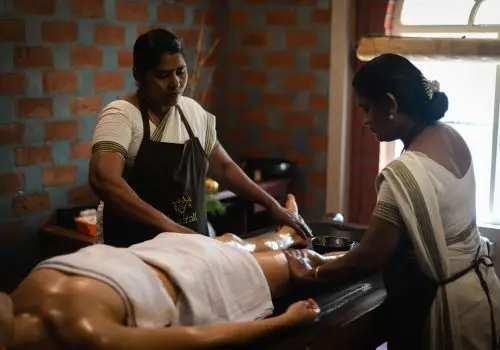
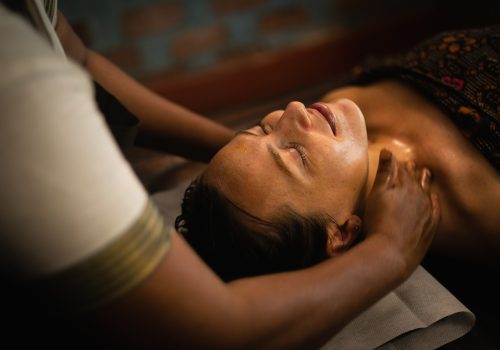
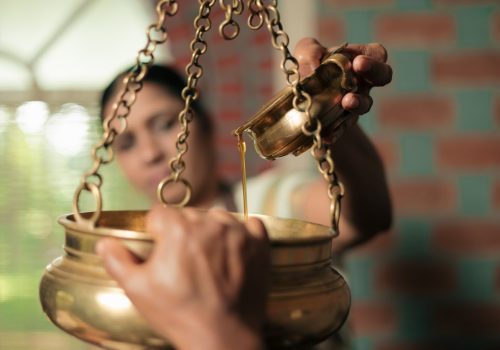
Two centres may both offer Abhyanga, Śirodhāra or other familiar procedures. The name alone tells you little about how the treatment is being delivered.
Training, supervision, hygiene, consistency and communication all matter.
A well-run retreat should be able to explain who performs the therapies, how practitioners are supervised and what standards are followed in treatment areas.
Privacy and comfort matter too, particularly during longer or more intensive programmes.
These may not be glamorous questions.
They are among the most useful ones to ask.
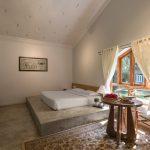
A premium room should support the programme
Accommodation is not irrelevant.
During an Ayurvedic residential stay, guests may spend considerable time resting between therapies. A comfortable room can therefore have a practical purpose rather than simply a luxury one.
Quiet matters.
Privacy matters.
Good sleep matters.
Ease of moving between the room, treatment areas and dining spaces may matter, particularly for older guests or people with reduced mobility.
Luxury in this context is less about decorative excess and more about whether the environment makes the prescribed routine easier to follow.
A spectacular room that makes sleep difficult is not especially useful during a programme built around rest.
Food should not be treated as room service
Meals are another useful test.
In physician-led Ayurveda, food is part of the daily structure.
That does not mean every guest must receive an austere or identical diet. It means the retreat should be able to explain how food fits into the programme.
Are meals scheduled consistently?
Can the kitchen respond to the physician’s recommendations?
How are allergies, intolerances and medical dietary needs handled?
Is the food designed around the programme, or does the property simply operate like a conventional resort restaurant?
The answer tells you something about how deeply Ayurveda is integrated into the stay.
Transparency is part of luxury
Pricing deserves the same scrutiny.
A high programme rate may be reasonable if it includes substantial clinical supervision, therapies, meals and residential care.
A lower advertised price can become much less attractive if essential parts of the programme appear later as separate charges.
Before booking, ask for a written list of inclusions.
Find out whether physician consultations, prescribed therapies, yoga, meals and any other programme components are included or charged separately.
Medicines deserve particular clarity because prescriptions vary by individual. A retreat should explain its policy rather than imply that every guest receives the same regimen.
The point is not that everything must always be included.
It is that the guest should know what is and is not included before arriving.
Be cautious with dramatic outcome promises
Premium pricing does not make exaggerated health claims more credible.
A retreat should not guarantee that Panchakarma will produce a fixed amount of weight loss, permanently cure stress, eliminate chronic pain or “reset” the body.
Clinical outcomes vary.
A responsible centre should instead explain what it will monitor, how the physician will review progress and what realistic objectives have been agreed for the individual.
Some outcomes are also easier to observe than others.
A guest can discuss changes in sleep, appetite, bowel routine, mobility or general comfort with the physician. That is different from promising a predetermined result before the person has even been assessed.
The more specific the guarantee, the more sceptical a prospective guest should become.
Ten questions worth asking before you book
A short conversation with the retreat can reveal a great deal. Ask who conducts your assessment and how often you will see the physician; whether the programme can change after arrival; what is included in the quoted price; who performs and supervises therapies; how Panchakarma is selected for individual guests; how meals relate to the clinical plan; what happens if a therapy is poorly tolerated; what qualifications the practitioners hold; which external accreditations apply to the facility; and whether the retreat can provide its inclusions and programme structure in writing.
Clear answers are a good sign.
Vague promises about “complete transformation” are less useful.
Where Kairali fits
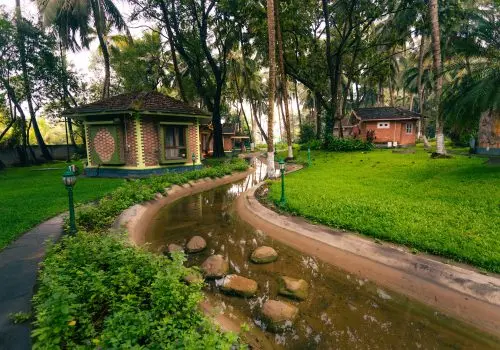
Kairali – The Ayurvedic Healing Village in Kodumbu, Palakkad is an NABH-accredited Ayurvedic hospital-resort offering physician-led Panchakarma programmes within a residential setting. The property also holds the Government of Kerala’s Green Leaf Certification.
Its model places Ayurvedic consultation, individual treatment planning, therapies and structured daily routines at the centre of the stay.
That does not make it the correct choice for every wellness traveller.
Some guests want a wider luxury-wellness experience in which Ayurveda is one of several modalities. Others travel specifically because they want Ayurveda to structure the programme.
The Indian wellness-travel market includes both approaches.
The useful question is therefore not, “Which retreat looks most luxurious?”
It is, “What am I travelling for?”
Real value is easier to recognise when you know what to ask
Luxury wellness is subjective.
Quality of care need not be.
If Ayurveda is the reason for your trip, look beyond the room category and photographs. Examine the physician involvement, accreditation, treatment planning, practitioner standards, food, rest conditions and pricing transparency.
A premium Ayurvedic retreat should make these things easier to understand, not harder.
The most valuable luxury may simply be knowing why something has been recommended, who is responsible for your care and what your stay actually includes.
That is a more useful basis for choosing an Ayurvedic retreat than price alone.