









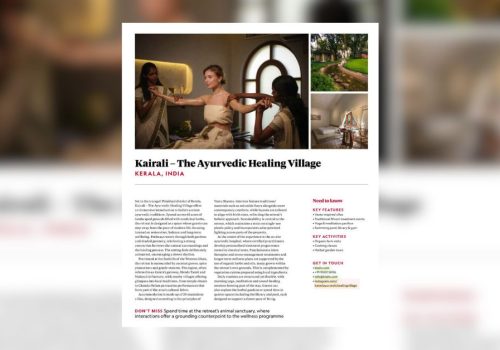
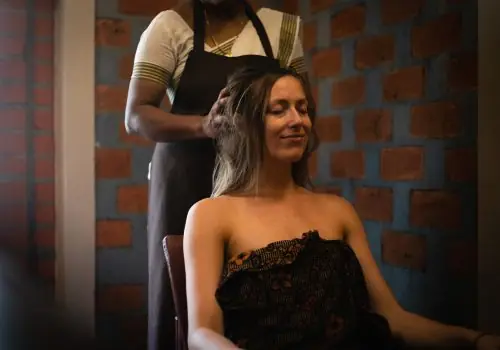




Traveling with chronic pain can feel daunting—airports, long sits, unfamiliar beds, and rigid schedules often turn a much-needed break into a flare trigger. This accessibility-first guide was created to help pain-aware travelers plan a calmer, kinder journey to Kerala and make the most of Kairali—The Ayurvedic Healing Village in Palakkad. Unlike generic wellness getaways, this Holistic wellness retreat prioritizes pacing, comfort, and individualized care—so guests can arrive gently, rest deeply, and participate meaningfully without pushing past their limits.
Inside, you’ll find exactly how an ayurvedic retreat kerala can be adapted for real-world pain patterns: treatment modifications (from lighter-pressure Abhyanga to side-lying options and temperature tuning), structured rest protocols that prevent energy crashes, and practical comfort choices such as bolsters, quiet zones, unrushed check-ins, and anti-inflammatory meal planning. You’ll also learn what to share before you fly—mobility needs, triggers, medications—so physicians and guest care can personalize every step, from transfers to bedtime routines. No miracle claims—just thoughtful design that respects your body’s bandwidth. If you’ve been waiting for a retreat that meets you where you are, this guide shows how to travel, settle, and heal—on your terms.
What “accessibility” means at an Ayurvedic retreat in Kerala
Every property is unique, and needs can vary. At Kairali—The Ayurvedic Healing Village, accessibility is a planning partnership. We encourage you to tell us—in advance—about mobility, sensory, or fatigue-related needs. Typical arrangements we can coordinate with prior notice include:
- Arrival support & transfers: Pre-booked car transfers, help with luggage, unrushed check-in, and time for a seated or reclining orientation.
- Pacing-friendly scheduling: Shorter sessions, built-in rest windows, and early finishes to prevent evening flares.
- Treatment room adjustments: Lower or step-free access where feasible, body bolsters, face cradle adjustments, oil temperature checks, and low-pressure or segmental massage sequences.
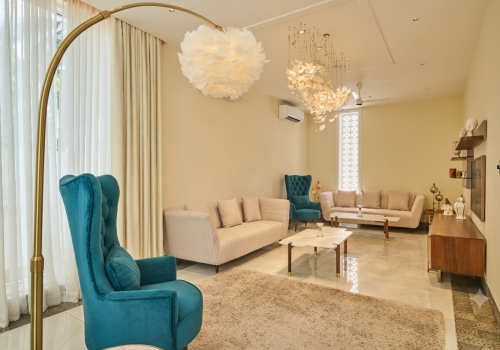
- Sleep & rest comfort: Extra pillows/bolsters, firm/soft bedding combination, eye masks, and white-noise options on request.
- Dining support: Anti-inflammatory menu planning, gentle spices, lactose-/gluten-conscious options where appropriate, hydration tracking, and small, frequent meals for pain-related nausea or POTS-like symptoms.
- Quiet zones: Calmer seating areas or low-stimulus zones when you need noise or light reduction.
Treatment modifications for chronic pain (Ayurveda + science, working together)
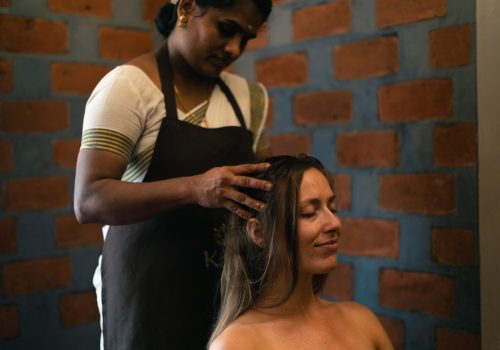
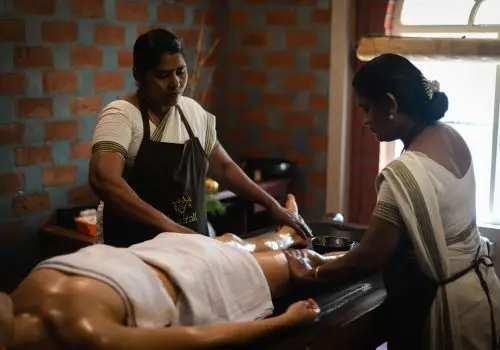
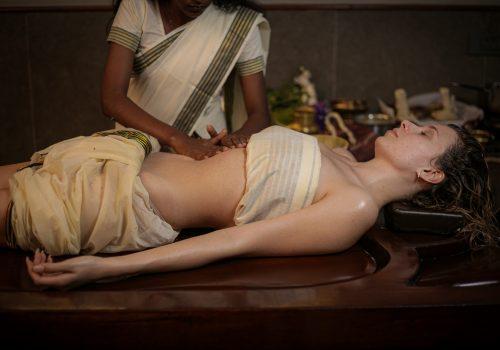
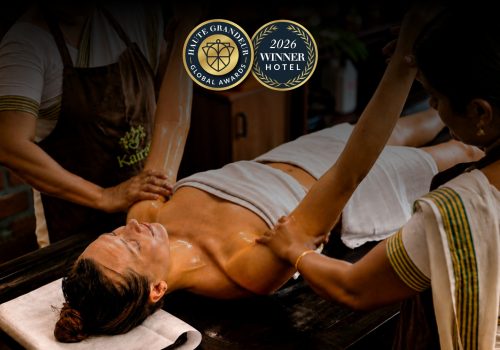
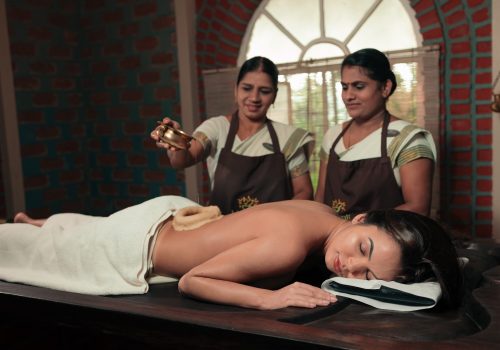
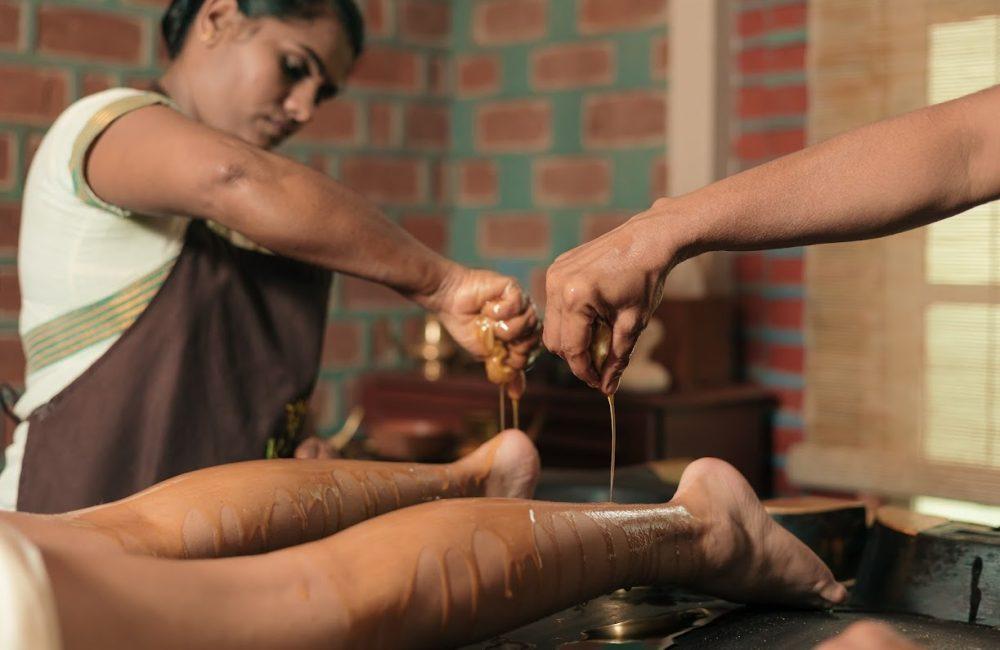
1) Abhyanga (therapeutic oil application)
- Pressure: Start light; increase to moderate only if well tolerated.
- Sequencing: Begin proximal-to-distal for sensitive limbs; avoid sweeping strokes over hyperalgesic zones.
- Positioning: Side-lying or semi-reclined options; bolsters under knees or abdomen to unload the spine.
- Duration: 30–45 minutes for high-fatigue days; 60 minutes only on stable days.
- Temperature: Warm but not hot oils; test on small patches if you have allodynia.
2) Kizhi / Poultice therapies
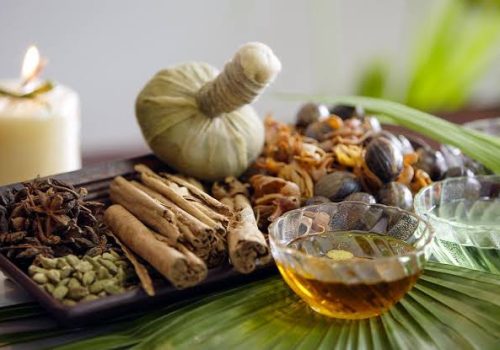
- For OA or myofascial pain: use mildly warm herb packs; shorten contact time; avoid high heat near neuropathic pain or CRPS-like sensitivity.
3) Basti variants (external oil pooling)
- Localized Kati Basti for lumbar pain: use gentle warmth, shorter holds, and careful exit to avoid after-ache.
- Avoid deep spinal pressure post-procedure; follow with guided rest and warm water.
4) Panchakarma considerations
- For guests with fatigue syndromes or on multiple medications, we typically prefer a gentle detox or rasa/ojas-building protocols instead of aggressive cleansing.
- Physician review checks drug–herb interactions, blood pressure stability, and flare history before any decision.
5) Movement & breathwork
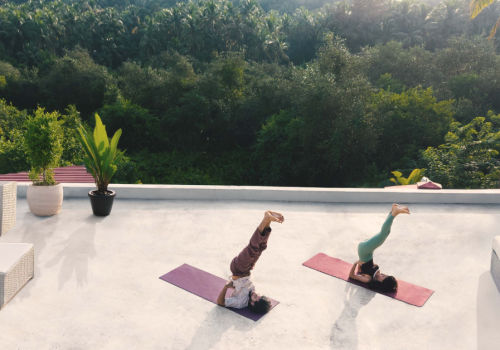
- Replace high-load asana with joint-friendly mobility, isometrics, and diaphragmatic breathing.
- Keep breath counts short (3–4 per cycle) if dizziness or POTS symptoms occur; use chair-based routines if standing work is tiring.
6) Pain-science-informed coaching
- We blend Ayurvedic dosha assessment with modern pain education: pacing, flare forecasting, sleep–pain linkage, and stress reappraisal.
- Micro-goals: “reduce morning stiffness 10–15%,” “add 1 pain-free activity block,” “improve sleep latency by ~10 minutes.”
Rest protocols that protect your energy (the “P.A.C.E.” model)
P—Plan: Map your energy envelope. Choose one main therapy block daily; add only light activities around it.
A—Alternate: Alternate activity–rest every 30–50 minutes.
C—Cut back early: Stop at 70–80% effort to avoid delayed-onset flares.
E—Exhale: Use 3-minute breath breaks before and after treatments.
Comfort options to prevent flares
- Bolsters, wedges, and pillows: Under knees/ankles for spine unloading; side-lying for shoulder pain.
- Heat/ice: Warm oil pre-treatment, cool gel packs post-treatment for localized rebound soreness.
- Skin-friendly oils: If you’re sensitive, ask for patch testing and lighter oils.
- Sensory load: Soft lighting, minimal scent, slower music tempo; earplugs available on request.
- Hydration & electrolytes: Pain and heat can dehydrate; we plan sips at every transition.
Nutrition for pain modulation (Ayurvedic + practical)
- Vata-soothing meals: Warm, lightly spiced, cooked foods; sesame/ginger in moderation, ghee for joint comfort if appropriate.
- Inflammation-aware: Emphasize veggies, lentils, whole grains; moderate nightshades if they’re a personal trigger.
- Meal timing: Earlier dinners support sleep architecture and next-day pain thresholds.
- Digestive support: CCF tea (cumin-coriander-fennel) or physician-approved alternatives; mind any reflux history.
Travel planning to Kerala with chronic pain
Before you fly
- Medical letter & meds: Bring a physician letter, current med list, and 2–3 weeks extra supply in original packaging.
- Seating strategy: Aisle seats for movement; request wheelchair assistance at airports to reduce standing time.
- Compression & movement: Use compression socks if advised; perform micro-moves every hour.
- Jet lag buffer: Add 1 buffer day on arrival before starting intensive therapies.
Arriving to the Ayurvedic healing village (Palakkad, Kerala)
- Pre-arranged vehicle transfer (at additional cost) reduces steps and decision fatigue.
- On arrival, we can schedule rest-first intake (brief check, rest, full consult later).
Packing list for comfort
- Your own pillows/neck roll, lightweight heat/ice packs, soft clothing, slip-on footwear, eye mask, earplugs, and any braces or TENS unit.
How to get the most from your Holistic wellness retreat
- Arrive rested, not rushed. Add a simple evening walk and earlier dinners the week before travel.
- Keep a tiny flare kit. Heat/cold packs, snack, electrolyte sachet, and your go-to breathing cue.
- Use “bookend breathing.” Three minutes before and after therapies stabilizes your system.
- Record micro-wins. A 10% stiffness drop or one extra hour of sleep is meaningful progress.
- Plan your return. We’ll send you home with a 4-week pacing and breathwork plan linked to your triggers.
Next step: Tell us what you need (so we can prepare before you fly)
If you (or a loved one) live with chronic pain and want the gentlest possible ayurvedic retreat kerala experience, share your Pain-Friendly Stay Planner details with our team. We’ll confirm treatment modifications, rest protocols, and comfort options suitable for your condition and design a calmer path through our Holistic wellness retreat experience at Kairali—The Ayurvedic Healing Village.
Your healing should never feel like a marathon. Let’s make Kerala feel kinder—together.
Website: www.ktahv.com
Call: +91-9555156156