




























Global attention is not simply increasing Ashwagandha’s visibility. It is raising expectations around evidence, manufacturing and responsible use.
Ashwagandha has spent the past decade moving steadily into the international wellness mainstream. It now appears in capsules, powders, beverages and products positioned around stress, sleep and physical performance.
Its growing popularity, however, has created a more important question than whether Ashwagandha is trending: what standards should govern its use as it enters more markets and reaches more consumers?
That question received focused attention during the Second WHO Global Summit on Traditional Medicine, held in New Delhi from 17 to 19 December 2025. The Summit, jointly organised by the World Health Organization and the Government of India, examined how traditional medicine could contribute to health systems through stronger evidence, appropriate regulation, innovation and safety frameworks.
A dedicated session titled “Ashwagandha: From Traditional Wisdom to Global Impact – Perspectives from Leading Global Experts” brought together researchers, regulators, policymakers and other specialists to consider the herb’s evolving scientific, regulatory and safety landscape. The session was organised by the WHO Global Traditional Medicine Centre in collaboration with India’s Ministry of Ayush.
The significance of this discussion should be interpreted carefully. It was not a blanket endorsement of every Ashwagandha product or every claim made about the herb.
It was a signal that wider acceptance must be accompanied by higher standards.
For Kairali Ayurvedic Products Pvt. Ltd., this is the part of the global conversation that matters most.
From popularity to accountability
When an Ayurvedic herb enters the international consumer market, its classical reputation is only the beginning.
Regulators, clinicians and informed consumers also want to know:
• Which botanical species is being used?
• Which part of the plant is included?
• How was the raw material sourced and identified?
• Is the formulation consistent between batches?
• What quality controls are applied during manufacturing?
• What adverse effects and medicine interactions are known?
• Does the language on the label accurately reflect the available evidence?
These are not objections to traditional medicine. They are the conditions under which traditional medicine can be used responsibly at scale.
WHO’s wider traditional-medicine work increasingly emphasises evidence, regulation, quality, safety and appropriate integration into health systems. The organisation’s reporting on the 2025 Summit similarly focused on safe, evidence-based and accessible traditional medicine rather than promotion without scrutiny.
For manufacturers, the implication is clear: heritage cannot substitute for quality systems.
The two must operate together.
Kairali’s position: lineage supported by manufacturing discipline
Kairali Ayurvedic Group was founded in 1989 by K.V. Ramesh and Gita Ramesh, building on four generations of Ayurvedic practice in the founders’ family.
That background shapes how the Group understands Ashwagandha within Ayurveda. It does not, by itself, prove the quality or suitability of an individual product. Those questions must be addressed through manufacturing standards, raw-material controls, responsible formulation and accurate labelling.
Kairali Ayurvedic Products Pvt. Ltd., the Group’s pharmaceutical manufacturing division, produces classical and proprietary Ayurvedic formulations at its WHO-GMP-certified manufacturing operation in Tamil Nadu.
WHO-GMP certification is relevant because it concerns the systems through which medicinal products are consistently manufactured and controlled. It should not be confused with WHO approval of a specific Kairali formulation, nor should it be used to imply that WHO endorses an individual product.
This distinction is important. Credibility is weakened, rather than strengthened, when legitimate quality credentials are stretched beyond what they mean.
What Ayurveda says about Ashwagandha
Ashwagandha, or Withania somnifera, is traditionally classified in Ayurveda as a rasāyana (a category of preparations used to support resilience, restoration and vitality).
Its traditional use is broader and more individualised than the modern label “adaptogen” sometimes suggests. Ayurvedic practitioners consider a person’s constitution, digestive capacity, presenting symptoms, age, overall health and the form in which the herb is given.
This is why Ashwagandha should not be treated as a universal wellness ingredient appropriate for everyone.
Modern research has investigated Ashwagandha in areas including perceived stress, anxiety symptoms, sleep quality, physical performance and aspects of general well-being. Some findings are encouraging, particularly around stress-related outcomes, but the evidence base remains uneven.
Studies differ in extract type, plant part, dose, duration and participant profile. Many have been relatively small. Results from one standardised extract cannot automatically be applied to every powder, capsule or combined formulation sold under the name Ashwagandha.
The appropriate position is neither dismissal nor certainty.
Traditional use provides a basis for investigation. Modern research helps test particular preparations and outcomes. Quality and safety systems determine whether the product reaching the consumer is credible.
What the global discussion means for Ashwagandha products
Botanical identity must be clear
A responsible Ashwagandha product begins with verified Withania somnifera. The botanical identity, plant part and source of the material influence the composition of the finished formulation.
Consumers should not have to rely on a large “Ashwagandha” label while important formulation details remain unclear.
Before publication, the KAPPL team should confirm the plant part and sourcing statement applicable to Kairali Ashwagandha Capsules in each market.
Manufacturing consistency matters
Traditional knowledge does not remove the need for controlled manufacturing.
A capsule produced for routine consumer use should be manufactured through documented processes that support consistency, hygiene, traceability and accurate labelling. These requirements become more important as Ayurvedic products move across jurisdictions with different regulatory expectations.
KAPPL’s WHO-GMP-certified manufacturing framework is therefore a meaningful part of the product story. The claim should be presented precisely, without extending it into an unsupported product endorsement.
Safety monitoring cannot be an afterthought
The international expansion of any herbal ingredient creates a larger and more varied user population. Some consumers will be taking prescription medicines. Others may be pregnant, breastfeeding, preparing for surgery or managing an existing health condition.
Ashwagandha may not be suitable in every circumstance. Potential concerns can depend on the formulation, the individual and concurrent medicines.
Consumers should follow the product label for their market and seek advice from an appropriately qualified healthcare professional where medications or medical conditions are involved. Pregnant or breastfeeding individuals should not begin using the product without professional guidance.
Claims must remain proportionate to evidence
Ashwagandha is frequently marketed with broad promises covering stress, hormones, immunity, sleep, cognitive performance, physical strength and longevity.
One ingredient should not be made to carry every wellness claim.
For Kairali, an evidence-aware approach means distinguishing between:
• Traditional Ayurvedic use
• Areas investigated in modern research
• Findings associated with particular extracts or study populations
• Benefits that have not been established conclusively
This distinction is not a marketing disadvantage. It allows consumers to make better-informed decisions and protects the credibility of the wider Ayurvedic sector.
Kairali Ashwagandha Capsules in a modern routine
Kairali Ashwagandha Capsules are best understood as part of a wider routine rather than a replacement for one.
A capsule cannot compensate for persistently inadequate sleep, irregular meals, unmanaged workload or an unsuitable exercise plan. Nor should a consumer expect to judge its value from one or two isolated days.
Where the product is appropriate and professionally cleared, it may be incorporated alongside basic measures such as:
A consistent daily rhythm
Take the product only according to the serving instructions printed on the pack sold in your market. Avoid copying dosages from social media, another brand or a study that used a different preparation.
A sleep-supportive evening
A regular bedtime, a lighter late meal, reduced screen exposure and a calmer final hour provide a more meaningful foundation for sleep than relying on a supplement alone.
People experiencing persistent insomnia, loud snoring, breathing interruptions during sleep or significant daytime fatigue should seek medical assessment rather than managing the problem only with wellness products.
Adequate recovery
For active individuals, Ashwagandha should not replace adequate food, hydration, rest and a training programme appropriate to their condition.
Research interest in physical performance and recovery is growing, but findings remain preparation-specific. Product claims should therefore be kept within the approved language for each market.
Simple observation
Rather than looking for a dramatic feeling, consumers can record a small number of relevant measures, such as sleep timing, night waking and perceived stress.
This is not a clinical trial or a substitute for medical assessment. It is simply a way to notice whether a routine is consistent and whether any unwanted effects occur.
What consumers should check before choosing an Ashwagandha product
The global spotlight on Ashwagandha makes label literacy increasingly important.
Before buying, check:
• The full botanical name
• The plant part used, where disclosed
• The complete ingredient list
• Serving instructions for the country in which the product is sold
• Manufacturer details
• Storage directions
• Relevant warnings
• Batch and expiry information
Avoid products that promise to cure, treat or reverse diseases. Broad therapeutic claims are not evidence of a stronger formulation. They are a reason to examine the product more carefully.
A higher bar is good for Ayurveda
Ashwagandha’s presence at a major global traditional-medicine forum is significant because it moves the conversation beyond popularity.
The questions now concern how the herb is researched, regulated, manufactured, labelled and monitored as its use expands.
For Kairali Ayurvedic Products, this direction is consistent with a necessary principle: Ayurvedic lineage and modern quality systems should not be treated as opposing ideas. Traditional knowledge explains why a formulation exists. Manufacturing discipline helps establish what is actually in the product. Research tests particular claims. Safety monitoring helps identify where caution is required.
None of these elements is sufficient alone.
The global attention on Ashwagandha should therefore not encourage the Ayurvedic sector to make louder claims. It should encourage the sector to make better products, communicate more precisely and remain accountable for how those products are used.
That is a more demanding standard.
It is also the standard through which Ayurveda earns durable trust.
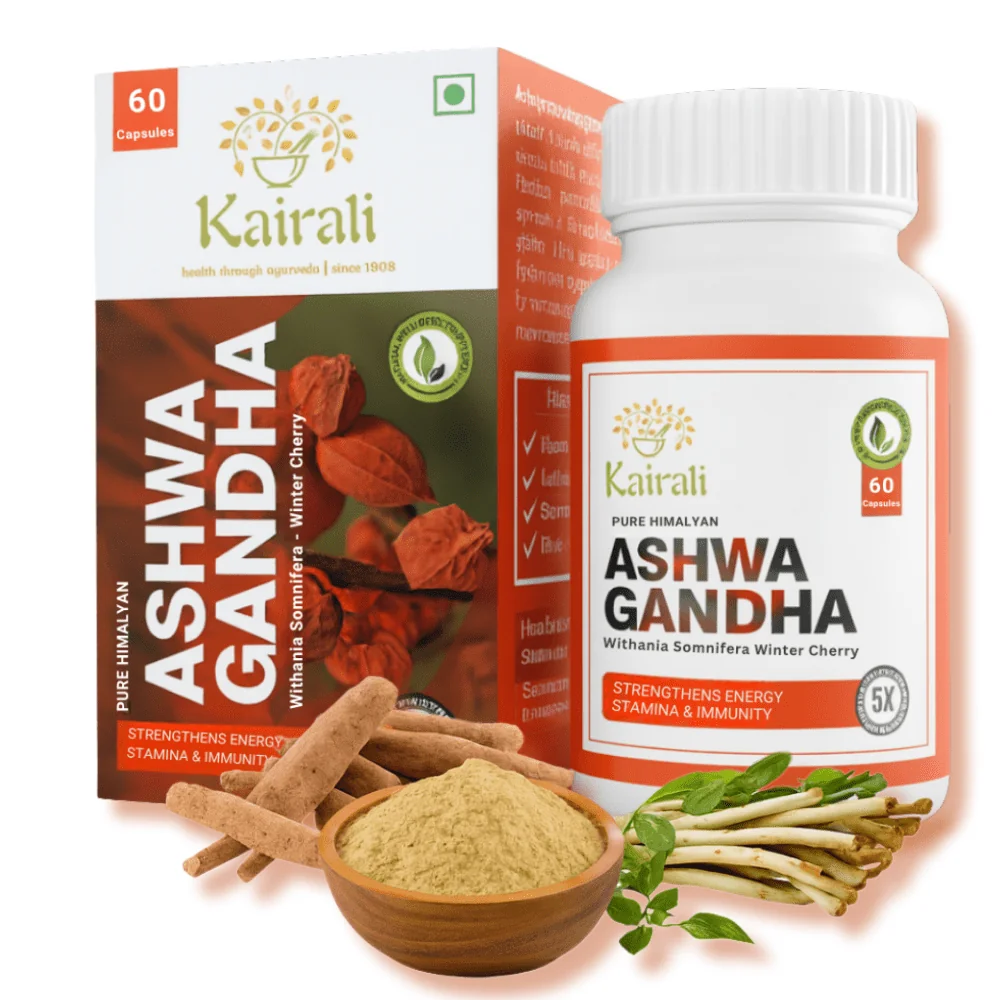
Explore Kairali Ashwagandha Capsules
Learn more about Kairali Ashwagandha Capsules, including the ingredient list, serving instructions and warnings applicable to your region.
Website: www.kairaliproducts.in
Call: +91-9555156156