





















Interest in Ayurveda has grown far beyond India. If you are considering an ayurveda retreat in Kerala, an important question arises: how can a traveller tell whether an Ayurvedic retreat takes safety and clinical standards seriously?
It is a reasonable concern.
The US Food and Drug Administration has warned about certain unapproved Ayurvedic products found to contain harmful levels of heavy metals such as lead, mercury and arsenic. The warning does not mean that all Ayurvedic medicines present the same risk. It does make sourcing, manufacturing standards and informed use important questions for anyone considering Ayurvedic care.
For guests choosing an Ayurvedic retreat in India, the surroundings are only part of the decision.
Who conducts the consultation? Who decides which therapies are appropriate? Where do the medicines come from? What quality systems are in place? And what happens when a treatment is not suitable for a particular person?
These questions tell you considerably more than a retreat brochure.
Start with the clinical standards
Ayurveda is now offered in many different settings, from hotel spas to dedicated healthcare institutions.
Those environments should not automatically be treated as equivalent.
At Kairali – The Ayurvedic Healing Village in Palakkad, an ayurveda retreat in Kerala Ayurveda is delivered within an NABH-accredited Ayurvedic hospital-resort. Kairali also holds the Government of Kerala’s Green Leaf Certification.
NABH accreditation matters because it is connected to healthcare quality and patient safety rather than simply hospitality. NABH’s AYUSH accreditation programme covers areas including documented procedures, trained practitioners, patient rights and safety systems.
For a guest, this translates into a basic but important principle: an Ayurvedic programme should begin with professional assessment rather than a menu of treatments.
Treatment should follow assessment
Two people arriving for the same length of stay may not receive the same programme.
That is intentional.
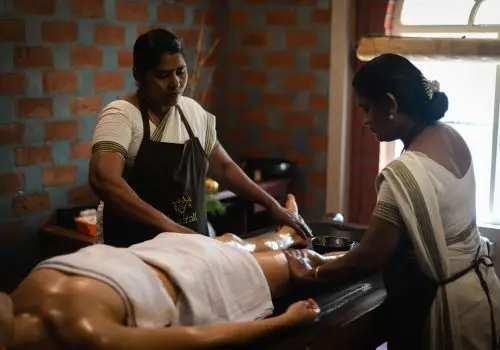
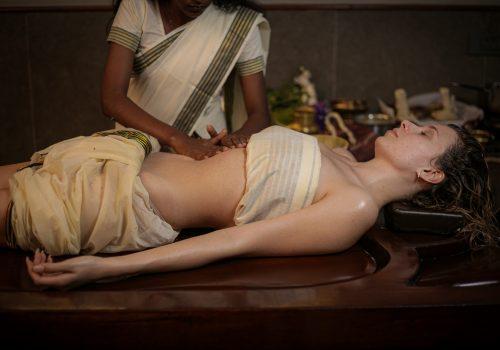
At this ayurveda retreat in Kerala, physician-led care is central to the residential model. Panchakarma and other Ayurvedic therapies are not simply selected because they are popular or familiar.
The practitioner first considers the individual and then determines what is appropriate within the programme.
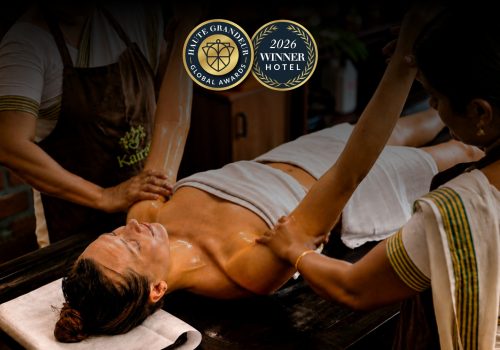
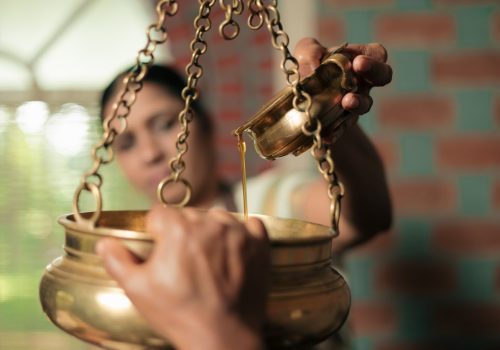
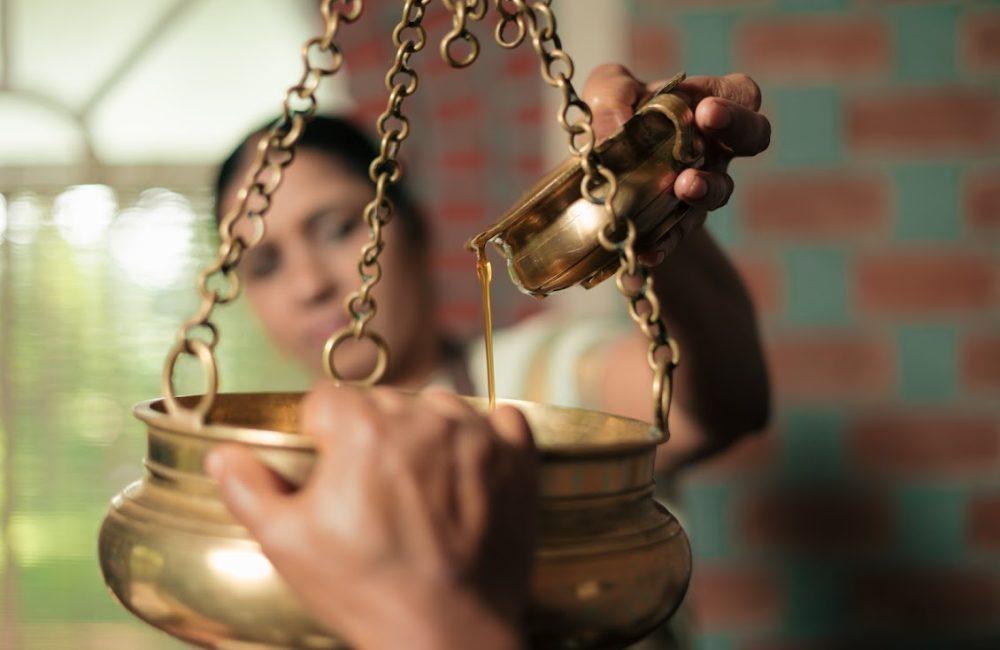
This is especially important with therapies such as Abhyanga, Shirodhara and the procedures associated with Panchakarma (“five actions”). Traditional Ayurvedic practice does not treat these as interchangeable relaxation treatments.
There are also circumstances in which a particular therapy may not be appropriate. Responsible Ayurvedic care therefore includes knowing when to modify, postpone or avoid an intervention.
This is one of the clearest differences between experiencing Ayurveda as healthcare and encountering an Ayurvedic-inspired treatment in a general spa setting.
Ask where the medicines come from
Clinical supervision is only one side of safety. The quality of the formulations being used matters too.
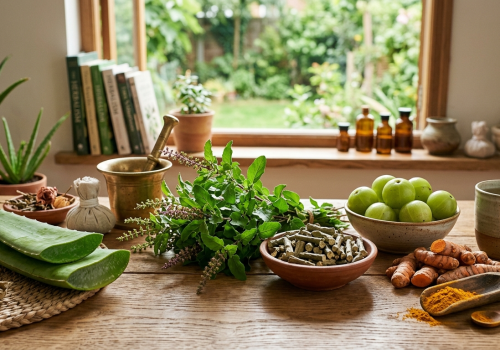
Kairali Ayurvedic Group has a separate pharmaceutical division, Kairali Ayurvedic Products Pvt. Ltd. , which manufactures classical and proprietary Ayurvedic formulations at a WHO-GMP-certified facility in Tamil Nadu.
Good Manufacturing Practice is relevant because medicine quality depends on much more than the reputation of a herb.
Raw materials, manufacturing processes, storage, consistency and quality-control procedures all matter.
This becomes particularly important for international travellers. Different countries regulate Ayurvedic medicines in different ways, and a product permitted or traditionally used in one jurisdiction may be treated differently elsewhere.
For that reason, “natural” should never be used as a synonym for “automatically safe”.
The heavy-metals question deserves a serious answer
Concerns about heavy metals in Ayurvedic products should neither be dismissed nor used to characterise every Ayurvedic formulation as unsafe.
Ayurvedic medicines can include herbal, mineral and herbo-mineral preparations. India’s AYUSH authorities advise that medicines should be taken under physician supervision rather than through self-medication.
The FDA has separately warned US consumers about specific unapproved Ayurvedic products associated with harmful levels of heavy metals.
For patients and wellness travellers, the sensible response is not fear. It is scrutiny.
Before taking an Ayurvedic formulation, ask:
- Who manufactured it?
- Is the manufacturer operating under recognised quality standards?
- Has a qualified practitioner recommended it for you?
- Do they know what other medicines or supplements you are taking?
- Can the ingredients and formulation be clearly explained?
A credible practitioner should be comfortable answering these questions.
Personalisation is also a safety issue
“Customised Ayurveda” is often used as a marketing phrase. In clinical practice, individualisation has a more specific purpose.
A physician needs to know enough about the person before deciding what should be done.
At a residential Ayurvedic centre, that may include considering medical history, current concerns, digestion, sleep, constitution, medications and other factors relevant to the programme.
This does not mean Ayurveda replaces conventional medical care.
Guests managing existing medical conditions or taking prescription medicines should make that information available to their treating practitioners. Depending on the situation, coordination with their regular physician may also be appropriate.
The goal should be informed care, not an artificial choice between medical systems.
Yoga and meditation should sit within the same framework
Many people looking for yoga retreats in India also want Ayurveda, meditation and Panchakarma as part of the same stay.
That combination can be valuable, provided each element has a clear purpose.
At Kairali, yoga and meditation sit alongside the wider residential Ayurvedic programme rather than functioning as isolated activities.
This allows movement, rest, meals, treatments and daily routines to be considered together.
But the same principle applies here as it does to treatment: more is not necessarily better.
A full schedule of therapies, yoga sessions and wellness activities may look impressive on paper. A carefully structured programme should instead reflect what is appropriate for the individual.
What should you look for in an Ayurvedic retreat?
A beautiful location can make a stay more comfortable. It cannot tell you whether the Ayurvedic care is rigorous.
Before choosing a retreat, look beyond photographs and programme names.
Ask who the physicians are. Look for recognised healthcare accreditation where applicable. Find out how treatments are prescribed. Ask about the source of medicines and preparations. Understand what happens if you have a contraindication or are already taking medication.
And be cautious of guarantees.
Responsible Ayurveda should be able to explain what a programme involves without promising that every guest will experience the same outcome.
Safety is part of good Ayurveda
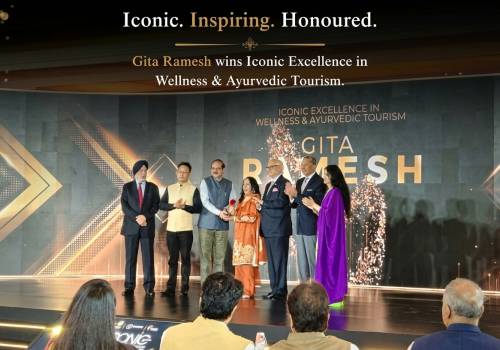
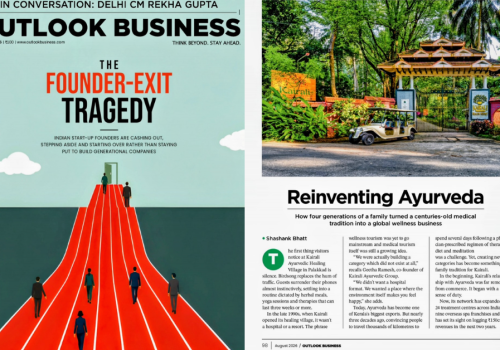
Kairali Ayurvedic Group was founded in 1989 by K.V. Ramesh and Gita Ramesh and draws on four generations of Ayurvedic practice in the founders’ family. Today, its Palakkad property operates within an NABH-accredited Ayurvedic healthcare framework, while Kairali ayurvedic products manufactures Ayurvedic formulations in a WHO-GMP-certified facility.
Those credentials matter because trust in Ayurveda cannot depend on heritage alone.
As more people around the world encounter Ayurveda, the institutions representing it will increasingly be judged by standards that patients already expect elsewhere in healthcare: qualified practitioners, transparent processes, responsible manufacturing and honest communication about limitations.
That scrutiny is healthy.
The question should not be whether one Ayurvedic retreat is more “authentic” than another.
A better question is simpler: what evidence does it give you that your care is being handled responsibly?
Website: www.ktahv.com
Call: +91-9555156516