























Ghee is a common ingredient in Indian cooking. But in Ayurveda, it may also be used during Panchakarma.
This often surprises people. Why would someone drink ghee during a cleansing programme?
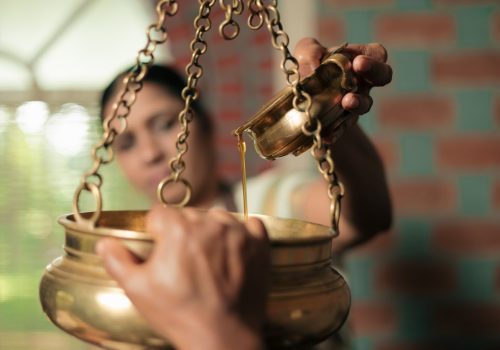
The answer lies in a preparation method called snehapāna, or internal oleation. In this process, a physician gives plain or medicated ghee before certain Panchakarma procedures.
The aim is to prepare the body for the next stage of treatment.
What is snehapāna?
Snehapāna means taking an oily substance by mouth.
In many cases, the substance is ghee. It may be plain or prepared with herbs.
Snehapāna is usually part of the preparation stage of Panchakarma. It is not used in the same way for every person.
The physician decides:
- whether ghee is suitable;
- which type should be used;
- how much should be given;
- and when the process should stop.
The decision depends on the person’s health, digestion and treatment plan.
Why is ghee used?
Ayurveda values ghee for its oily and nourishing qualities.
In traditional practice, internal oleation is used to prepare the body before certain cleansing procedures. It is part of a planned sequence, not a treatment used on its own.
Some online articles say that ghee binds to toxins and removes them from the body. Modern research has not proved this claim.
It is more accurate to say that ghee has a traditional role in Panchakarma preparation.
What is medicated ghee?
Medicated ghee is called ghṛta in Ayurveda.
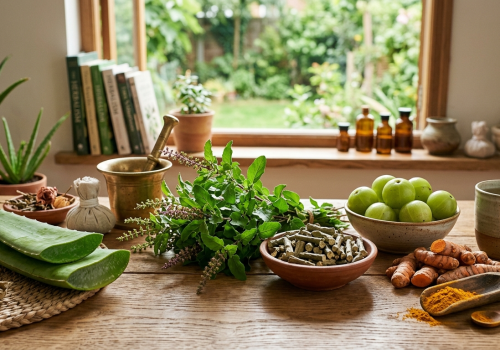
It is made by processing ghee with selected herbs. The physician chooses the formula based on the person’s needs.
Medicated ghee is not the same as ordinary cooking ghee. Different formulas are used for different purposes.
It should not be taken without guidance from a qualified Ayurvedic physician.
Does everyone take ghee during Panchakarma?
No.
Some people may receive internal oleation. Others may need a different form of preparation.
The physician considers several factors, including:
- appetite;
- digestion;
- bowel habits;
- age;
- strength;
- current health;
- and the planned treatment.
This is why Panchakarma should not follow one fixed routine for every guest.
How does the doctor know if the ghee is suitable?
The medical team watches how the person responds.
They may ask about appetite, digestion, bowel movements, nausea, heaviness or discomfort.
These signs help the physician decide whether to continue, change or stop the process.
Taking more ghee is not always better. The correct amount depends on the individual.
Does ghee improve digestion?
Not in every case.
Ayurveda places strong importance on agni, or digestive capacity. A physician first checks whether the person is likely to digest the ghee well.
If the person develops nausea, heaviness or poor appetite, the plan may need to change.
Ghee should not be described as a digestive aid for everyone. During Panchakarma, it is used for a specific purpose under supervision.
Will ghee cause weight gain?
Snehapāna is not a weight-loss treatment. It is also not meant to cause weight gain.
Weight can change during a residential Panchakarma programme for many reasons. Diet, activity, hydration and bowel movements may all change.
The use of ghee should not be promoted as a way to burn fat or lose weight.
People with concerns about cholesterol, liver health, gallbladder health or digestion should speak to the physician before starting.
Is snehapāna safe for everyone?
No.
Internal oleation may not suit people with certain digestive, liver, gallbladder or metabolic concerns. It may also be avoided during acute illness.
Possible side effects include:
- nausea;
- heaviness;
- poor appetite;
- stomach discomfort;
- and changes in bowel movements.
For this reason, snehapāna should not be tried at home using online instructions.
It requires medical assessment and daily observation.
How is ghee used at Kairali?
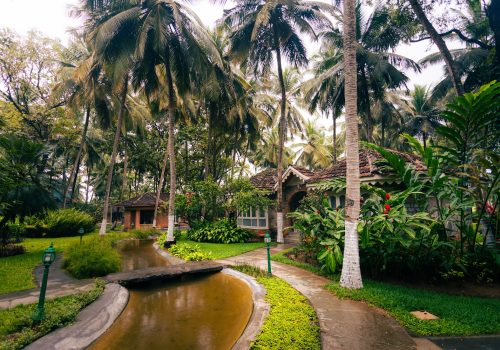
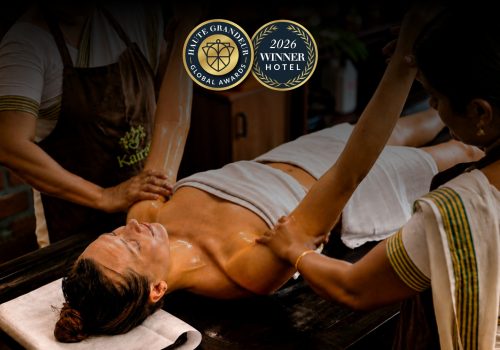
At Kairali – The Ayurvedic Healing Village in Kodumbu, Palakkad, Panchakarma programmes are planned by Ayurvedic physicians.
Before treatment begins, the physician reviews the guest’s health, digestion, medical history and suitability for the planned procedures.
When internal oleation is advised, the team monitors the guest each day.
The next step depends on how the person responds. It is not based on finishing a fixed amount of ghee.
Food, rest, movement and other therapies are also planned around the treatment.
Kairali – The Ayurvedic Healing Village is an NABH-accredited Ayurvedic hospital and holds the Government of Kerala’s Green Leaf Certification. These credentials relate to the standards used in the delivery of Ayurvedic care.
Ghee is one part of Panchakarma
Ghee should not be seen as a detox drink.
It is one part of a larger treatment plan. Its use depends on the person, the formula, the timing and the procedure that follows.
The most important part is not simply the ghee. It is the medical assessment and supervision around it.
Website: www.ktahv.com
Call: +91-9555156156