

















Planning an Ayurveda retreat but worried about food? At Kairali – The Ayurvedic Healing Village in Kerala, meals are designed to support healing and comfort—without compromising your dietary needs. Whether you’re vegan, gluten-free, Jain/satvik, or managing food allergies, our physicians and kitchen team work together to tailor every plate to your preferences and safety.
This guide explains exactly how we handle requests, what safeguards we follow in the kitchen, and what a day of eating can look like with sample menus for vegan, gluten-free, and common allergen-free diets. You’ll also find clear alternatives for staples like ghee, curd, wheat, nuts, and soy—so you know what to expect before you arrive.
If eating well is a key part of why you’re coming to Kairali, you’re in the right place. Let’s show you how we make therapeutic, delicious food work for your body.
How we handle dietary requests—step by step
Pre-arrival (10–14 days before):
- Submit checklist with booking ID
- Share medical details (e.g., coeliac, IBS, diabetes), current meds, past reactions.
- Confirm severity for any allergy (mild/moderate/anaphylaxis)
On arrival (Day 1):
- Vaidya consultation: constitution (prakriti) + imbalance (vikriti), triggers, goals.
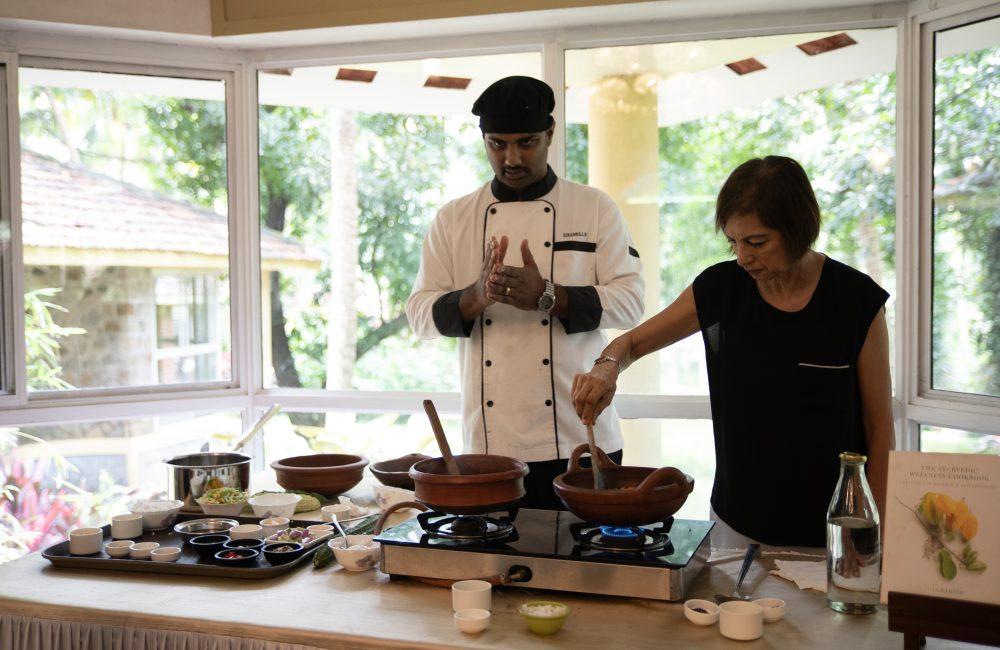
- Kitchen brief: your profile is tagged in our kitchen system (allergens, cuisine rules, spice tolerance).
- Meal plan: 3 therapeutic meals + herbal waters/teas, adjusted daily.
In-kitchen safeguards (SOP highlights):
- Dedicated prep boards/utensils for GF and allergen-free items; colour-coded containers.
- Allergen matrix posted per recipe; batch labels with time stamps.
- Gluten-free grains (red rice, millet, quinoa, buckwheat) cooked in GF-only pots.
- No peanut oil; sesame and nuts used only in labelled recipes, with opt-outs by default for flagged profiles.
- Front-of-house double-check: every plate for allergy-tagged guests is verified by a supervisor before service.
- Emergency readiness: staff trained in recognition of anaphylaxis, rescue protocol, and physician on call.
Daily feedback loop:
- Your physician checks digestion, sleep, mood, and appetite; chefs adjust spices, textures, portions, and timings.
Vegan at Kairali: nourishing without dairy, egg or honey
Ayurvedic cuisine often uses ghee, curd, and buttermilk for therapeutic reasons. For vegan guests, we provide functionally equivalent options while respecting your ethics and the therapeutic goal.
Ayurvedic swaps we use:
- Ghee → cold-pressed oils (coconut, sesame, groundnut-free sunflower on request); for snehana (unctuousness) we use murchita taila style infused oils where indicated.
- Curd/buttermilk → fresh coconut or cashew yoghurt (nut-free option: rice-based yoghurt) cultured with vegan probiotics.
- Milk → almond, oat, coconut, or rice milk (nut-free default available).
- Jaggery & dates for sweetening; no bone-char sugar.
Sample vegan one-day menu (customised per dosha)
Breakfast
- Moong dal cheela (no yoghurt), mint-coriander chutney (no sesame)
- Warm cumin-fennel-coriander digestive tea
Lunch
- Red rice or barnyard millet
- Ash gourd curry in coconut milk, tempered with curry leaves
- Beetroot thoran (stir-fry)
- Kachumber salad with lime & rock salt
Evening
- Roasted makhana (lotus seeds) or green gram sundal
Dinner
- Vegetable khichdi with bottle gourd & ginger (oil-tempered)
- Carrot-coconut soup
- Golden turmeric latte with oat milk
Gluten-free & coeliac-safe: beyond “no wheat”
For medical disease, we follow strict cross-contact controls:
- GF-only pans, colanders and wooden tools; metal utensils sanitised between uses.
- Separate ladles and serving spoons for GF dishes on the buffet (or plated service to room/clinic patio if preferred).
- Certified GF staples where relevant (oats only on request with documentation).
- Millet-first menus starring kodo, little, foxtail, barnyard; plus red rice, quinoa, buckwheat, tapioca, jackfruit flour.
Sample gluten-free one-day menu
Breakfast
- Millet upma with vegetables
- Stewed papaya with mint
Lunch
- Kerala red rice
- Drumstick sambar (no asafoetida or GF-certified hing if requested)
- Cabbage & coconut thoran
- Cucumber raita with coconut yoghurt (dairy-free on request)
Evening
- Sweet potato chaat with roasted cumin & lime
Dinner
- Quinoa khichdi with pumpkin & moong dal
- Okra pepper fry (light)
- Herbal jeera-ajwain water
Allergy-safe dining: exactly what we can (and can’t) promise
We can:
- Cook without your listed allergens (peanut, tree nut, sesame, soy, dairy, egg, wheat/gluten, mustard, celery, sulphites, etc.).
- Provide nut-free and sesame-free kitchens for your meals with dedicated tools and closed-door prep timing.
- Offer soy-free protein options (moong, urad, chana, black-eyed peas, amaranth, quinoa).
- Replace dairy in most recipes with plant alternatives while preserving Ayurvedic intent.
We cannot:
- Guarantee a 100% allergen-free facility (our property cooks a range of guest preferences), but we can deliver allergen-controlled plates with documented SOPs, staff training, and physician oversight. Guests with a history of anaphylaxis must carry personal medication (EAI) and inform us in writing.
Ayurvedic + scientific integration (why this works)
- Digestive ease: We use lightly spiced, seasonal produce to regulate agni (digestive fire). From a nutrition lens, this reduces FODMAP load, supports gut motility, and avoids common triggers.
- Balanced macros for healing: Moong dal–based dishes provide easily digestible protein; millets and red rice offer low-GI carbohydrates and minerals like magnesium and iron.
- Anti-inflammatory focus: Turmeric, ginger, cumin, coriander, fennel, and curry leaves contribute polyphenols that align with Ayurveda’s shamana (pacifying) approach.
- Circadian timing: Early, lighter dinners support sleep and metabolic recovery—an overlap between dinacharya and chrono-nutrition research.
- Personalisation: Your doshic state (e.g., Vata dryness → more warm, oily textures; Pitta heat → cooling, hydrating foods; Kapha heaviness → light, pungent accents) guides recipe tweaks so nutrition meets therapeutic intent.
Eating well shouldn’t be a worry at an Ayurveda retreat—and at Kairali – The Ayurvedic Healing Village, it isn’t. Whether you’re vegan, gluten-free, satvik, or managing allergies, our physicians and kitchen team align your meals with your constitution, current health goals, and safety needs. From millet-first menus and dairy-free yoghurts to allergen-controlled prep and daily check-ins, every step is designed to keep you comfortable while supporting healing.
Your plan starts before you arrive. Share your dietary details, choose the level of spice and texture you prefer, and we’ll tailor each plate—from breakfast to bedtime herbal teas—so you can focus on rest, therapies, and results. Guests often tell us the biggest surprise is how simple, flavourful food can feel so therapeutic.
If you’re comparing retreats, use this guide as a checklist. Ask about prep zones, utensils, hing policy, labelled service, and emergency readiness. The right answers mean you can relax and let the cuisine do its quiet, daily work.