























Stopping alcohol, drugs or tobacco is rarely a matter of willpower alone.
Dependence can affect sleep, appetite, mood, physical health, relationships and the structure of everyday life. Recovery therefore often requires more than simply removing a substance. It may involve medical care, psychological support, changes in routine and, importantly, continued support after the initial withdrawal period.
This is also where conversations about Ayurveda and addiction need to be careful.
Ayurveda should not be presented as a replacement for medically supervised withdrawal, addiction medicine, counselling or prescribed treatment. Its more credible role is complementary: helping to create a structured environment around rest, food, daily routine, movement and stress management while a person receives appropriate professional care.
Addiction recovery is more than “detox”
The word detox is frequently used in wellness culture as though the body simply needs to be cleansed before recovery can begin.
Addiction is considerably more complex.
Depending on the substance and the degree of dependence, suddenly stopping can produce significant withdrawal symptoms. Alcohol withdrawal in particular can become medically serious and, in some cases, life-threatening. Drug dependence may also require specialised medical management.
For this reason, anyone who is physically dependent on alcohol or drugs should be assessed by an appropriately qualified medical professional before beginning a residential wellness or Ayurvedic programme.
The purpose of an Ayurvedic setting should not be to replace this assessment. It is to determine whether supportive Ayurvedic care is appropriate alongside the person’s wider recovery plan.
What can Ayurveda contribute?
Ayurveda approaches health through individual assessment rather than a standard programme applied to everyone.
A physician may consider a person’s constitution, present health, digestion, sleep, appetite, energy, daily habits and other clinical factors before deciding whether Ayurvedic therapies are appropriate.
In a recovery setting, that can shift the emphasis from simply “stopping a substance” towards rebuilding some of the daily functions that prolonged substance use may have disrupted.
The areas of support may include several components.
1. Re-establishing routine
Recovery often requires structure.
Regular sleep and wake times, consistent meals, appropriate physical activity and periods of rest can provide a more predictable framework during a period that may otherwise feel unsettled.
Ayurveda has long placed considerable emphasis on dinacaryā (daily routine). In a supervised residential setting, this principle can translate into simple but important habits: regular meals, scheduled therapies where appropriate, movement, rest and reduced exposure to everyday triggers.
These measures should not be confused with addiction treatment themselves. Their value is in supporting the wider recovery environment.
2. Physician-supervised Ayurvedic therapies
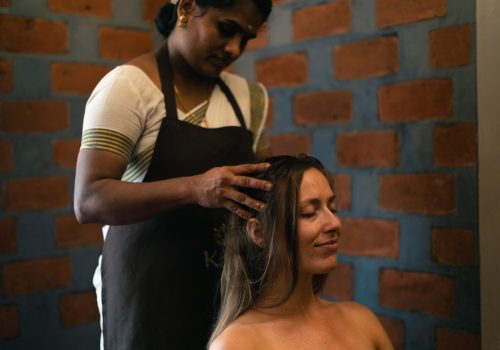
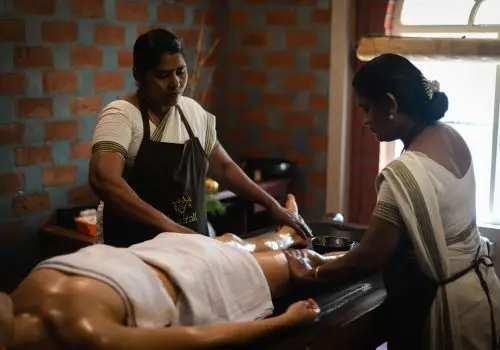
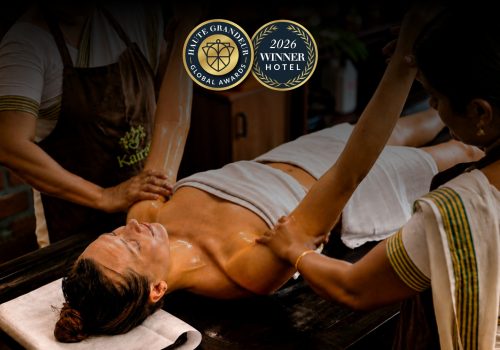
Ayurvedic programmes may include external oil therapies, steam procedures or other interventions following assessment by an Ayurvedic physician.
Pañcakarma refers to a group of classical, physician-supervised Ayurvedic procedures. It should not automatically be prescribed simply because someone has a history of substance use, nor should it be described as a way to “flush drugs or alcohol from the body.”
Whether any Panchakarma procedure is appropriate depends on the individual’s health, current medications, stage of recovery and physician assessment.
This is particularly important because intensive procedures are not suitable for everyone.
3. Food and digestive routine
Substance dependence can coexist with irregular eating patterns and poor nutritional habits.
An Ayurvedic residential programme may therefore place attention on regular meals, food selection and digestive comfort. Rather than promising that particular foods will remove toxins or eliminate cravings, the more useful objective is practical: restore predictable eating habits and support adequate nourishment while recovery continues.
Food can also become part of the routine that a person takes home after leaving a residential environment.
4. Yoga, breathing practices and meditation
Yoga, meditation and breathing practices are often included in integrative wellness programmes because they provide structured periods of movement, attention and relaxation.
For someone in recovery, these practices may be useful as complementary tools for managing stress and establishing healthier routines.
They are not substitutes for psychological treatment, particularly where a person is dealing with trauma, depression, anxiety or another mental-health condition alongside substance dependence.
The intensity and type of yoga or breathing practice should also be adapted to the individual’s health rather than treated as another standard component of a package.
5. Psychological support still matters
One of the biggest problems with the phrase “holistic de-addiction” is that it can make conventional addiction care sound incomplete or unnecessary.
That is the wrong distinction.
Good recovery care is already multidimensional. Depending on the individual, evidence-based treatment can involve counselling, behavioural therapies, medication, family support, peer support and ongoing relapse-prevention strategies.
Ayurvedic care, where appropriate, belongs alongside this framework rather than outside it.
A residential Ayurvedic environment can create space for routine and reflection, but psychological dependence, behavioural triggers and underlying mental-health concerns require appropriately qualified professionals.
Alcohol, drugs and tobacco are not the same problem
Another reason to avoid a one-size-fits-all “de-addiction package” is that different forms of dependence require different approaches.
Alcohol
People who have developed physical dependence on alcohol should not abruptly stop drinking without medical guidance. Withdrawal can sometimes involve serious complications and may require medication and monitoring.
Ayurvedic care should therefore begin only after appropriate assessment and coordination with conventional medical care where needed.
Drugs
The appropriate treatment depends greatly on the substance involved.
Some substance-use disorders have established medication-based treatments, while others rely more heavily on behavioural interventions and supportive care. A person’s medical history, psychiatric health and current medications all matter.
An Ayurvedic physician should therefore be part of a wider clinical conversation, not positioned as a replacement for addiction specialists.
Tobacco
Tobacco dependence presents a different clinical picture. Counselling and approved smoking-cessation medications are well-established approaches to helping people quit.
Ayurvedic lifestyle practices may complement these measures by supporting routine, sleep and stress management, but they should not be presented as substitutes for proven tobacco-cessation interventions.
Why a residential setting can be useful
One of the practical advantages of a residential programme is distance from the patterns of ordinary life.
Meals are scheduled. Sleep can become more regular. Daily responsibilities are temporarily reduced. The environment can make it easier to observe routines that may have become closely connected with substance use.
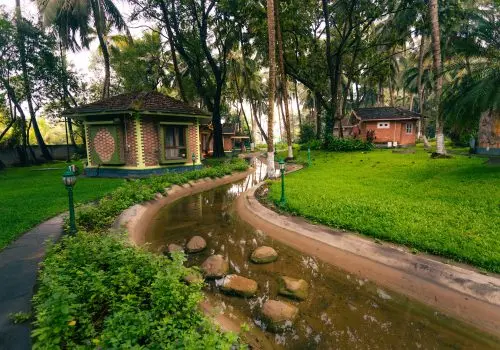
At Kairali – The Ayurvedic Healing Village in Kodumbu, Palakkad, programmes are physician-led within an NABH-accredited Ayurvedic hospital setting.
For someone considering Ayurvedic support during recovery, the accreditation is more relevant than the idea of a “wellness resort.” It signals that Ayurvedic care is being delivered within a structured clinical environment rather than as a collection of spa treatments.
Even then, suitability needs to be assessed individually.
The limits matter as much as the possibilities
Ayurveda has useful concepts around routine, food, rest, behavioural discipline and individualised care. These can have a place within a broader recovery programme.
What Ayurveda cannot responsibly promise is that Panchakarma will remove addiction, that herbs will eliminate cravings, or that a residential stay will prevent relapse.
The evidence does not justify those claims.
Recovery from substance dependence is often a long process. For some people, it includes medication. For others, counselling or peer support is central. Many require several approaches at different stages.
Ayurveda is most credible when it works within that reality.
A physician-led Ayurvedic environment may help someone rebuild routines and pay closer attention to sleep, food, movement and stress. Those may sound like modest objectives compared with promises of “complete detoxification.”
In recovery, however, modest and sustainable changes often matter more than dramatic claims.
If you are considering Ayurvedic care as part of a broader recovery plan, speak with a Kairali Ayurvedic physician about whether the setting and therapies are appropriate for you.
Website: www.ktahv.com
Call: +91-9555156156