





























Explore how yoga, Ayurvedic lifestyle practices and personalised wellbeing routines may support women through different life stages, from menstrual changes to menopause.
Women’s hormonal health changes throughout life. Menstruation, pregnancy, perimenopause and menopause can bring shifts in energy, sleep, mood and physical comfort.
For some women, these changes are manageable. Others experience persistent symptoms that affect their daily lives.
Yoga and Ayurveda offer complementary approaches that focus on movement, rest, nutrition and daily routines. While these practices cannot replace medical treatment for hormonal disorders, they may contribute to overall wellbeing and help women manage stress during periods of change.
At Kairali, The Ayurvedic Healing Village, in Palakkad, Kerala, traditional Ayurvedic practices are incorporated into a physician-led approach to individual wellbeing.
Understanding Hormonal Health Through Ayurveda
Hormones influence several essential functions, including metabolism, reproduction, sleep and mood.
Changes in hormone levels are a normal part of many life stages. However, persistent menstrual irregularities, thyroid disorders and polycystic ovary syndrome (PCOS) may require medical evaluation and ongoing care.
Ayurveda approaches health through the relationship between three doshas: Vata, Pitta and Kapha.
According to traditional Ayurvedic theory, these doshas influence different bodily functions:
- Vata: Associated with movement, circulation and nervous-system activity within the Ayurvedic framework.
- Pitta: Associated with digestion, metabolism and transformation.
- Kapha: Associated with structure, stability and nourishment.
Ayurveda also considers Agni (digestive and metabolic functioning) and Dhatu (the body’s tissues) when assessing an individual’s constitution.
These concepts form part of the traditional Ayurvedic understanding of health. They are not direct equivalents of hormones, endocrine glands or biomedical diagnoses.
How Yoga May Support Women’s Hormonal Wellbeing
Yoga combines physical movement, breathing practices and focused attention.
Its benefits for flexibility, stress management and general wellbeing make it a useful activity for many women.
Research has also investigated yoga’s role in improving quality of life and managing some menopause-related symptoms. However, evidence that specific yoga postures directly regulate hormones or restore endocrine function remains limited.
The value of yoga may therefore lie in supporting physical comfort, relaxation and emotional wellbeing rather than promising hormonal correction.
1. Yoga for Menstrual Wellbeing and PCOS
Women experiencing menstrual discomfort or PCOS may find gentle movement and relaxation practices helpful as part of a broader lifestyle routine.
Common yoga postures include:
- Baddha Konasana (Bound Angle Pose): A seated posture that encourages hip flexibility.
- Supta Baddha Konasana (Reclining Bound Angle Pose): A supported resting position often used for relaxation.
- Balasana (Child’s Pose): A gentle resting posture that may help ease physical tension.
These postures are not established treatments for PCOS or menstrual disorders.
For women with PCOS, evidence-based care includes appropriate medical assessment, physical activity, nutrition and individualised management.
2. Yoga During Perimenopause and Menopause
Menopause is a natural biological transition, but symptoms can vary considerably.
Some women experience sleep disturbances, hot flashes, mood changes or reduced physical comfort.
Gentle yoga and breathing exercises may provide a supportive way to manage stress and maintain activity during this period.
Practices such as restorative yoga, supported forward bends and mindful breathing can be adapted to individual comfort levels.
Yoga should be considered a complementary practice rather than a replacement for clinically indicated menopause care.
3. Yoga for Stress and Better Sleep
Stress and disrupted sleep can affect how women experience hormonal transitions.
Regular relaxation practices may help reduce perceived stress and encourage more consistent sleep routines.
Gentle stretches, comfortable seated breathing and meditation can be incorporated into an evening routine.
Consistency matters more than attempting difficult postures or following an intensive schedule.
The Role of Ayurveda in Women’s Wellbeing
Ayurveda considers daily habits, dietary patterns, sleep, physical activity and individual constitution when developing lifestyle recommendations.
Within traditional practice, a qualified Ayurvedic physician may assess Prakriti (individual constitution) and Vikriti (current doshic state) before suggesting changes to a person’s routine.
At Kairali, The Ayurvedic Healing Village, this individualised approach forms part of the broader Ayurvedic care experience.
Traditional therapies may be considered alongside yoga, dietary guidance and rest, depending on the individual’s health history and suitability.
Traditional Ayurvedic Therapies for Women’s Wellbeing
Several Ayurvedic therapies are commonly discussed in relation to relaxation, physical comfort and general wellbeing.
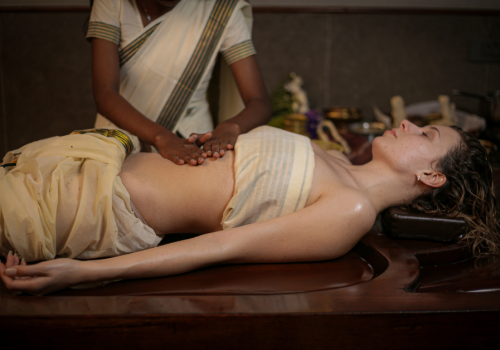
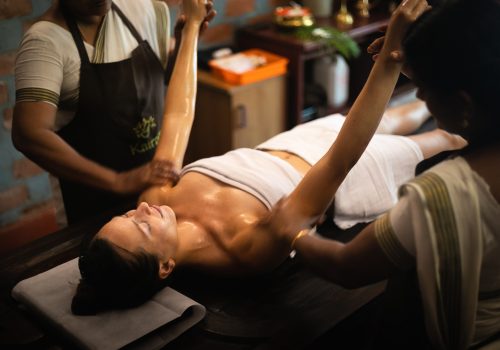
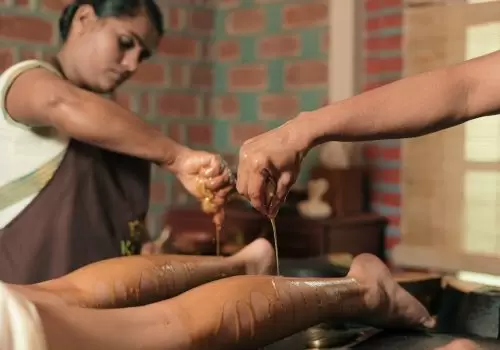
Abhyangam: Ayurvedic Oil Massage
Abhyangam involves massage using oils selected according to traditional Ayurvedic principles.
It is commonly associated with relaxation and physical comfort. However, claims that it corrects hormonal imbalances or improves lymphatic detoxification are not supported by sufficient clinical evidence.
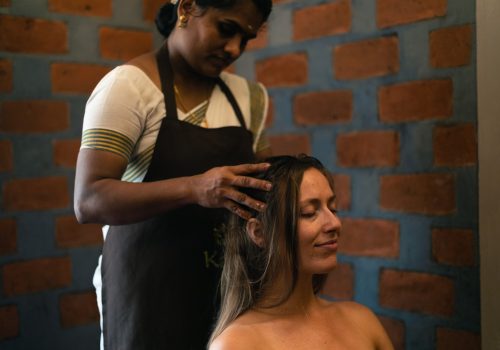
Shirodhara: A Traditional Relaxation Practice
Shirodhara involves the controlled application of a continuous stream of liquid, often oil, over the forehead.
Within Ayurveda, it is traditionally used as part of calming and restorative routines.
Research on its specific clinical benefits remains limited, and it should not be described as a treatment for endocrine disorders.
Udwarthanam: Herbal Powder Massage
Udwarthanam is a traditional massage technique using herbal powders or pastes.
It is included in certain Ayurvedic care programmes, although evidence is insufficient to establish that it improves insulin resistance or directly regulates hormonal function.
Nasya and Basti: Practitioner-Supervised Procedures
Nasya involves the administration of preparations through the nasal passages, while Basti refers to a category of Ayurvedic procedures involving rectal administration.
Both belong to supervised Ayurvedic practice.
They are not general self-care treatments and should only be considered following an appropriate assessment by a qualified practitioner.
Nutrition and Daily Habits Matter Too
Food and routine are important parts of Ayurvedic lifestyle guidance.
Rather than recommending one diet for every woman, Ayurveda traditionally considers constitution, digestion, season and personal circumstances.
A practical approach to everyday wellbeing may include:
- Eating regular, balanced meals with varied vegetables, fruits, whole grains and suitable protein sources.
- Maintaining consistent sleep and waking times.
- Including comfortable physical activity throughout the week.
- Making time for relaxation and stress management.
- Seeking medical advice for persistent or unexplained symptoms.
These habits can support general health, although no single diet or daily routine is proven to correct all hormonal imbalances.
Women’s Wellbeing at Kairali Ayurvedic Healing Village
Located in Palakkad, Kerala, Kairali, The Ayurvedic Healing Village, is an NABH-accredited Ayurvedic hospital offering physician-led traditional care.
Its approach brings together Ayurvedic assessment, dietary guidance, yoga and selected therapies within a structured setting.
For women interested in exploring Ayurveda alongside their existing healthcare, individual consultation is important.
The suitability of any therapy depends on medical history, current symptoms, medications and other personal circumstances.
Kairali’s approach is centred on developing a routine suited to the individual rather than applying the same programme to every woman.
Can Yoga and Ayurveda Restore Hormonal Balance?
The phrase hormonal balance is widely used in wellness discussions, but it can oversimplify how the endocrine system works.
Hormone levels naturally fluctuate throughout life and even during the course of a single day.
Yoga may support stress management, sleep and quality of life. Ayurvedic lifestyle practices may also encourage greater attention to nutrition, rest and daily habits.
However, there is not enough clinical evidence to conclude that Ayurvedic therapies or particular yoga postures can reliably correct endocrine disorders.
Women experiencing persistent menstrual changes, fertility concerns, thyroid symptoms or difficult menopausal symptoms should seek appropriate medical evaluation.
Complementary practices are best considered alongside, rather than instead of, evidence-based healthcare.
A More Individual Approach to Women’s Health
Women’s health needs are not identical at every age or life stage.
A woman navigating menstrual discomfort may have different concerns from someone experiencing perimenopause, disrupted sleep or ongoing fatigue.
Yoga and Ayurveda provide ways to explore movement, relaxation and daily routines within a personalised framework.
Their greatest practical value may be in helping women build sustainable habits while remaining attentive to their medical needs.
For those interested in a supervised Ayurvedic setting, Kairali offers an opportunity to explore traditional practices with qualified practitioners.
Website: www.ktahv.com
Call: +91 9555156156