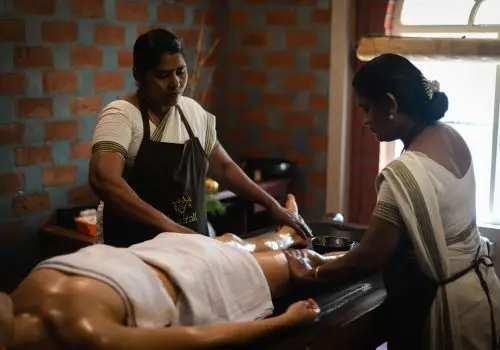


























Travelling alone can be deeply empowering, restorative, and transformative — but safety is a real concern, especially when staying at wellness retreats far from home. At Kairali – The Ayurvedic Healing Village, we welcome many solo women guests, and we believe that safety is part of the sacred trust we share. Below is a guide to what solo women should look for (and ask) when choosing an Ayurvedic retreat, especially around night safety.
Introduction
Wellness travel is about rewiring your body, mind, and energy. But for solo women, the journey must be anchored in trust, transparency, and peace of mind. Nighttime can bring vulnerability, which is why retreats must offer more than just candlelit ambiance — they must provide robust safety protocols. Let’s explore what to expect, what to ask, and how to feel secure on your Ayurvedic stay.
1. Pre‑Stay Communication & Escort Protocols
- Arrival coordination
Before you travel, the retreat should request your arrival details — flight, time, driver name, etc. A reliable retreat will arrange an escort from the airport or train station to the retreat. This escort is not optional — it’s standard for solo women guests. - On‑site escort protocol
Within the retreat, you should always have an escort option when moving between villa and shared facilities after dark (for dinner, evening therapy rooms, etc.). The escort should ideally be a staff member, trained in guest safety protocols, with visibility (e.g. carrying a soft light) and a means of communication (radio, phone). - Escort schedules & records
A good retreat will log escort requests and maintain schedules so that no movement after dark is unsupervised. You might be given a phone number to request an escort at any hour. - Escort for in‑villa movement
Even within private villa grounds, the retreat should have a “villa escort” protocol: a staff member who can walk with you to your villa at night, especially when grounds are large or dimly lit.
2. CCTV Coverage & Surveillance Design
- Comprehensive surveillance
The retreat should maintain 24/7 CCTV coverage in all common areas: lobbies, corridors, pathways, dining pavilions, parking zones, therapy wings, entrances and exits. Each camera should be monitored and recorded securely. - Villa perimeter surveillance
There should be cameras covering villa exteriors, walkways, and entrances (but not interior private zones). This ensures any movement near your villa is monitored. - Access control & monitoring
The system should flag after‑hours activity (for example, if someone enters a guest zone late at night). Guards or staff should review alerts and respond promptly. - Data privacy & transparency
Guests should be assured CCTV footage is for safety only, stored securely, and deleted per policy after a period. The retreat safe for women should communicate this clearly — no covert surveillance of private indoor spaces.
3. Room & Villa Safety Features
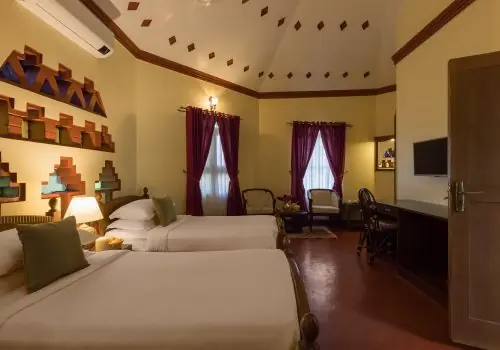
Your villa is your sanctuary — and its design must reflect that.
- Secure door locks
Opt for biometric or electronic locks (key cards, PIN) over simple mechanical locks. Double locking systems (deadbolt + latch) are preferred. - Internal safety latch / bolt
Guests should have the ability to secure their doors from the inside with a safety latch or bolt. - Peep viewer or digital door viewer
A viewer or low-light camera at the door helps confirm who is knocking during late hours. - Intercom / room phones
Each villa should include a direct line to reception, security, or concierge, 24/7. You should not have to go out into hallways to ask for help. - Safe / lockbox
A built-in safe for your valuables is essential (passport, phone, jewelry). The safe should be bolted or discreetly secured. - Window and balcony security
Windows and balcony doors should have locks, grills or restrictors (so they don’t open fully), especially on ground-level or accessible sides. - Night lighting & motion sensors
Well-lit pathways, motion-sensitive lights along walkways, and night lights inside the villa help reduce accidents and deter unauthorized movement. - Emergency lighting & exit plan
In case of power disruption, the villa should have backup lighting and clear escape routes. A laminated map of exits inside the villa is useful.
4. Staffing, Training & On‑Call Readiness
- Security personnel
Trained security staff should be on-site 24/7, with night shift guards who patrol grounds, check villas, and respond quickly to calls. - Staff vetting & background checks
A reputable retreat should perform background checks, identity verifications, and references for all staff who interact with guests — especially those on night shifts or escorts. - Night shift coordination
There should be a night-shift manager (or lead) available to coordinate staff, log incidents, and maintain communication with guests. - Staff awareness & guest familiarity
The staff should greet guests by name, and be familiar with their movements. Unexpected requests or late-hour movement should prompt a check (for example, “Are you okay? Can I escort you?”). - Anonymous check‑in options
Guests should not have to disclose personal itinerary publicly. The retreat must avoid broadcasting guest names across staff areas.
5. Emergency Protocols & Contact Systems
- Local emergency contacts
The retreat should provide you a laminated card or digital file listing: local ambulance, fire, police, nearest hospital, and 24/7 retreat safe for women security line. - Emergency buttons / panic alarm
Villas and key common areas should be equipped with panic buttons (physical button, app, or room phone feature) that immediately alert security with your location. - Medical backup & paramedic tie-ins
The retreat should have a basic medical kit and agreement with a nearby hospital or clinic. If a guest has a medical emergency, staff should be trained to respond until paramedics arrive. - Incident logs & response transparency
If any security or safety incident occurs, there should be transparent protocols: guest is informed, logged, and steps taken. Reassurance of response plans is a trust builder.
6. Guest Safety Best Practices (Your Role)
- Share your itinerary & emergency contact
A trusted person back home should have your travel details. Provide retreat staff with a contact who can be reached in emergencies (parent, friend, etc.). - Lock your villa at all times
Even when stepping out for brief moments, close and double-lock each door and window. - Use Staff services after dark
Never walk alone at night, even within retreat grounds. Accept staff offers. - Check staff IDs & use official routes
If someone claims to be staff, ask for identification. Use lit, designated walkways only. - Avoid disclosing travel alone openly
It’s fine to be friendly, but unnecessary public announcements or social media posts revealing solo status can invite risk. - Stay alert to surroundings
Know your villa location relative to exits; avoid exploring unknown paths alone after dark. - Carry a small safety kit
A personal alarm, flashlight, and phone charger or portable battery can help in emergencies.
Conclusion: Night Peace as a Pillar of Wellness
True wellness isn’t just massages and detoxes — it’s about feeling safe, valued, and seen from dusk to dawn. When booking your retreat safe for women, don’t hesitate to ask these questions. At Kairali, we uphold night safety with dignity, transparency, and respect — because peace of mind is part of your healing.
Book your stay now: www.ktahv.com