






























A medicinal plant does not begin its life as an ingredient on a manufacturing line.
It begins in soil.
Long before an Ayurvedic herb is dried, processed or incorporated into a formulation, decisions have already been made about where it is grown, how the soil is managed, what agricultural inputs are used and when the plant is harvested.
That makes sourcing an important part of Ayurvedic quality control.
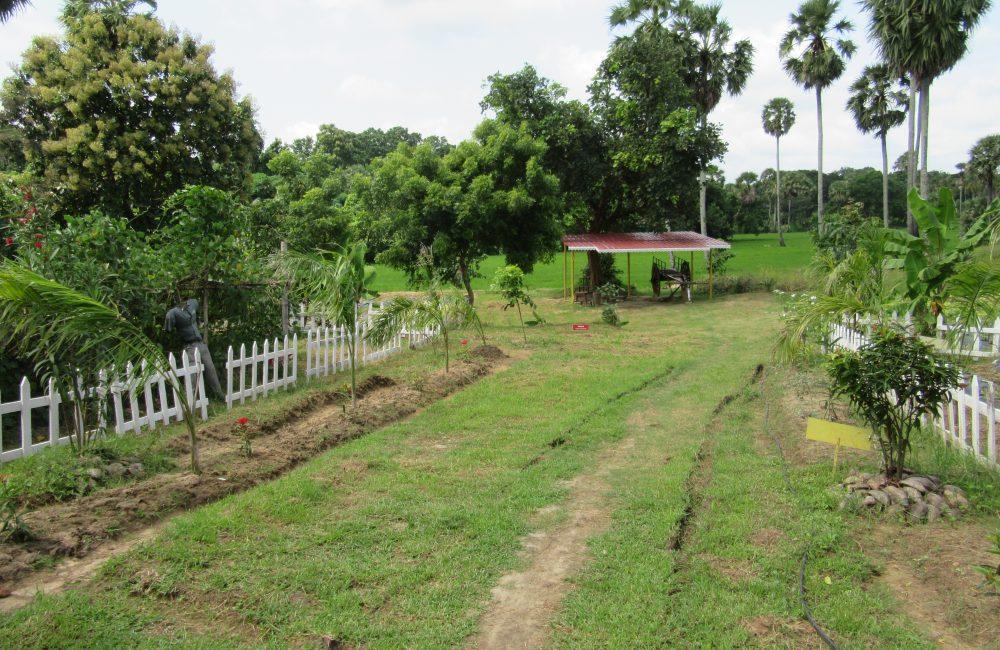
At Kairali – The Ayurvedic Healing Village in Palakkad, the organic farm and herbal gardens provide a visible example of this relationship between cultivation and Ayurvedic practice. Medicinal herbs grow alongside fruits and vegetables, with produce from the property used within the Village’s food and Ayurvedic activities.
But there is an important distinction to make: growing herbs carefully is not, by itself, proof of the quality or effectiveness of a finished Ayurvedic product.
Product quality is a chain. Cultivation is where that chain begins.
Why Ayurvedic herb sourcing matters
When people compare herbal products, they often look first at the ingredient name.
Ashwagandha is Ashwagandha. Brahmi is Brahmi.
Botanical identity, however, is only the beginning.
The characteristics of plant material can be influenced by growing conditions, soil, climate, maturity at harvest, storage and processing. For Ayurvedic manufacturers, this makes raw-material selection an important quality consideration rather than simply a procurement exercise.
Ayurveda has its own long-standing interest in the origin and condition of medicinal substances. The broader concept of deśa (place or habitat), for example, reflects the importance the system gives to environment and locality when considering plants and their use.
Modern quality control approaches the question differently, examining botanical identity, contamination, processing and manufacturing standards.
These two perspectives do not need to be treated as competing ideas. Both make the same practical point: what happens before an herb reaches the formulation stage matters.
Inside Kairali’s organic farm and herbal gardens
Kairali, The Ayurvedic Healing Village maintains an organic farm at its Palakkad property. According to Kairali’s current farm information, the cultivation system excludes synthetic pesticides, synthetic fertilisers, genetically modified organisms and growth hormones.
The property also describes its farm as supporting soil fertility and biological diversity.
Visitors can see fruits, vegetables and medicinal plants growing within the same environment in which Ayurvedic programmes are delivered.
That creates an unusually direct connection between the plant, the kitchen and the clinical setting.
The value of the farm is therefore not merely visual. It provides an opportunity to understand that the herbs encountered in Ayurveda originate as agricultural materials before they become powders, oils, decoctions or manufactured formulations.
Organic cultivation is one part of quality
“Organic” can easily become a shorthand for “better medicine.”
That is too simple.
Avoiding certain synthetic agricultural inputs can be an important sourcing choice, but organic cultivation does not by itself establish the purity, potency, safety or clinical effectiveness of an Ayurvedic formulation.
Several later stages matter as well.
The correct botanical material must be identified. Raw ingredients need to be handled and stored appropriately. Manufacturing has to be controlled. Finished formulations require appropriate quality and safety standards.
This distinction is important because Ayurveda increasingly operates in an international market where consumers are rightly asking harder questions about herbal-product quality.
Where was the raw material obtained?
How was it identified?
How was it processed?
What standards apply at the manufacturing facility?
Those questions are more useful than simply looking for words such as “natural” on a label.
From soil to manufacturing
Kairali Ayurvedic Group operates Kairali Ayurvedic Products Pvt. Ltd. (KAPPL), its Ayurvedic pharmaceutical manufacturing division in Tamil Nadu. KAPPL’s manufacturing operation is WHO-GMP-certified.
That manufacturing standard represents a different part of the quality chain from the Palakkad farm.
The farm concerns cultivation and access to plant material. Manufacturing controls concern what happens when raw materials enter a pharmaceutical production environment.
Keeping these stages distinct makes the quality story stronger rather than weaker.
A credible Ayurvedic product should not depend on a romantic image of herbs growing in Kerala. It should be possible to ask what happens at each stage between cultivation and the finished formulation.
Season and harvest: an area that requires precision
Ayurvedic literature pays considerable attention to the condition in which plant material is collected and prepared.
This is sometimes translated into broad marketing claims such as “harvested at the perfect time for maximum healing potency.”
Such language sounds convincing but usually tells the reader very little.
Harvest timing can matter because different plant parts change as a plant develops. Roots, leaves, bark, fruits and flowers may be collected at different stages depending on the species and intended preparation.
But those decisions are botanical and technical questions. They should be documented for the particular raw material rather than turned into universal promises about “maximum potency.”
This is especially important for manufacturers. The stronger claim is not that every herb is somehow at its most powerful; it is that sourcing and processing standards are defined, controlled and repeatable.
Why the soil still matters
Soil is one of the least glamorous parts of an Ayurvedic product story, and arguably one of the most important.
It influences how plants grow and determines the agricultural environment in which medicinal raw materials develop.
At Kairali’s Palakkad farm, organic cultivation is described as part of a broader effort to maintain soil fertility and biological diversity.
From an Ayurvedic perspective, this also makes the farm useful as an educational space.
A visitor looking at a medicinal garden is confronted with something that packaged wellness products can make easy to forget: herbal medicine is dependent on agriculture.
Before there is a capsule, oil or cūrṇa (powdered herbal preparation), there is a plant that had to be identified, cultivated or collected, harvested and handled.
Medicinal plants are not interchangeable commodities
Another useful lesson from a herbal garden is variety.
Ayurveda uses roots, leaves, flowers, fruits, bark and other plant materials, each requiring different forms of handling and preparation.
That makes it difficult to speak meaningfully about “herbs” as if they are a single category.
A root crop has different agricultural requirements from an aquatic or moisture-loving plant. A leaf intended for processing raises different questions from a mature root. Some materials may be cultivated; others may enter manufacturing through approved external sourcing channels.
The correct question is therefore not simply, “Is this Ayurvedic product organic?”
A more rigorous set of questions would include: What plant is being used? Which part? How was it identified? Where was the material sourced? What controls followed after harvest?
That is the level at which sourcing begins to become a quality issue.
Farm-to-formulation should not become a marketing shortcut
There is an appealing simplicity to the phrase “farm to formulation.”
It suggests complete traceability from a green field in Kerala to a finished bottle.
Unless that supply chain has been documented for a particular product, however, the phrase can promise more than it proves.
Kairali’s organic farm and herbal gardens are better understood as one part of a larger quality system.
They demonstrate the agricultural foundations of Ayurveda and provide medicinal plants for use within the Healing Village. Separately, KAPPL operates within WHO-GMP-certified pharmaceutical manufacturing standards.
Those are two meaningful facts.
They do not require an exaggerated claim connecting every plant in the garden to every product on the shelf.
What better Ayurvedic sourcing looks like
For consumers, the lesson is straightforward.
Do not judge an Ayurvedic formulation only by the herb named on the front of the package.
Look further upstream and downstream.
Consider where the raw material comes from, how clearly the botanical ingredient is identified, what manufacturing standards apply and whether the company is transparent about the limits of its claims.
The farm matters because product quality begins before manufacturing.
The factory matters because careful cultivation can still be undermined by poor handling or processing.
And neither substitutes for evidence about what a finished formulation can actually do.
At Kairali’s Palakkad property, walking through the organic farm offers a useful reminder of that sequence. Ayurveda may eventually reach the consumer as an oil, powder, tablet or decoction.
But its material story begins much earlier, with a plant in the ground.
Website: www.ktahv.com
Call: +91-9555156156