











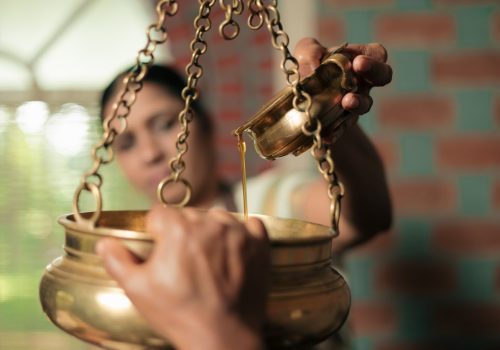














Basti is one of the principal procedures used in Panchakarma. It involves the administration of a physician-selected oil or herbal preparation through the rectal route.
Because the procedure is used across different stages of life, many people ask a simple question: is there an age limit for Basti?
There is no single answer that applies to everyone.
Age is important, but it is only one part of the assessment. An Ayurvedic physician must also consider the person’s strength, digestion, bowel habits, medical history, medication use and reason for treatment.
A healthy older adult may be more suitable for a carefully planned Basti than a much younger person who is acutely unwell or physically weak.
What is Basti therapy?
In classical Ayurveda, Basti is mainly associated with the management of aggravated vāta doṣa.
The treatment may use an oil-based preparation or a physician-formulated decoction. The choice depends on the individual and the purpose of the wider treatment plan.
Basti is not the same as a routine enema. It forms part of a structured Ayurvedic approach and should only be carried out under qualified supervision.
The treatment is selected after consultation, not simply according to age.
Can children undergo Basti?
Basti may be considered for children in selected situations, but it is not a routine treatment for every child.
A physician must first assess the child’s age, strength, digestion and overall health. The reason for considering the procedure must also be clear.
When Basti is used in paediatric care, the preparation and method are adjusted carefully. It should never be attempted at home or based on general online instructions.
Parents should also inform the practitioner about any existing condition, medication or recent illness.
What about adolescents?
Adolescence brings rapid physical and hormonal changes. Digestive habits, sleep, stress and daily routine may also shift during this stage.
Basti may be considered in some cases, but it should not be presented as a general solution for acne, stress, weight changes or hormonal concerns.
These issues can have many causes. They require proper assessment.
An Ayurvedic physician may recommend Basti only when it is appropriate within the person’s wider treatment plan.
Is Basti more suitable for adults?
Adults are often more physically able to undergo Panchakarma procedures. Even then, suitability cannot be assumed.
A physician will consider:
- General strength
- Digestive capacity
- Bowel function
- Current symptoms
- Existing medical conditions
- Medication use
- Pregnancy status
- Recent illness or surgery
The intensity and type of treatment may also vary.
Basti is therefore not automatically suitable simply because someone falls within a certain age range.
How is Basti approached in later life?
Older adults may be considered for Basti when a physician believes it is appropriate.
However, treatment planning usually becomes more cautious with age. Physical strength, hydration, mobility, digestion and medication use require particular attention.
A gentler approach may be selected for some older adults. For others, Basti may not be suitable at all.
The aim is not to force an intensive cleansing procedure on an ageing body. It is to select a treatment that the person can tolerate safely.
This is why chronological age alone is a poor guide.
What matters more than age?
Several factors may be more important than the number of years a person has lived.
Physical strength
A person must be able to tolerate the procedure. Severe weakness, fatigue or recovery from illness may affect suitability.
Digestive condition
The physician considers appetite, digestion, bowel regularity and abdominal symptoms before planning treatment.
Current health
Acute illness, fever, active bleeding and some gastrointestinal or cardiovascular conditions may make Basti inappropriate.
Medication use
Prescription medicines and ongoing medical treatment must be disclosed before any Panchakarma procedure.
The purpose of treatment
Basti should be recommended for a clear clinical reason. It should not be offered as a generic treatment for every age group.
When may Basti be avoided?
Basti is not suitable for everyone.
It may be avoided or postponed during:
- Pregnancy
- Acute illness
- Severe weakness
- Active rectal bleeding
- Certain gastrointestinal conditions
- Some cardiovascular conditions
- Recovery from surgery
- Situations where the physician considers the person unable to tolerate the procedure
This list is not complete. Individual assessment remains essential.
How Kairali approaches age and Basti therapy
At Kairali, The Ayurvedic Healing Village, Basti is not prescribed according to a standard age chart.
KTAHV is an NABH-accredited Ayurvedic hospital. Qualified Ayurvedic physicians assess each person before recommending a Panchakarma procedure.
The consultation considers age, but it also looks at the person’s strength, digestion, bowel habits, sleep, medical history and current health.
Where Basti is considered appropriate, the physician selects the type, timing and broader treatment sequence.
For older adults, children and people with reduced strength, the plan may need greater modification and monitoring.
The decision is based on suitability, not on the assumption that Basti is beneficial for everyone.
The clear answer
Is there an age limit for Basti therapy?
There is no universal age limit that can be applied safely to every person.
Children, adults and older people may all be considered for Basti in selected circumstances. But age alone does not decide whether the treatment is suitable.
The more important question is whether a qualified Ayurvedic physician has assessed the person and determined that the procedure is appropriate.
Basti is a clinical Ayurvedic therapy. It should be individualised, supervised and explained clearly before treatment begins.
Website: www.ktahv.com
Call: +91-9555156156