





























Ayurveda evaluates foods by their rasa (primary taste), guna (qualities such as heavy/light, oily/dry), virya (heating/cooling action), and vipaka (post-digestive effect). This four-part lens predicts how food interacts with Vata, Pitta, and Kapha and your agni.
- Rasa (taste): Sweet, sour, salty, pungent, bitter, astringent. Dairy tends to be dominantly madhura (sweet).
- Guna (qualities): Many dairy items are snigdha (unctuous/oily) and guru (heavy) by nature.
- Virya (potency): Milk is cooling, ghee is mildly heating in action, and paneer varies with preparation (neutral to mildly cooling).
- Vipaka (post-digestive effect): Often sweet, which can be building (anabolic) when digestion is adequate—but clogging when weak.
Implication: Dairy can be a rasayana (rejuvenative) when matched to person, season, and meal-timing. The same food becomes problematic when agni is low or when combined with incompatible items.
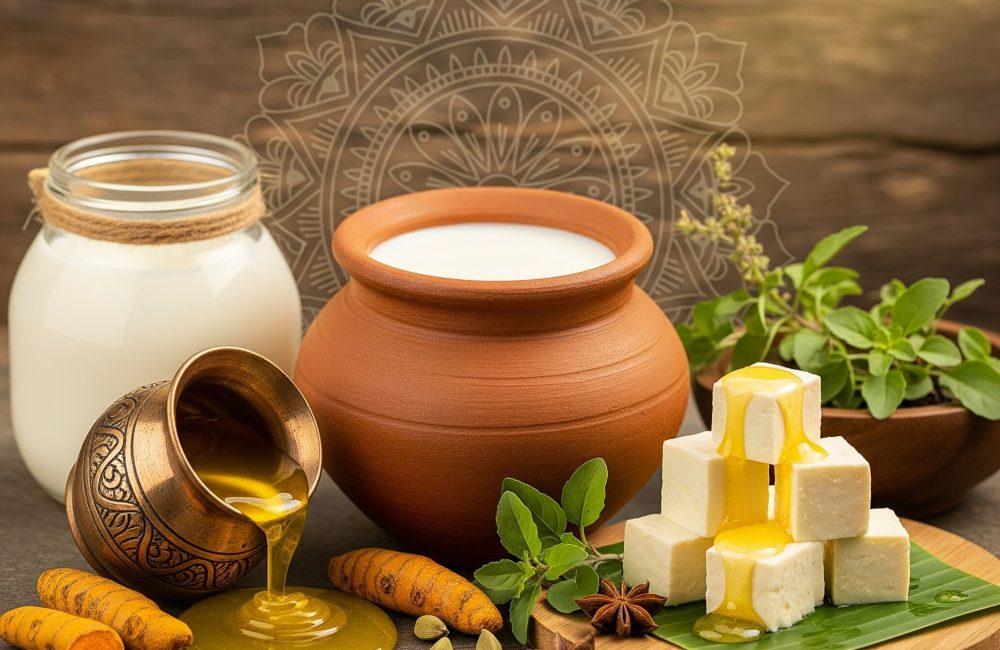
Milk (ksheera): when it heals, when it harms
Classical profile
- Rasa: Sweet
- Guna: Heavy, unctuous
- Virya: Cooling
- Vipaka: Sweet
Potential benefits (with the right context)
- Builds ojas (vital essence) and supports tissue nourishment in depletion states.
- Calms Vata when warm, spiced (e.g., ginger/cardamom) and taken alone.
- Supports mild Pitta irritation when used cooled, diluted, or infused with cooling herbs (as clinically appropriate).
When to avoid or modify
- Low agni/Kapha aggravation: heaviness, sluggishness, frequent mucus, post-meal fog.
- Acute colds/sinus congestion or recurrent respiratory susceptibility.
- Incompatible mixes (see viruddhahara below), e.g., milk with sour fruits, fish, or very salty/spicy meals.
- Night-time for slow digesters; prefer early evening or daytime and keep the portion modest.
Preparation that helps
- Always boil; sip warm, not straight-from-fridge.
- Add tiny pinches of dry ginger, cardamom, turmeric, or black pepper to support digestion.
- Prefer standalone—not as dessert immediately after a heavy, mixed meal.
Ghee (ghrita): the intelligent fat
Classical profile
- Rasa: Sweet
- Guna: Light (compared to butter), unctuous
- Virya: Mildly heating
- Vipaka: Sweet
Potential benefits
- Aids assimilation of fat-soluble actives from herbs/spices.
- Lubricates tissues and supports Vata balance.
- Used in therapeutic contexts (under physician guidance) for cognition, dryness, and as a vehicle for medicated ghee.
When to limit
- Kapha-predominant states: weight stagnation, oily skin with congestion, heaviness.
- Pitta with significant heat/inflammation—use sparingly and prefer cooling accompaniments.
Usage principles
- Think teaspoons, not tablespoons unless prescribed.
- Temper spices in a small amount of ghee to make meals digestible without excess oil.
- Pair with warm, simply cooked grains/vegetables; avoid deep-frying and heavy multi-fat combinations.
Paneer (chhena): nourishing—yet tricky
Classical reading (by preparation)
- Fresh, soft paneer: Sweet taste, heavy, cooling; can increase Kapha if digestion is weak.
- Spiced, lightly sautéed paneer: Easier to digest; warming spices (jeera, ginger, black pepper) counter heaviness.
Potential benefits
- Protein-dense option for Vata depletion or active individuals when digestion is strong.
- Can be satisfying at lunch, the peak agni window (~12–2 pm).
When to avoid or modify
- Dinner for slow digesters—can feel heavy or disturb sleep.
- Pitta with acne/heat may prefer lighter proteins or smaller portions, cooked with cooling herbs and bitter greens.
- Kapha with congestion, post-meal lethargy, or water retention—limit frequency and portion size.
Paneer the Ayurvedic way
- Cook with digestive spices (jeera, ajwain, ginger, black pepper).
- Combine with bitter/astringent vegetables (spinach, methi, ridge gourd) to offset heaviness.
- Prefer grilled/sauteed over deep-fried or overly creamy gravies.
Viruddhahara (incompatible food combinations) to watch
- Milk + sour fruits (e.g., pineapple, citrus, berries).
- Milk + fish/meat.
- Milk with heavy salt/fermented dishes.
- Paneer in very creamy, overly sour gravies at night.
When in doubt, keep dairy simple, warm, spiced, and not mixed with antagonistic tastes.
Seasonal guidance (Kerala context)
Grishma (hot/dry months): Cooling potency of milk may soothe Pitta if digestion is steady—prefer diluted, spiced milk, and light paneer at lunch only.
Varsha (monsoon): Agni tends to dip; go lighter—tiny ghee for spice tempering, minimal paneer, favor warm broths and cooked vegetables.
Hemanta/Shishira (cool months): Stronger appetite; ghee in moderation and spiced paneer at lunch can be sustaining for Vata types.
Women’s health focus: dairy through life stages
Teens/early 20s: Watch for acne/heat signs—cooling herbs and smaller portions; consider fermented alternatives if sensitive.
Fertility/postpartum: Warm, spiced milk and modest ghee can support recovery when digestion is good; avoid heavy night mixes.
Perimenopause: Prioritize agni—tiny ghee with spices to maintain bowel regularity; paneer paired with greens at lunch; adjust if there’s heat or congestion.
Planning a natural healing retreat for women’s health in Kerala? Our physicians at Kairali Ayurvedic Health Village tailor dairy guidance to cycle phase, symptoms, and lab context.
On-property story: how Kairali personalizes dairy
Anita, 39, arrived for a 10‑day Ayurvedic wellness getaway with stress, late dinners, and bloating. Her plan: no paneer at night, small cardamom milk only on yoga days, and teaspoon ghee for spice tempering at lunch. By Day 7: lighter evenings, better sleep. Her discharge plan reintroduced paneer twice weekly at lunch, paired with bitter greens.
Results vary; personalization and consistency are key.
The Kairali way: what you can expect
- BAMS physician consult on Day 1 to check digestion, allergies, and current state.
- Menu personalization by our culinary team to align with therapy goals.
- Cooking classes on sattvic dairy prep and spice pairing.
- Discharge plan with portion guidance and seasonal swaps.
Choose an Ayurvedic retreat Kerala at Kairali – The Ayurvedic Health Village for a setting where cuisine, therapies, yoga, and rest work together.
Book free doctor consultation now or you can fill out the dosha form.
Website: www.ktahv.com
Call: +91-9555156156
FAQ
Ayurveda classifies dairy based on qualities such as heaviness, digestibility, energetic effect, and impact on the doshas.
Milk is generally considered nourishing and grounding
Ghee is valued for supporting digestion and tissue nourishment
Paneer is considered heavier and more Kapha-increasing when consumed excessively
Their effects may vary depending on preparation method, quantity, season, and individual constitution.
No. Ayurveda believes dairy tolerance differs from person to person based on:
Dosha balance
Digestive strength (Agni)
Age
Lifestyle
Seasonal factors
Some individuals may digest dairy comfortably, while others may experience bloating, mucus buildup, heaviness, or sluggish digestion.
Ayurveda may advise limiting or avoiding certain dairy products during:
Poor digestion or low Agni
Congestion or excess mucus
Kapha imbalance
Certain skin conditions
Seasonal allergies
Heavy nighttime meals
Improper dairy combinations and excessive intake are also generally discouraged.
Ghee is traditionally viewed as easier to digest compared to many other dairy products when used moderately. Ayurveda values ghee for its potential to:
Support digestion
Nourish tissues
Lubricate the body
Balance Vata and Pitta doshas
However, moderation remains important, especially for individuals with weak digestion or metabolic concerns.
Ayurveda generally recommends:
Consuming fresh and high-quality dairy
Eating dairy according to digestive strength
Avoiding incompatible food combinations
Using digestive spices like turmeric, ginger, or cardamom
Preferring warm preparations over cold dairy products
Personalized dietary guidance is often recommended to determine which dairy products best suit an individual’s constitution and lifestyle.