































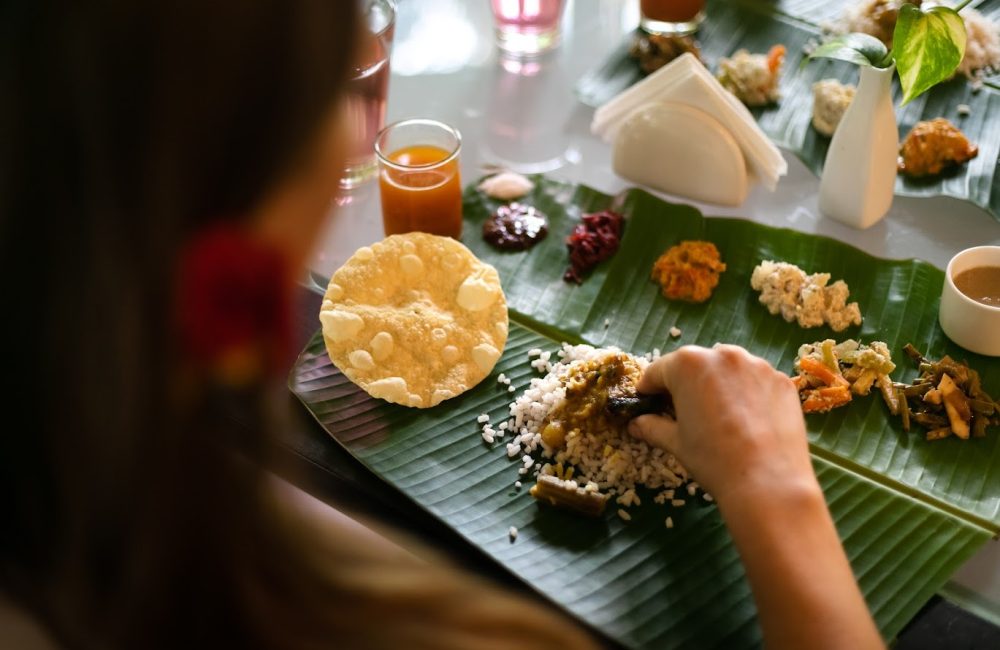

There is no single Ayurvedic rule stating that everyone should eat two meals, three meals, or a fixed number of meals each day.
Meal frequency in Ayurveda is determined by the individual: their appetite, digestive capacity, constitution, age, daily activity, season and current state of health. For many people, three structured meals may be appropriate. Others may feel better with two substantial meals. What matters most is whether the previous meal has been properly digested before the next one is eaten.
This distinction is important because discussions about Ayurvedic eating are often reduced to simple formulas. “Eat only twice a day” can sound authoritative, but it ignores the central principle of individual assessment. Ayurveda is less concerned with enforcing a universal schedule than with understanding how a person digests, responds to hunger and maintains energy through the day.
The Ayurvedic focus is digestion, not meal counting
Ayurveda places considerable emphasis on agni, commonly translated as digestive capacity or digestive fire. The term refers not only to the physical breakdown of food, but also to the body’s ability to assimilate what has been eaten and process it without discomfort or residue.
A person with steady digestion may experience clear hunger at predictable times, eat an appropriate quantity and feel comfortable after the meal. Someone whose digestion is irregular may alternate between strong hunger, bloating, heaviness, acidity, fatigue or a lack of appetite.
From an Ayurvedic perspective, eating again before the previous meal has been adequately digested can disturb this process. Frequent grazing, habitual snacking or eating simply because food is available may place repeated demands on digestion without allowing one digestive cycle to be completed.
Ayurveda describes the incompletely processed residue associated with disturbed digestion as āma. This concept should not be interpreted as a literal modern medical diagnosis or equated casually with “toxins”. It is an Ayurvedic framework used to describe the consequences of incomplete digestion and impaired metabolic processing.
The practical principle is straightforward: meals should be spaced sufficiently for genuine hunger to return, rather than being governed only by habit, boredom or a rigid clock.
Are two or three meals better?
For many adults, two or three well-composed meals a day may provide a workable structure. Three meals can support people who have regular energy demands, active schedules or a constitution that responds poorly to long gaps without food. Two meals may suit some people with slower digestion, lower appetite or a tendency to feel heavy after eating.
Neither pattern is automatically superior.
The more useful questions are:
- Do you feel clear, natural hunger before eating?
- Has the heaviness of the previous meal passed?
- Is your appetite stable or unpredictable?
- Do you feel energised after meals, or sleepy and uncomfortable?
- Are you eating because you are hungry, or because it is a customary time?
- Does the meal pattern remain suitable during changes in weather, activity or health?
These observations provide more meaningful information than following a fixed meal count without reference to the individual.
Why Ayurveda is cautious about constant snacking
Modern eating environments make it easy to consume something every few hours. Coffee, packaged snacks, fruit, health bars and sweetened drinks may not feel like full meals, but they still require digestion.
Ayurveda generally encourages clear spaces between meals because uninterrupted eating can make it difficult to recognise genuine appetite. A person may gradually lose the distinction between hunger, craving, thirst, fatigue and emotional comfort-seeking.
This does not mean that every snack is inappropriate. Children, older adults, pregnant people, those recovering from illness, individuals with specific medical needs and people taking certain medications may require a different pattern. Meal frequency should never be reduced abruptly when there are clinical reasons for eating regularly.
The Ayurvedic objection is not to the existence of a snack. It is to automatic, repeated eating that disregards digestive signals.
When a snack is appropriate, its quantity, timing and digestibility matter. It should not become a second meal inserted between two already substantial meals.
Constitution influences the pattern, but not in isolation
Ayurvedic constitutions are commonly discussed through the three doṣas, or functional principles: vāta, pitta and kapha. These categories may help a practitioner understand appetite and digestion, but they should not be used as rigid diet labels.
People with a strong vāta pattern may experience variable hunger, irregular routines or discomfort when meals are delayed. Regular meal timings can therefore be stabilising. This does not mean that every person identified as vāta requires frequent snacks.
People with a pronounced pitta pattern may experience a strong, sharp appetite and may become uncomfortable or irritable when meals are missed. Consistent meals can be helpful, although portion size and food selection still need to be considered.
People with a kapha tendency may have slower digestion, less pronounced hunger or a greater tendency toward heaviness after eating. Some may feel more comfortable with fewer, lighter meals. This should not be turned into a universal instruction that every kapha person must eat only twice a day.
Constitution is only one part of the assessment. A practitioner will also consider age, strength, occupation, climate, sleep, medications, health conditions and the current imbalance, or vikṛti, rather than relying on a dosha questionnaire alone.
Why lunch is often the principal meal
Ayurvedic daily routines generally favour eating the most substantial meal around the middle of the day. This corresponds with the period when appetite and digestive capacity are often strongest.
A larger lunch may also be more practical than a heavy evening meal. Food eaten late at night must be processed during a period when the body is preparing for sleep and activity is reduced. For some people, late or substantial dinners are associated with heaviness, disturbed sleep, reflux or reduced appetite the following morning.
An earlier, lighter dinner gives the body more time to digest before sleep. “Light”, however, does not mean nutritionally inadequate. The meal should still be satisfying and appropriate for the person’s needs.
Breakfast is similarly individual. Some people wake with a clear appetite and benefit from a nourishing morning meal. Others have little morning hunger and may prefer something modest. Ayurveda does not require a heavy breakfast when appetite is absent, nor does it support ignoring persistent morning hunger simply to follow a fasting trend.
How meals are approached at Kairali, The Ayurvedic Healing Village
At Kairali – The Ayurvedic Healing Village in Palakkad, guests are served breakfast, lunch and dinner as part of the daily residential routine.
Meals are prepared according to sattvic principles. Sāttvika food, in this context, refers to fresh, balanced preparations intended to support clarity, moderation and ease of digestion. The menu uses organic ingredients and is planned as part of the wider physician-guided residential programme.
Breakfast is generally kept simple and digestible. Lunch is the principal meal, while dinner is served lighter than lunch. The schedule creates defined meal periods rather than encouraging continuous eating through the day.
This structure is not intended to prove that three meals are correct for every person. It provides a stable baseline within a supervised setting. Individual adjustments may be made according to a guest’s consultation, programme, appetite, digestive response and health requirements.
The food offered during an Ayurvedic residential stay should also be understood as part of the clinical environment. It is not simply a generic “wellness menu”. The physician’s assessment, the timing of treatments, the person’s digestive state and the purpose of the programme may all influence what is served.
The best meal pattern is the one you can digest well
Ayurveda’s answer to the question “How many meals should I eat?” is therefore conditional.
For many people, three regular meals provide stability. For others, two meals may be sufficient. Some individuals may require an additional small meal or snack because of age, activity, medication, pregnancy, recovery or a specific health condition.
The most important signs are not the number on the schedule, but the quality of digestion: clear hunger, comfortable elimination, stable energy, an absence of persistent heaviness and the ability to finish one meal before beginning the next digestive cycle.
Sudden fasting, prolonged meal restriction or major dietary changes should not be undertaken solely on the basis of a dosha type or an article online. Anyone with a diagnosed medical condition, a history of disordered eating, pregnancy, low body weight, blood-sugar instability or regular medication use should seek appropriate clinical guidance.
To understand which meal pattern is suitable for your constitution and current health, speak with a qualified Kairali Ayurvedic physician.
To learn more about physician-guided residential care, enquire about programmes at Kairali – The Ayurvedic Healing Village.
Website: www.ktahv.com
Call: +91-9555156156