





























There is a difference between visiting a wellness resort and spending a few days in a place where the entire routine is organised around Ayurveda. At Kairali, The Ayurvedic Healing Village in Palakkad, that difference becomes apparent quite early. The experience is not limited to a treatment room or a particular therapy. The surroundings, the meals, the daily schedule, the physician consultation and even the quieter pace of the day become part of the stay.
Set amid the green landscape of Kerala, Kairali is an NABH-accredited Ayurvedic hospital-resort where residential programmes are structured around physician-led Ayurvedic care. The original account of a three-day stay begins with the journey itself: an evening drive towards Palakkad after rainfall, with the sound of frogs and crickets gradually replacing the noise of the city. By the time the guest reaches the property, the change in pace has already begun.
The setting contributes strongly to that first impression. Trees, dense foliage, pathways and water features surround the cottages, while the architecture uses natural materials and a restrained design language. It creates a very different atmosphere from the polished uniformity of a conventional resort. The effect is not that nature itself becomes a treatment, but that the environment makes it easier to slow down and follow a more structured routine.
The experience begins with a physician, not a treatment menu
One of the most important parts of an Ayurvedic stay is also one of the least dramatic: the consultation.
The morning after arrival began with yoga, followed by breakfast and a consultation with an Ayurvedic physician. Rather than simply choosing a therapy based on preference, the guests were introduced to the Ayurvedic understanding of their constitution and current state before their treatment schedule was followed.
This is an important distinction. In a physician-led Ayurvedic setting, therapies are intended to follow assessment. Ayurveda traditionally considers factors such as constitution, digestion, current imbalance, lifestyle and other individual characteristics before deciding what may be appropriate.
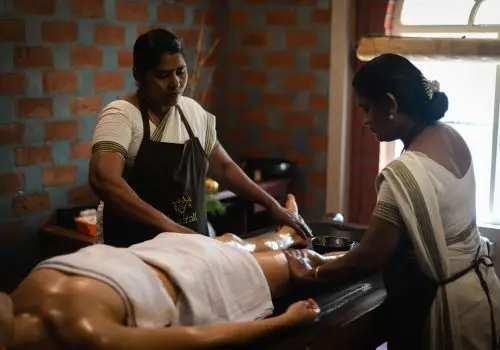
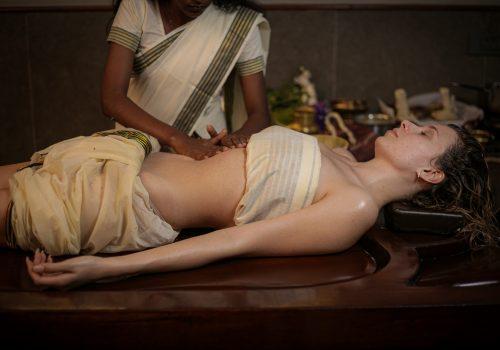
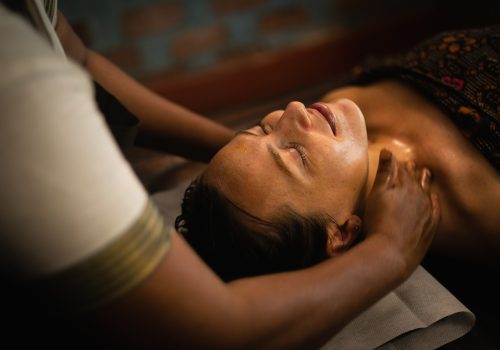
During the three-day stay, the treatments experienced included Abhyanga, Shirodhara and Kizhi. Abhyanga involves the application and massage of Ayurvedic oils, while Shirodhara is traditionally performed by allowing a controlled stream of liquid, often oil, to flow over the forehead. Kizhi refers to therapies that use warmed herbal or other prescribed materials bundled in cloth and applied by trained practitioners.
For the guest, the immediate experience was one of relaxation. But within Ayurveda, these therapies are more than spa treatments chosen for how they feel. They sit within a larger programme and are selected in relation to the individual.
Food is part of the same philosophy
The food at Kairali was another memorable part of the stay. Meals were vegetarian and adjusted according to the recommendations of the physicians, while vegetables grown on the property were also used in the kitchen.
This reflects an important principle in Ayurvedic dietary thinking: food is not considered healthy simply because an ingredient carries that label. Ayurveda asks whether the food is suitable for the person eating it, whether it is easy for them to digest, how it has been prepared and how it fits within the season and the rest of the day’s routine.
The meals described during the stay were simple and familiar rather than elaborate. Breakfast included fresh fruit, juice and uttapam, while meals throughout the day were designed to fit the wider programme. Pathimugam, the characteristic pink-coloured drinking water commonly served in parts of Kerala, accompanied the meals as well.
This is perhaps one of the more practical ways to understand Ayurvedic food. It does not necessarily require exotic ingredients or highly restrictive menus. Often, the emphasis is on preparation, timing, balance and digestibility.
The routine may matter as much as the individual therapies
Over the following days, a rhythm began to develop. Mornings started with yoga. Meals happened at regular times. Treatments followed the physician-led schedule, and meditation became part of the evening.
None of these activities is unusual on its own. What changes the experience is that they are placed together within a consistent daily structure.
In ordinary life, health routines often have to fit around everything else. Meals are delayed because of meetings, sleep is shortened by work or travel, and exercise is fitted into whichever part of the day remains free. During a residential Ayurvedic programme, that order is temporarily reversed. The routine itself becomes the priority.
This is one reason a short stay can feel noticeably different from everyday life. There is less negotiation around when to eat, when to rest or when to move. The schedule has already created space for those things.
The natural surroundings support that slower rhythm as well. Walking through the property, spending time away from traffic and screens, and having fewer competing demands on the day can make rest feel less like something that has to be deliberately scheduled.
Ayurveda beyond the treatment room
For someone encountering Ayurveda for the first time, it is easy to focus on the therapies with unfamiliar names. Shirodhara is visually memorable. Abhyanga is immediately associated with Ayurvedic oil treatments. Yoga and meditation are familiar elements of wellness travel.
Yet the larger experience is found in the way these elements are connected.
The consultation informs the programme. The programme determines the rhythm of the day. Food is considered alongside treatment rather than separately from it. The surroundings create space for rest, while yoga and meditation give the day a predictable beginning and end.
That is what makes an Ayurvedic stay different from simply booking several Ayurvedic treatments at a resort.
The three-day experience at Kairali – The Ayurvedic Healing Village was not defined by a single therapy or moment. It was defined by the cumulative effect of doing ordinary things differently: waking earlier, eating at regular times, following a physician-led schedule, spending more time outdoors and allowing the day to move at a quieter pace.
Sometimes, that change in rhythm is the most noticeable part of the experience.
And it may also be the part that stays with you after you leave.