
















Travelling alone to Kerala for an Ayurveda retreat can sound appealing and slightly intimidating at the same time.
The appeal is easy to understand: a structured break from ordinary routines, physician-led Ayurvedic care, quiet surroundings and time set aside for rest. The hesitation is equally understandable. What happens during the treatments? Will you feel comfortable with the therapists? Is Panchakarma too intensive for a first visit? What happens if you are menstruating? And how much of the experience is genuinely clinical Ayurveda rather than wellness marketing?
For a woman travelling alone, these are not minor details. They should influence how you choose a retreat.
The useful distinction is not between Kerala is safe and Kerala is unsafe. Nor is it between Ayurveda is gentle and Ayurveda is intense. The reality is more practical: the quality of a solo Ayurveda stay depends heavily on the standards of the facility, the level of medical supervision and how clearly the retreat handles privacy, consent and communication.
Here are some of the most common assumptions worth examining before you book.
Myth 1: A Kerala Ayurveda retreat is difficult to navigate alone
Reality: Travelling alone changes what you need from a retreat, but it does not make an Ayurveda stay inherently unsuitable.
For a solo traveller, good organisation matters more. Before arriving, you should know who is meeting you, how you will reach the property, whom to contact outside normal hours and what the first day will involve.
A serious Ayurvedic facility should be able to explain these details before you travel. If basic questions about arrival, treatment schedules or whom to contact produce vague answers, take that seriously.
At Kairali – The Ayurvedic Healing Village in Palakkad, Ayurveda is delivered within an NABH-accredited Ayurvedic hospital setting, with physician-led programmes rather than a treatment menu chosen independently by the guest.
That distinction matters when you are travelling by yourself: structure can make the experience considerably easier to navigate.
Myth 2: You may have little control over who performs your treatments
Reality: Therapist assignment, privacy and consent are questions you should discuss before booking, not after entering the treatment room.
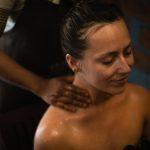
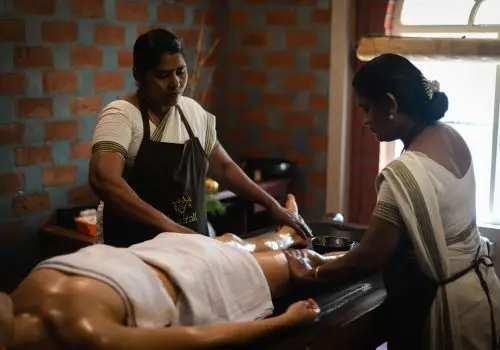
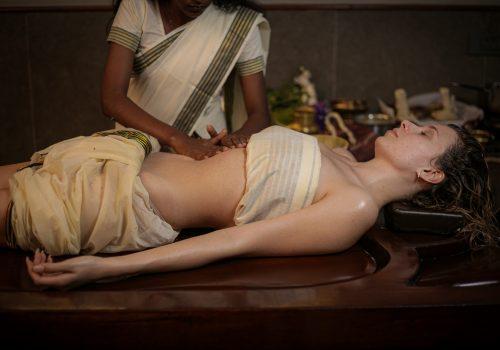
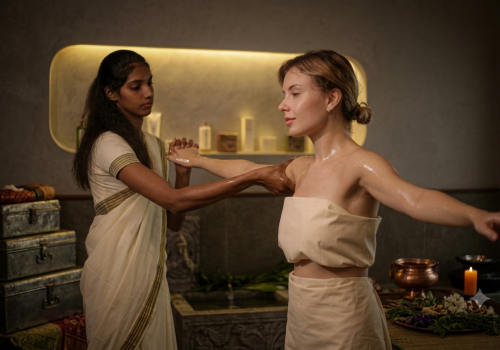
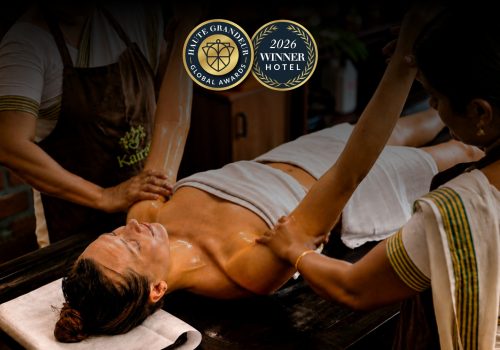
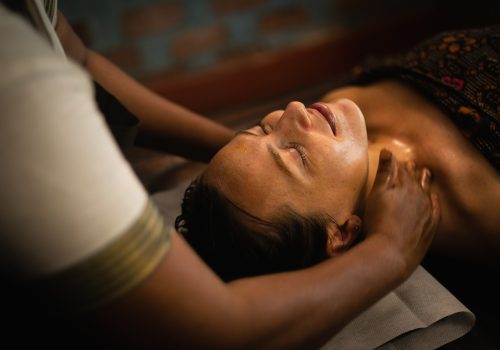
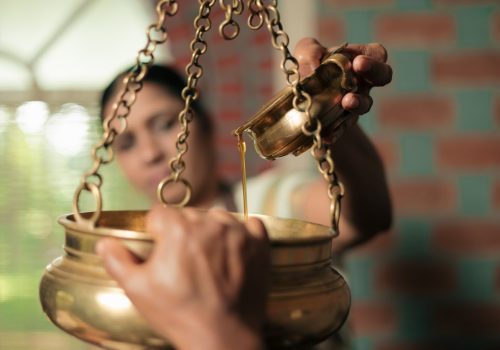
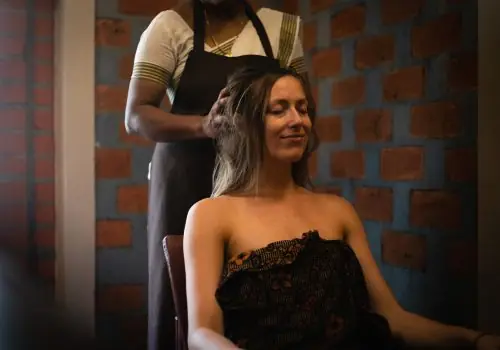
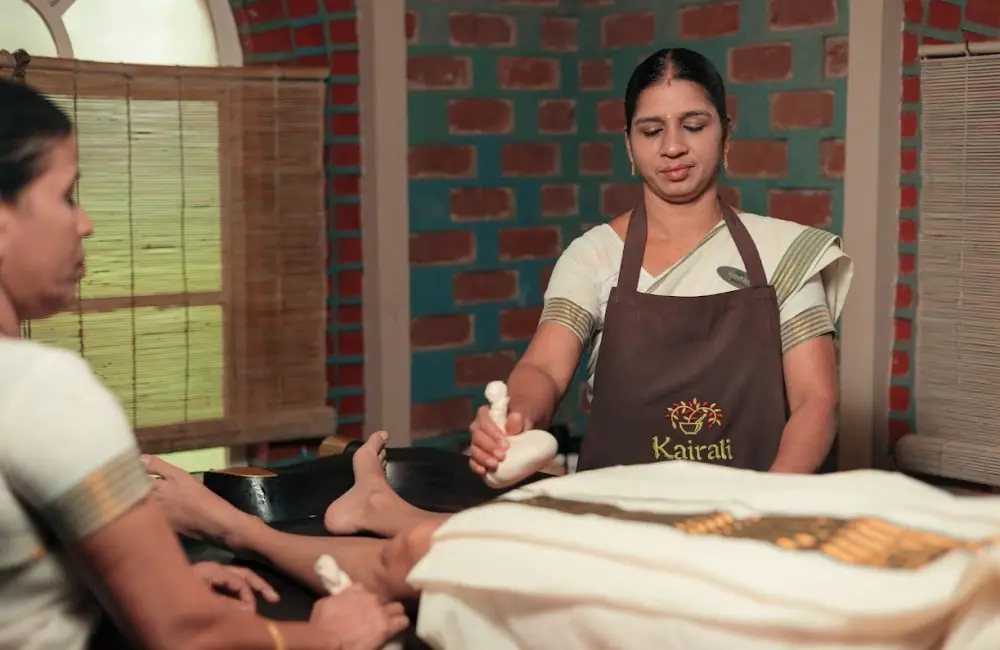
Ayurvedic therapies can involve oil application and considerable physical contact. A reputable centre should therefore be able to tell you clearly how therapists are assigned, how draping is handled and what happens if you are uncomfortable with any part of a procedure.
For female travellers in particular, ask directly whether female therapists are available for female guests and whether that preference can be recorded in advance.
Kairali publication note: [Team to verify current written policy on female therapist assignment, draping and consent before publication.]
There is no reason to feel awkward asking. These are ordinary questions about professional care.
Myth 3: Panchakarma means days of extreme cleansing
Reality: Panchakarma is not a single treatment, and it should not be reduced to the popular idea of an intensive “detox”.
In classical Ayurvedic practice, Panchakarma involves a sequence of procedures selected according to the individual and supervised by a qualified practitioner. Not every guest requires the same interventions, and not every wellness stay needs to become a Panchakarma programme.
At an appropriately supervised centre, the process begins with a physician consultation. Your health history, current condition and suitability for particular procedures should influence what is prescribed.
This is especially important if you take regular medication, have an existing medical condition, are pregnant, or have recently been unwell. An Ayurveda retreat should not replace necessary conventional medical care.
For a first-time solo traveller, the reassuring question is not, “How intensive is your Panchakarma?” It is, “How do your physicians decide whether Panchakarma is appropriate for me at all?”
Myth 4: Every day will be filled with treatments
Reality: A clinical Ayurveda programme can actually involve a considerable amount of quiet time.
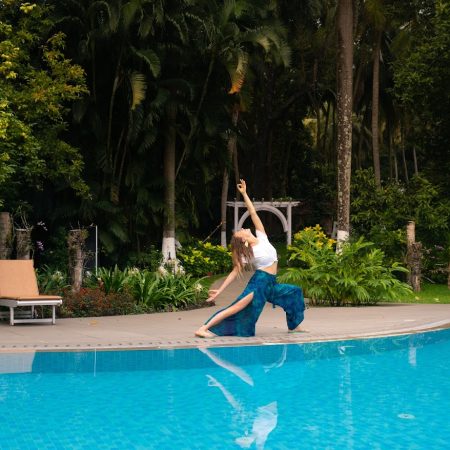
There may be consultations, prescribed therapies, meals, yoga or other scheduled activities, but rest is also part of the rhythm. A well-run programme should not feel like a sightseeing itinerary in which every hour has been filled because you have paid for a retreat.
This can take adjustment.
Solo travellers sometimes arrive accustomed to keeping themselves continuously occupied. An Ayurveda stay may ask for almost the opposite: fewer decisions, less movement and more attention to regular meals, sleep and how the body responds from one day to the next.
That slower pace is not evidence that “nothing is happening”. It is part of what makes the stay different from an ordinary holiday.
Myth 5: Travelling alone means spending the entire retreat alone
Reality: Solitude and isolation are not the same thing.
Many women choose a solo retreat precisely because they do not want to coordinate their days around a partner, family member or friend. But that does not mean they want seven or fourteen days without human interaction.
When evaluating a retreat, look at the physical and social design of the property. Are there common areas? Are yoga or educational activities available? Can you eat comfortably on your own? Is there staff presence around the campus?
The ideal balance is personal. Some travellers want conversation between treatments. Others want considerable privacy.
Ask for the kind of stay you prefer rather than assuming that “solo wellness travel” has to follow one model.
Myth 6: Menstruation makes an Ayurveda retreat impractical
Reality: Menstruation should be part of the clinical conversation because it may affect which procedures are appropriate and when.
It should not be treated as an embarrassing complication.
If your period is likely to occur during the retreat, mention it during your consultation. Your physician can then decide whether particular therapies should continue, be modified or be rescheduled.
That is another reason to favour physician-led Ayurveda over a fixed spa package. A treatment plan should be capable of changing when your circumstances change.
If you have significant menstrual symptoms or an underlying health concern, discuss them with your usual healthcare practitioner as well as the Ayurvedic physician.
Myth 7: The food will be aggressively spicy or restrictive
Reality: A therapeutic Ayurvedic kitchen is different from ordering from a restaurant menu.
Meals may be simpler than you expect, and food choices can form part of the physician’s broader recommendations during your stay. That does not mean every guest should receive identical food.
Before booking, tell the retreat about allergies, intolerances, dietary requirements and any medically necessary restrictions. Ask what can genuinely be accommodated rather than assuming.
Be cautious, too, of retreats that present severe fasting or restriction as proof that a programme is more “authentic”. More intensity does not automatically mean better Ayurveda.
Myth 8: You need to understand your dosha before you arrive
Reality: You do not need to diagnose yourself before attending an Ayurveda retreat.
Online dosha quizzes have made Vāta, Pitta and Kapha familiar terms, but an Ayurvedic assessment is more involved than identifying yourself as a personality type.
A qualified physician may consider constitution alongside current imbalance, digestion, sleep, appetite, medical history and other observations.
Arrive with information rather than a self-diagnosis. Bring a list of medications and supplements, relevant medical records where necessary, and a clear description of what you hope to address during the stay.
That is more useful than trying to arrive with your treatment plan already worked out.
Myth 9: The monsoon is a bad time to visit Kerala for Ayurveda
Reality: Rain changes the experience, but it does not automatically spoil it.
Kerala’s monsoon months can mean heavy rainfall, higher humidity and different travel conditions. Some travellers enjoy the quieter atmosphere; others strongly prefer clearer weather.
Ayurvedic tradition also pays attention to seasonal changes when considering diet, routine and therapies. But this should not be converted into the sweeping claim that everyone needs to undergo intensive treatment during the monsoon.
Choose the season partly on practical grounds. Consider your tolerance for humidity and rain, the journey to the retreat and how much travelling you plan to do before or afterwards.
If you are coming primarily for a structured clinical programme rather than sightseeing, your priorities may be different from those of a conventional Kerala holiday.
Myth 10: The most luxurious retreat is automatically the best one
Reality: Beautiful surroundings can improve a stay. They cannot substitute for clinical standards.
If Ayurveda is the main reason for your journey, start by asking who is responsible for your care.
Look for qualified Ayurvedic physicians, a clear consultation process and treatments prescribed according to an individual assessment rather than selected from a spa menu. For facility-based Panchakarma in India, accreditation is another useful signal to examine.
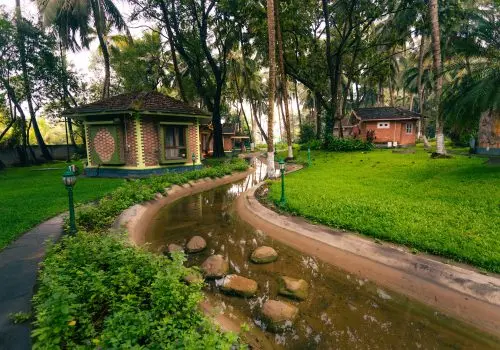
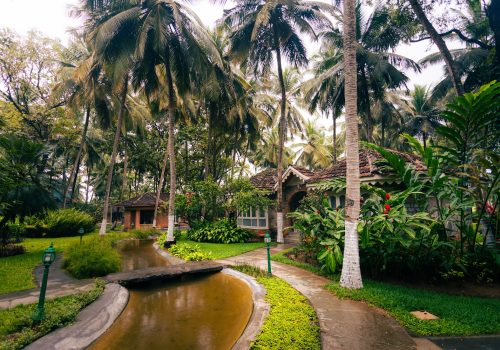
Kairali – The Ayurvedic Healing Village is an NABH-accredited Ayurvedic hospital-resort in Kodumbu, Palakkad, and holds the Government of Kerala’s Green Leaf Certification. Its model places physician-supervised Ayurveda at the centre of the stay.
Other retreats may place greater emphasis on broader wellness, hospitality or leisure.
Neither model needs to be dismissed. The important question is which one you are actually booking.
What should a solo female traveller ask before booking an Ayurveda retreat?
A good retreat should be comfortable answering practical questions before asking you to commit.
Consider asking:
- Who performs treatments for female guests?
- How are privacy, draping and consent handled?
- Will I have an initial consultation with an Ayurvedic physician?
- Are treatments individually prescribed?
- What happens if I feel unwell or uncomfortable during my stay?
- How are therapies adapted during menstruation?
- What dietary requirements can the kitchen accommodate?
- Who can I contact outside normal reception hours?
- How are airport or railway transfers organised?
- What qualifications or accreditations does the clinical facility hold?
- What information should I bring about existing health conditions or medication?
The answers should be straightforward.
If a retreat responds primarily with promises about “transformation”, “detox” or guaranteed results while avoiding questions about practitioners, safety and clinical processes, that tells you something important.
What a solo Ayurveda retreat can realistically offer
A well-planned Ayurveda stay can give you something that is surprisingly difficult to create at home: a period in which meals, sleep, consultations and daily routines are organised around a consistent schedule.
What it cannot responsibly promise is a cure-all.
Some people travel for general rejuvenation and rest. Others arrive with specific health concerns and need more careful medical supervision. Ayurveda may form part of their broader care, but significant or persistent medical symptoms require appropriate clinical assessment.
This distinction is particularly important for international travellers. The further you are from your usual doctors and support network, the more valuable clear medical communication becomes.
A note on Kairali for women travelling alone
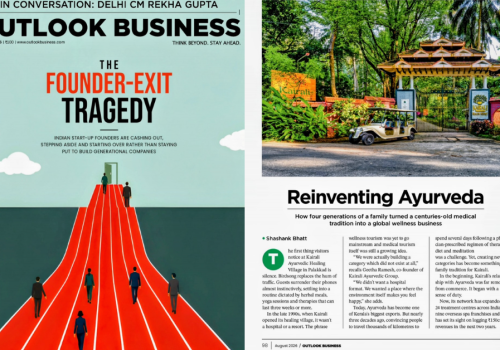
Kairali – The Ayurvedic Healing Village is located in Kodumbu, Palakkad, Kerala. It operates as an NABH-accredited Ayurvedic hospital-resort and draws on four generations of Ayurvedic practice in the founders’ family. Kairali Ayurvedic Group itself was founded in 1989.
For a solo traveller considering the property, the most useful questions remain the same ones we would recommend asking any serious Ayurveda centre: who is supervising your programme, what is being prescribed and why, what privacy arrangements apply, and whom you can approach when something does not feel right.
The reality is less dramatic than the myths
Solo female travel rarely fits neatly into “completely safe” or “too risky”. Neither does Ayurveda fit neatly into “gentle spa break” or “intensive cleanse”.
The better approach is to look at systems.
Who is responsible for your care? How transparent is the retreat before you arrive? Are clinical decisions made by qualified practitioners? Can you state a preference or decline a procedure without friction? Does the centre make realistic claims about what Ayurveda can and cannot do?
Those questions may sound less romantic than coconut palms and warm herbal oils.
They are also far more useful.
For a woman travelling alone, a good Kerala Ayurveda retreat should not require blind trust. It should earn confidence through clear processes, qualified care and respect for your decisions.
Website: www.ktahv.com
Call: +91-9555156156