






















Mainstream coverage has highlighted bedtime yoga as a practical alternative when melatonin supplements don’t feel like the right fit. A recent roundup describes a simple flow—think Child’s Pose, Seated Forward Fold, Legs-Up-the-Wall—that people use to unwind before bed.
Beyond headlines, studies associate yoga and certain breathing practices with improved sleep quality, shorter sleep latency, and calmer autonomic tone (as reflected in HRV). Guidance from sleep organizations also endorses gentle evening routines (and cautions against vigorous late-night workouts, which can be stimulating)
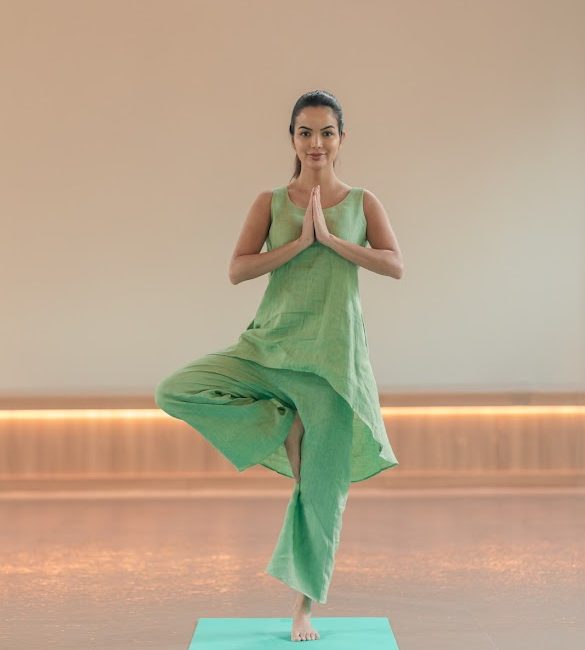
The Kairali Bedtime Flow (15–18 minutes)
Gentle, no pain, no strain. Stop if anything hurts; skip inversions if contraindicated. Place a pillow/bolster as needed. Our yoga and meditation retreat are breath-led and therapeutic, designed by BAMS physicians with yoga therapists to calm the nervous system. In-residence, we personalize timings and props; the flow below is a safe, at-home starting point.
- Seated Centering + Nasal Breathing (2 min)
Sit comfortably; inhale to a count of 4, exhale to 6. Soften shoulders/jaw. - Cat–Cow (Marjaryasana–Bitilasana) (1–2 min)
Slow spinal mobilization to release desk tension. - Child’s Pose (Balasana) (2–3 min)
Knees wide, big toes together, forehead supported on a pillow. Soften belly. - Reclined Bound Angle (Supta Baddha Konasana) (2–3 min)
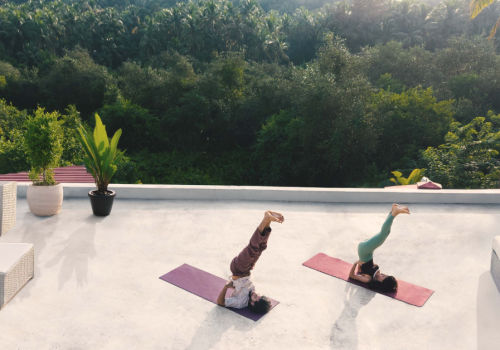
Soles of feet together, knees supported. Hands on abdomen to feel breath. - Legs-Up-the-Wall (Viparita Karani) (3–5 min)
Hips a palm’s width from wall; optional pillow under pelvis. (Skip if glaucoma, uncontrolled hypertension, or as advised.) - Supported Forward Fold (Paschimottanasana, gentle) (1–2 min)
Sit tall; hinge from hips; rest head/arms on a cushion. - Savasana + 4-7-8 or Nādānusandhāna-style soft humming (3–4 min)
Lie down; inhale quietly, lengthen exhale (or soft humming). Keep it effortless.
Sleep hygiene add-ons: dim lights 60–90 minutes pre-bed, cool/dark room, no caffeine late day, avoid strenuous exercise within ~4 hours of bedtime.
A named practitioner story
Case lead: Dr. Deepu John , Chief Physician & Head of Department
Guest (46, UAE): light insomnia (difficulty winding down), neck tightness, late-evening screen use.
Plan (14 nights): the above flow + 6-minute nadi-shodhana practice, digital sunset 60 min pre-bed, warm sattvic dinner earlier.
Outcomes (self-reported): sleep latency dropped from ~45 to ~20 min; neck stiffness improved; fewer nighttime wakings by week two. Individual results vary; not a guarantee.
Ayurveda + science: how we integrate
- Assess, don’t assume: Prakriti assessment + sleep/stress history + basic vitals/ROM.
- Gentle first: restorative shapes over intensity at night; we avoid over-stimulating evening workouts.
- Breath as a lever: elongated exhale and light humming can support vagal tone and perceived calm.
- Consistency over hacks: multiple trials link regular yoga to better sleep metrics; progress accrues over weeks.
When not to rely on melatonin—or yoga alone
If you struggle with chronic insomnia, loud snoring/pauses in breathing, severe mood changes, or persistent daytime sleepiness, consult a clinician. Yoga is supportive, but underlying conditions (sleep apnea, thyroid issues, medication effects) need medical attention. (General guidance echoed by major sleep organizations.)
Quick FAQ
How soon will I notice changes? Some people feel calmer after the first session; more durable changes typically appear after 2–6 weeks of regular practice.
Evening workouts okay? Keep them light; finish vigorous sessions ≥4 hours before bedtime. Gentle yoga/stretching is fine for most.
Can I do this if I’m a beginner? Yes—move within comfort, use props, and pause if unsure.
Thoughtful next steps
- Book a free consultation call for a personalized bedtime routine and contraindication screen.
- Visit us in Kerala: experience a doctor-supervised program for sleep and stress recovery.
Website: www.ktahv.com
Call: +91-9555156156
About the Author
Dr. Deepu John is a highly respected Ayurvedic physician serving as the Chief Physician and Head of Department at Kairali – The Ayurvedic Healing Village. With over 12 years of dedicated clinical experience, Dr. Deepu is known for his profound diagnostic acumen, deep-rooted knowledge of Ayurvedic principles, and a compassionate, personalized approach to healing.
Dr. Deepu believes true healing comes from addressing root causes and restoring internal balance—not merely easing symptoms. His consultations are comprehensive, blending classical Ayurvedic diagnostics (Nadi Pariksha, Darshana, Prashna) with modern wellness insights and therapeutic yoga. He prescribes breath-led asana sequences, pranayama, and guided relaxation to support sleep, stress regulation, mobility, and long-term recovery.