





















Growing older changes the way we move.
A posture that once felt effortless may require more attention. Balance can become less certain. Recovery may take longer. Some people become cautious about exercise altogether, particularly if they have spent years being told that physical activity must be strenuous to count.
Yoga offers a different proposition.
For older adults, a useful yoga practice does not have to involve deep stretches, complicated postures or impressive flexibility. It can be slower, more deliberate and adapted to the person practising it.
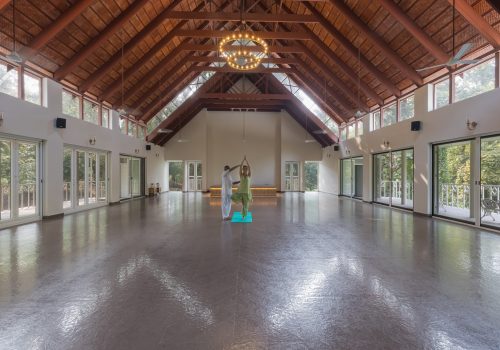
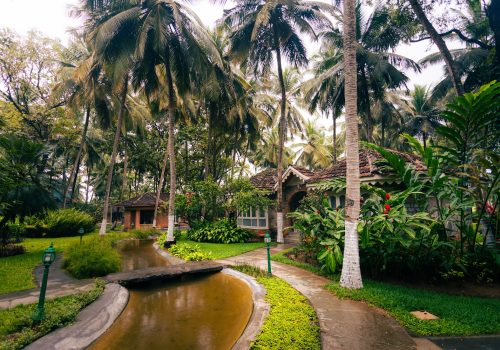
At Kairali – The Ayurvedic Healing Village in Palakkad, Kerala, yoga forms part of a broader environment centred on Ayurveda, daily routine, appropriate movement and rest. For senior guests in particular, the emphasis is not on how far the body can be pushed. It is on how intelligently it can be supported.
Yoga for seniors should begin with adaptation
There is no single way a person in their sixties, seventies or eighties should practise yoga.
Age alone tells us very little about someone’s physical capacity. One person may have remained active for decades, while another may be returning to movement after a long period of inactivity. Joint mobility, balance, previous injuries, medical conditions and confidence all matter.
That is why yoga for seniors should be adapted rather than standardised.
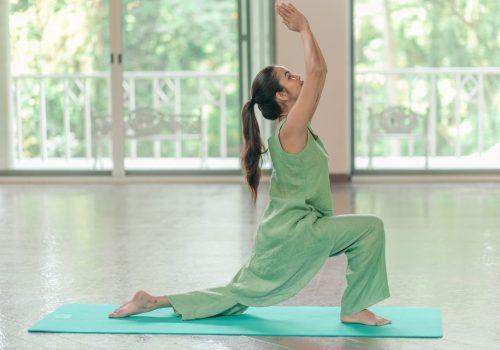
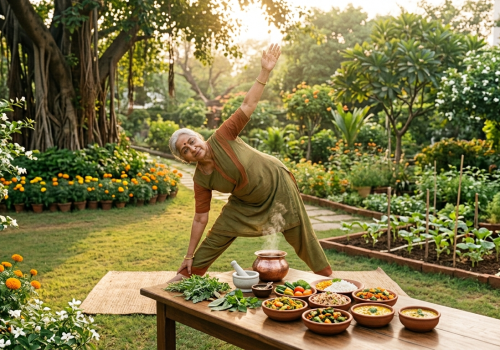
A suitable session may involve slower transitions, supported standing postures, seated movements, gentle stretches and breathing practices. Some participants may need a chair or other support. Others may be comfortable practising on a mat.
The objective is not to reproduce a younger person’s yoga class at a reduced intensity. It is to build a practice around the individual.
Mobility matters, but flexibility is not the goal
Yoga is often marketed through images of extreme flexibility. For an older adult, that can be both irrelevant and discouraging.
The more useful question is whether movement can remain comfortable and functional.
Gentle yoga may support mobility by encouraging joints and muscles to move regularly through a comfortable range. Over time, maintaining movement can make everyday activities such as standing, walking, reaching and changing position feel less intimidating.
But greater flexibility should never become a competition.
Pain is not evidence that a posture is working. A senior yoga practice should respect the body’s present capacity rather than forcing it toward an arbitrary ideal.
Balance deserves particular attention
Balance is not a single ability. It involves strength, coordination, vision, the inner ear and the nervous system working together.
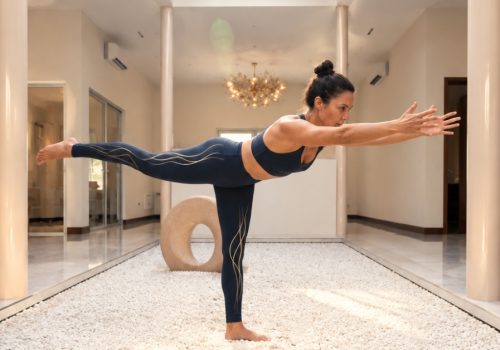
Certain yoga practices can introduce balance exercises in a controlled setting, particularly through slow standing movements and attention to posture. For older participants, however, these exercises should be approached conservatively.
Using a wall, chair or instructor for support is not a lesser form of yoga. It is sensible adaptation.
The purpose is to practise awareness and stability without creating unnecessary risk.
Strength can be cultivated gently
Strength training does not always require heavy equipment.
Standing up from a chair, holding an adapted posture or maintaining an upright position all require muscular effort. Yoga can incorporate this kind of controlled loading while allowing the intensity to be adjusted.
This is particularly relevant for seniors who are uncomfortable with conventional exercise environments.
Yoga should not be treated as a substitute for medical rehabilitation or physiotherapy where either has been prescribed. It can, however, form one part of an appropriate movement routine when a person’s health circumstances allow it.
Breathing and stillness are part of the practice
The physical postures are only one component of yoga.
Breathing exercises and periods of quiet attention can make the practice less about performance and more about awareness. For older adults, this slower aspect of yoga can be particularly accessible because it does not depend on athletic ability.
A session may therefore combine gentle movement with breathing and relaxation rather than maintaining continuous physical intensity.
This is one reason yoga can sit naturally within an Ayurvedic setting. Ayurveda also places considerable importance on routine, appropriate activity, sleep, food and the way daily habits are organised.
The two traditions are distinct, but they share an interest in health as something influenced by repeated everyday practices.
What yoga looks like at Kairali
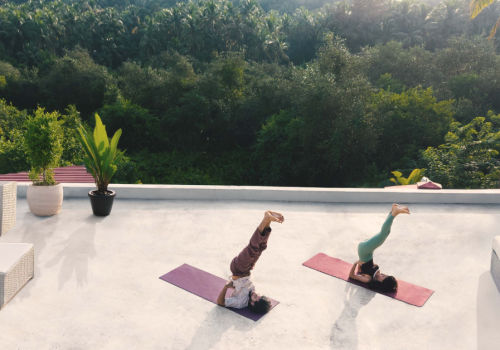
At Kairali – The Ayurvedic Healing Village, yoga is not treated as an isolated fitness activity.
The Palakkad property operates as an NABH-accredited Ayurvedic hospital-resort, with physician-led Ayurvedic programmes forming the centre of the guest experience.
For senior guests, this wider context matters.
Yoga can be considered alongside the person’s general health, current level of activity and the other elements of their stay. Sessions can be approached at an appropriate pace, rather than expecting every participant to follow the same sequence in the same way.
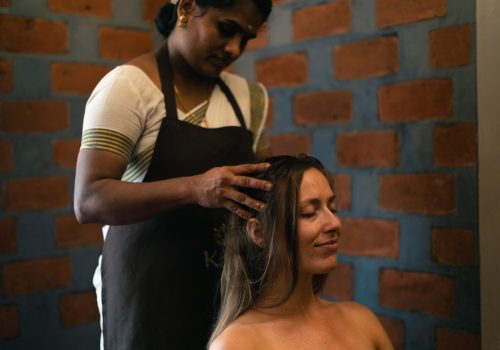
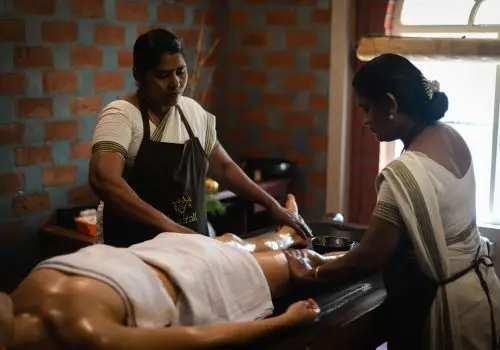
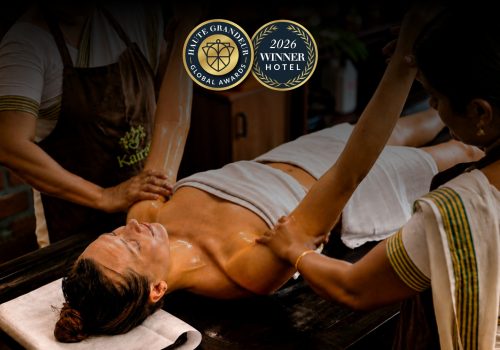
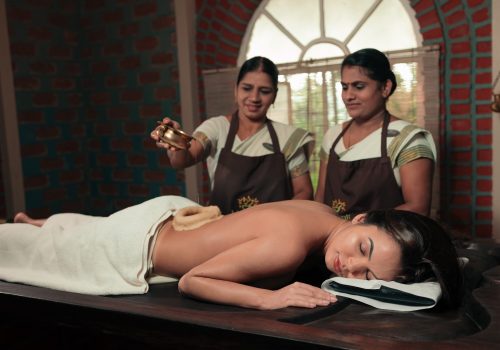
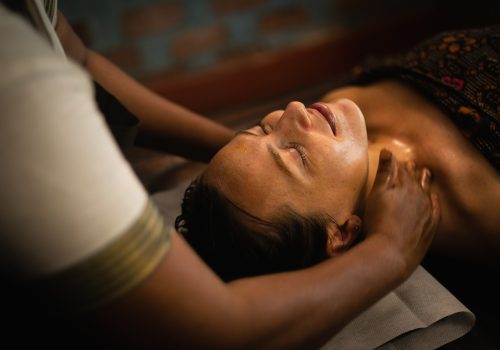
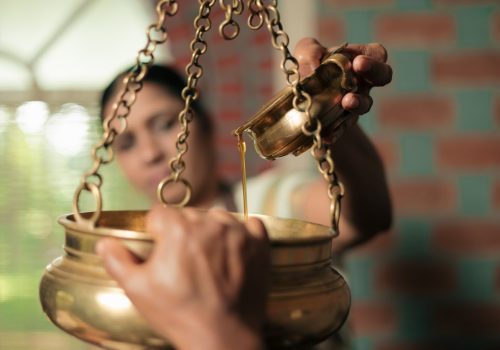
A day at the Healing Village may include morning yoga, Ayurvedic therapies prescribed as part of an individual programme, meals prepared according to Ayurvedic principles, periods of rest and other gentle activities.
The important part is not filling every hour.
For many older guests, a considered rhythm of activity and recovery is more appropriate than a packed wellness schedule.
Ayurveda and yoga should not become a promise of youth
Wellness marketing often talks to older people as though ageing itself were a problem to be corrected.
That is not a particularly useful starting point.
Yoga cannot stop ageing, and an Ayurvedic retreat should not promise to restore someone to a younger version of themselves.
A more realistic aim is to support the body that exists now.
That might mean becoming more comfortable with movement, building confidence in a supervised environment, paying closer attention to breathing, or simply developing a routine that feels sustainable after returning home.
The quieter goals are often the more useful ones.
Safety comes before ambition
Older adults should be particularly careful about beginning a new yoga programme if they have significant balance difficulties, recent surgery, cardiovascular concerns, osteoporosis, persistent pain or another medical condition that could affect safe movement.
Existing medical advice should not be discontinued or replaced because someone begins practising yoga or attending an Ayurvedic retreat.
A qualified instructor should also know about relevant physical limitations before a session begins.
The principle is straightforward: yoga should be adapted to the participant, not the participant forced to adapt to yoga.
The best senior yoga practice may look very simple
A slower practice can sometimes be mistaken for an easier or less serious one.
That misunderstands its purpose.
For a senior participant, practising a few movements carefully, breathing without strain and finishing a session feeling steady may be far more appropriate than completing an ambitious sequence of postures.
Yoga does not need to become more difficult to remain valuable as we age.
It may need to become more attentive.
And perhaps that is the most useful way to think about yoga in later life: not as a test of what the body can still do, but as a regular opportunity to work with the body as it is today.
Interested in exploring yoga and Ayurveda in a supervised setting? Book a free consultation with a Kairali Ayurvedic physician to discuss the programme and whether it may be appropriate for your health circumstances.
Website: www.ktahv.com
Call: +91-9555156156