

















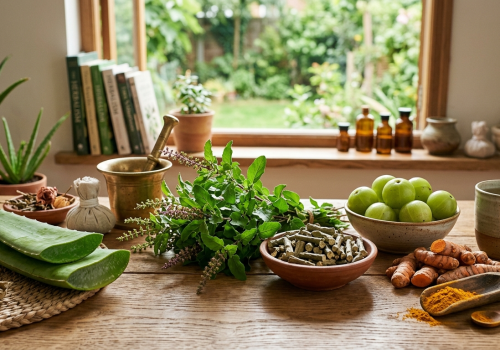














Summer can change the way we eat.
As temperatures rise, many people naturally prefer lighter meals, fresh fruit, cooling drinks and foods that feel easier to digest.
Ayurveda has long recognised this seasonal shift. Through the principle of ṛtucaryā, or seasonal routine, it encourages people to adapt food and daily habits according to climate, appetite and individual constitution.
In summer, the aim is usually to avoid excessive heat, heaviness and dehydration while choosing foods that feel fresh, light and comfortable.
Here are eight foods commonly associated with summer eating in Ayurveda.
1. Watermelon
Watermelon is naturally high in water and can be refreshing during hot weather.
In Ayurvedic terms, it is generally considered cooling and is often included in summer diets.
It is best enjoyed fresh and in moderation, particularly when digestion is sensitive.
2. Cucumber
Cucumber is another simple summer food with a high water content.
It can be added to salads, raita or light meals and is commonly used during warmer months because of its fresh, cooling quality.
Not everyone digests raw foods equally well, so people who feel bloated after raw vegetables may prefer smaller portions or lightly cooked alternatives.
3. Coconut Water
Coconut water is widely consumed in tropical climates and is valued as a refreshing drink.
It contains naturally occurring electrolytes and can be useful as part of regular hydration during hot weather.
From an Ayurvedic perspective, coconut is generally associated with cooling qualities, which is one reason it is commonly used in summer.
4. Mint
Mint, or pudina, is often used in chutneys, drinks and herbal infusions.
Its fresh flavour makes it especially popular in warm weather.
In Ayurvedic cooking, herbs like mint are used not only for taste but also for the qualities they bring to a meal.
5. Amla
Amla, or Indian gooseberry, has an important place in Ayurvedic food traditions.
It is naturally rich in vitamin C and is used in several classical Ayurvedic preparations.
Rather than viewing amla as a universal “immunity booster,” it is more accurate to think of it as a traditional food ingredient with a long history of use in Ayurveda.
6. Buttermilk
Buttermilk, or takra, is a familiar part of Indian food culture.
Ayurvedic traditions often use it as a lighter alternative to heavier dairy preparations.
It may be served plain or lightly spiced, depending on the individual and the meal.
As with all dairy, tolerance varies, so it should not be treated as suitable for everyone.
7. Seasonal Green Vegetables
Fresh vegetables remain an important part of summer meals.
Leafy greens, gourds, coriander and other seasonal produce can be prepared in simple ways that keep meals light.
Ayurveda places more emphasis on suitability, preparation and seasonality than on labelling one vegetable as universally better than another.
8. Pomegranate
Pomegranate is widely used in Indian and Ayurvedic food traditions.
Its sweet and astringent taste makes it a useful summer fruit for many people.
It can be eaten fresh or used as part of lighter meals and beverages.
As always, suitability depends on digestion and individual needs.
Why Seasonal Eating Matters in Ayurveda
Ayurveda does not treat food as separate from the season.
The concept of ṛtucaryā encourages people to adjust diet and routine as the climate changes.
In hot weather, this may mean:
- choosing lighter meals;
- staying well hydrated;
- reducing very heavy or excessively spicy foods;
- eating more seasonal fruit and vegetables;
- and paying attention to how heat affects appetite and digestion.
The goal is not to follow a rigid summer diet.
It is to make sensible adjustments based on the environment and how your body responds.
What About Pitta in Summer?
Summer is often associated with increased heat in Ayurvedic thinking, which is why Pitta is frequently discussed during this season.
But dosha-based advice should not be reduced to a simple food list.
Two people may react very differently to the same climate.
One may feel overheated and irritable, while another may simply lose appetite or feel tired.
That is why individual response matters more than following a generic “Pitta diet.”
How Kairali Approaches Seasonal Food
At Kairali – The Ayurvedic Healing Village in Palakkad, seasonal eating forms part of the wider Ayurvedic approach to daily routine.
Food is considered alongside factors such as constitution, digestion, season and the individual programme.
This is different from simply offering a standard “summer menu.”
The aim is to make meals appropriate to both the season and the person.
A Simple Summer Approach
Ayurvedic summer eating does not need to be complicated.
Start with what is practical:
Choose fresh seasonal foods.
Drink enough water.
Keep meals lighter when appetite is lower.
Use cooling ingredients where they suit you.
And avoid turning every ingredient into a “superfood.”
That is closer to the spirit of Ayurveda: adapting food to the season without losing sight of the individual.