


























Two people can arrive at an Ayurvedic centre with the same complaint and leave with different treatment plans.
That is not inconsistency.
It is one of the defining principles of Ayurveda.
Modern wellness culture often packages treatments as standard experiences: the same massage, the same diet, the same routine, the same herbal recommendation. Ayurveda works differently. Its clinical logic begins with the individual.
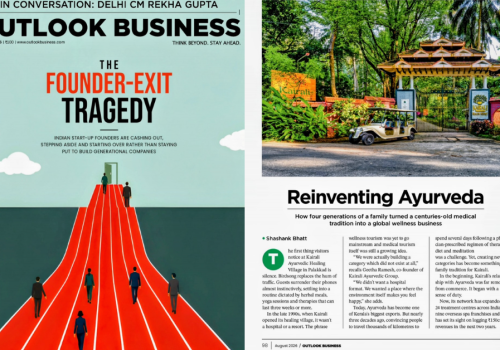
At Kairali, The Ayurvedic Healing Village in Palakkad, Kerala, physician-led care is built around that principle. KTAHV is an NABH-accredited Ayurvedic hospital, where programmes are structured around individual assessment rather than a fixed menu of therapies.
The important question is not simply, “Which Ayurvedic treatment is best?”
It is:
Best for whom, at what stage, and for what pattern of imbalance?
Personalisation Begins With Prakriti and Vikriti
Ayurveda uses several frameworks to understand individual variation.
Two of the most important are Prakṛti (an individual’s constitutional pattern) and Vikṛti (the current state of imbalance or deviation from that baseline).
Prakriti describes the constitutional tendencies a person is understood to be born with.
Vikriti describes what is happening now.
That distinction matters.
Someone may have a naturally Vāta-predominant constitution, for example, but currently present with features associated with increased Pitta. Another person may have a broadly similar constitution but a completely different current pattern because of sleep, diet, stress, travel, age or other factors.
Ayurveda therefore does not stop at asking, “What is your dosha?”
A physician may consider constitution, current symptoms, appetite, digestion, sleep, bowel patterns, energy, menstrual or other physiological rhythms, daily routine, previous treatments and relevant medical history.
The resulting picture is more complex than a simple dosha label.
That complexity is precisely the point.
Why a Consultation Comes Before Treatment
At Kairali, the first stage of a programme is physician consultation.
This may include discussion of current concerns, medical history, daily routine, dietary habits and previous treatment. Ayurvedic assessment may also involve observation and traditional examination methods where appropriate.
The purpose is not to fit a guest into a predefined treatment package.
It is to understand the pattern before deciding what, if anything, should be done.
This distinction separates a clinical Ayurvedic programme from a treatment menu.
A therapy may be widely used in Ayurveda and still be unsuitable for a particular person at a particular time.
The same applies to herbal preparations, food recommendations and levels of physical activity.
Personalisation therefore does not mean simply offering more choices.
It means making fewer assumptions.
The Same Therapy Does Not Mean the Same Prescription
Some Ayurvedic therapies are familiar even to people with limited knowledge of the system.
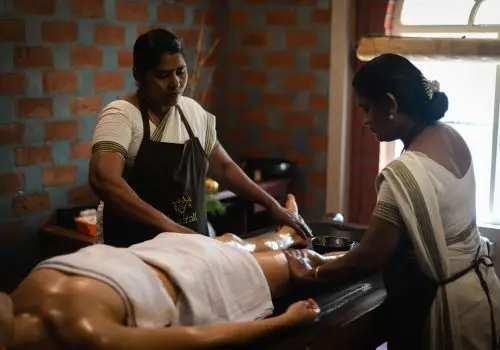
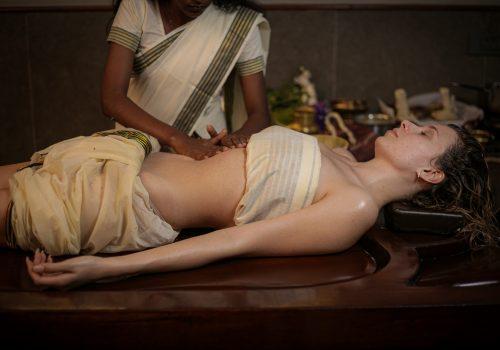
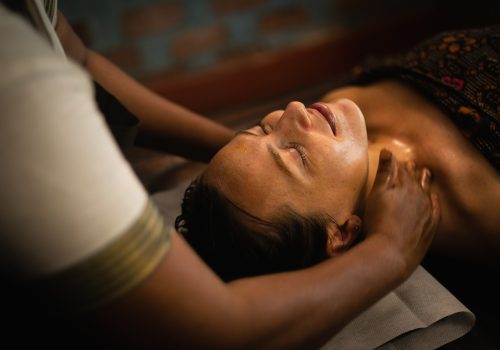
Abhyanga, for example, refers to the application of oil to the body.
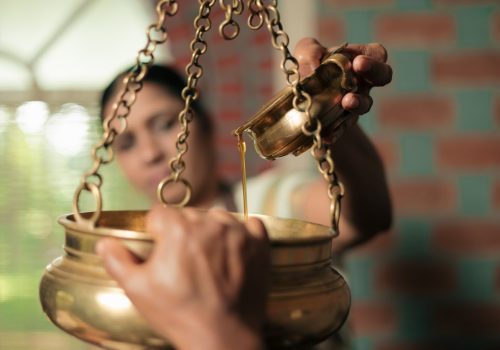
Śirodhāra involves a controlled flow of liquid over the forehead.
Panchakarma refers to a broader physician-supervised therapeutic framework that can include preparatory, main and recovery phases.
But recognising the name of a treatment does not tell us whether it is appropriate for a particular person.
At KTAHV, treatments are selected within a physician-led programme rather than simply chosen because they are popular.
One guest may receive a particular therapy.
Another may receive a different one.
A third may require a more conservative programme.
This is where personalisation becomes clinical rather than cosmetic.
Ayurveda Looks Beyond the Main Complaint
A modern wellness brief often begins with a goal.
Better sleep.
Less stress.
Improved digestion.
More energy.
Ayurveda may begin with the same concern but then widen the inquiry.
How is appetite?
When does fatigue occur?
Is sleep disturbed at the beginning of the night or early in the morning?
Is digestion irregular, sluggish or overheated?
How much physical and mental exertion is occurring?
Has the pattern changed recently?
The objective is not to create complexity for its own sake.
It is to avoid assuming that the same symptom has the same cause in everyone.
Poor sleep, for example, may occur alongside restlessness and mental overactivity in one person, digestive discomfort in another, or physical discomfort in someone else.
A personalised Ayurvedic plan would respond to those differences.
Food Is Part of the Assessment
Diet is also individualised within Ayurvedic thinking.
This does not mean every person receives an elaborate or restrictive diet.
It means food recommendations are considered in relation to the person’s digestive capacity, appetite, current condition and broader programme.
The same ingredient may not suit everyone equally.
Meal timing may matter as much as the ingredients themselves.
A person with irregular appetite may require a different approach from someone experiencing heaviness after meals.
For this reason, Ayurvedic nutrition cannot be reduced to a universal list of “good” and “bad” foods.
At a residential programme, regular meals also provide physicians with the opportunity to observe how a guest responds over time and adjust recommendations when needed.
Herbal Support Is Not One-Size-Fits-All Either
Herbal preparations occupy an important place in Ayurveda, but they also require individual judgement.
A herb that appears frequently in wellness content may not be appropriate simply because it is popular.
Selection depends on the person, the preparation, the formulation, the reason for use, other medicines being taken and the physician’s assessment.
This is particularly important because “natural” is often misunderstood to mean universally safe.
It does not.
Herbal preparations can have contraindications and interactions, and the same herb may be used differently depending on the context.
A responsible Ayurvedic programme therefore treats herbal support as part of clinical decision-making rather than as a self-service supplement routine.
Yoga Should Be Adapted Too
Personalisation does not stop at Ayurvedic treatment.
Yoga can also be adjusted according to a guest’s age, mobility, fitness, current health and overall programme.
A person recovering from physical strain may not benefit from the same practice as someone looking for more movement.
Someone with limited mobility may require a gentler sequence.
Someone experiencing mental agitation may benefit from slower movement and greater emphasis on breathing and attention.
This is why a serious residential wellness programme should not treat yoga as a performance standard.
The objective is not to complete the same sequence as everyone else.
It is to use movement appropriately.
The Importance of Daily Routine
One of the less visible parts of personalised Ayurvedic care is the structure around the treatments.
Meal timings.
Rest periods.
Movement.
Sleep.
Treatment schedules.
These may appear ordinary compared with an elaborate therapy, but Ayurveda gives them considerable importance.
A guest who is constantly fatigued, overstimulated or sleeping poorly may not need a more complicated schedule.
They may need a more coherent one.
At Kairali, programmes are therefore not built around the assumption that more activity means better care.
Sometimes the relevant intervention is not another treatment.
It is better timing, more rest or a change in routine.
Personalisation Also Means Knowing When Not to Treat
This is one of the most important aspects of responsible Ayurveda.
Individualisation is not only about selecting treatments.
It is also about identifying when a therapy should be avoided, delayed or modified.
Panchakarma, for example, is a supervised practice and should not be approached as a generic cleansing experience or a do-it-yourself protocol.
A qualified physician has to consider whether the individual is an appropriate candidate and what level of intervention is suitable.
The same applies to herbal preparations, intensive therapies and changes in diet or physical activity.
Personalised care therefore includes restraint.
Not every guest needs the maximum number of treatments.
Not every concern requires a complex protocol.
And not every Ayurvedic therapy is appropriate for every body.
Why the Term “Personalised” Is Often Misunderstood
In wellness marketing, personalisation can mean very little.
A different oil.
A customised meal.
A menu where guests choose between three versions of the same programme.
Ayurvedic personalisation is more demanding than that.
It begins before treatment.
It asks the physician to make sense of constitution, current imbalance, digestive function, sleep, lifestyle and the presenting concern as one connected picture.
The programme is then adjusted to that picture.
This also means plans should be capable of changing.
A guest’s response over several days matters.
If appetite changes, sleep improves, fatigue increases or a therapy is not tolerated well, the programme may need to be reconsidered.
Personalisation is therefore not a one-time decision made at check-in.
It is an ongoing clinical process.
What Makes the Kairali Approach Different
Kairali – The Ayurvedic Healing Village operates within a physician-led model of Ayurveda.
Its NABH accreditation matters because it reflects an organised clinical framework rather than a purely spa-style interpretation of Panchakarma and Ayurvedic care.
The property also holds the Government of Kerala’s Green Leaf Certification, the state’s highest level of classification for Ayurveda centres.
These credentials do not guarantee a particular health outcome.
What they do provide are signals about the setting in which care is being delivered.
That distinction is important.
A credible Ayurvedic programme should not promise that every guest will leave “balanced”, “rejuvenated” or fundamentally changed.
Different people respond differently.
The more responsible standard is whether the care is assessed, supervised and adjusted with appropriate clinical judgement.
Personalisation Is Not the Same as Precision Medicine
It is tempting to compare personalised Ayurveda with modern precision medicine.
There is some conceptual overlap in the sense that both reject the idea that every person should receive identical care.
But they are not equivalent systems.
Modern precision medicine may use genetics, biomarkers, imaging and other biomedical tools to guide diagnosis and treatment.
Ayurveda uses its own traditional frameworks of constitution, imbalance, digestion, tissue function, symptoms and clinical observation.
The two systems should not be collapsed into one another.
The useful comparison is simply this:
Both remind us that averages are not individuals.
A treatment that helps one person may not be suitable for another.
A Retreat Should Not Be a Treatment Assembly Line
The wellness industry is very good at creating packages.
Three days.
Seven days.
Fourteen days.
A fixed number of massages.
A fixed diet.
A fixed yoga routine.
That format is easy to sell because it is easy to explain.
It is less suited to a clinical system built around individual assessment.
Ayurveda asks for more flexibility.
A retreat can still have a defined duration and structure, but the clinical content within that structure should respond to the person.
That may make the programme less predictable.
It may also make it more honest.
What Guests Should Ask Before Choosing an Ayurvedic Programme
Anyone considering a residential Ayurveda programme should ask practical questions.
Who performs the initial assessment?
Are physicians appropriately qualified?
Are treatments selected after consultation?
Can the programme change during the stay?
How are contraindications assessed?
Are herbal preparations prescribed or simply included automatically?
Is Panchakarma supervised clinically?
Are dietary recommendations individualised or the same for everyone?
These questions often tell a reader more than a long list of treatments ever could.
Because the quality of an Ayurvedic programme is not defined by how many therapies it includes.
It is defined by whether those therapies are appropriate.
Personalised Care Is the Point
Ayurveda is sometimes presented as if its uniqueness lies in oil treatments, herbal formulations or Sanskrit terminology.
Those are visible parts of the system.
But one of its more consequential ideas is much simpler:
the person matters as much as the condition.
At Kairali – The Ayurvedic Healing Village, that principle is reflected in physician consultation, treatment selection, dietary guidance, yoga, routine and ongoing assessment.
Personalisation does not guarantee results.
Nor does it remove the need for conventional medical care when that is required.
What it does is reject the assumption that everyone arriving with the same concern should be managed in exactly the same way.
In a wellness culture increasingly built around standardised protocols, that may be one of Ayurveda’s most relevant ideas.
Speak with a Kairali Ayurvedic physician
If you are considering a physician-guided Ayurvedic programme, speak with a Kairali Ayurvedic physician about whether a personalised programme is appropriate for your current health context.
Website: www.ktahv.com
Call: +91-9555156156