


























Kerala offers Ayurveda in many forms. A traveller may encounter it through a resort massage, a short wellness programme, an Ayurvedic clinic or a residential hospital providing physician-supervised care.
These experiences may share similar language, treatments and visual cues. Clinically, however, they are not necessarily equivalent.
For someone considering Panchakarma or another intensive Ayurvedic programme, the important question is not simply whether a property describes itself as an Ayurveda resort. It is whether the organisation has qualified physicians, documented clinical processes, patient-safety systems and a clearly defined standard of care.
This is where accreditation by the National Accreditation Board for Hospitals & Healthcare Providers, or NABH, becomes relevant.
NABH accreditation does not promise a particular therapeutic result. Nor does it mean that every non-accredited retreat is unsafe. It does, however, provide independent evidence that a healthcare organisation has been assessed against defined standards for quality and patient safety.
What is NABH accreditation?
NABH is a constituent board of the Quality Council of India. Its accreditation programme for AYUSH hospitals covers organisations working in Ayurveda, Yoga and Naturopathy, Unani, Siddha, Homoeopathy and Sowa-Rigpa.
According to NABH, the programme is intended to ensure that these systems are practised in a structured, ethical and safe environment. Its standards address documented procedures, trained practitioners, patient rights and organisational systems. NABH describes its Ayurveda hospital standards as covering three broad areas: structure, process and outcome.
The correct term is NABH-accredited, rather than NABH-certified. Accreditation applies to the healthcare organisation and its defined scope of services.
For patients, this distinction matters because a residential Ayurvedic programme may involve far more than relaxation therapies. It can include medical assessment, dietary changes, internal preparations and supervised procedures selected for the individual.
A resort setting does not always indicate clinical care
The word “resort” describes a hospitality environment. It does not, by itself, explain the level of medical supervision available.
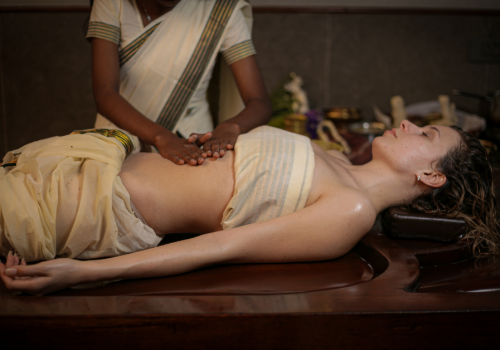
Some properties provide spa-style Ayurveda intended primarily for rest and relaxation. Others function as Ayurvedic hospitals within a residential setting. Both may have a legitimate role, but they should not be treated as interchangeable.
A relaxation massage does not require the same clinical structure as a physician-designed Panchakarma programme. The latter may require assessment before treatment, daily review, changes to the treatment plan and attention to contraindications.
Before booking, travellers should therefore ask what kind of organisation they are entering.
Is it a wellness resort that offers Ayurvedic-inspired services? Is it an Ayurvedic treatment centre? Or is it an accredited Ayurvedic hospital with residential accommodation?
The answer affects what patients can reasonably expect.
What does NABH accreditation assess?
NABH accreditation is broader than a single inspection of treatment rooms. It examines how a healthcare organisation functions.
Depending on the applicable standards and accredited scope, this can include:
- patient assessment and continuity of care;
- practitioner qualifications and defined responsibilities;
- documented treatment procedures;
- infection-control and hygiene systems;
- medication management;
- patient records and informed consent;
- emergency preparedness;
- patient rights and complaint procedures;
- quality monitoring and organisational governance.
These systems may seem administrative, but they affect the patient experience directly.
A documented assessment creates a clinical record. Defined procedures help reduce inconsistency. Informed-consent processes help patients understand what is proposed. Emergency protocols clarify what happens when a person becomes unwell.
Accreditation does not remove every possible risk. It indicates that the organisation has established systems for identifying, documenting and responding to those risks.
Why this matters during Panchakarma
Panchakarma is frequently marketed as a fixed wellness package. In classical clinical practice, however, it is not a standard sequence that should be offered identically to every visitor.
A physician considers the individual’s constitution, current imbalance, strength, age, digestive capacity, medical history and suitability for particular procedures. The treatment plan may change as the programme progresses.
This makes clinical supervision important.
A credible centre should be able to explain:
- who conducts the initial consultation;
- which practitioner is responsible for the treatment plan;
- how progress is reviewed;
- how medicines and oils are sourced;
- whether treatment records are maintained;
- what contraindications are considered;
- how emergencies or unexpected reactions are handled.
Travellers should be cautious when intensive procedures are offered without a proper medical assessment or when every guest is given essentially the same programme.
Accreditation is one part of due diligence
NABH accreditation is a meaningful quality signal, but it should not be the only question a prospective patient asks.
Accreditation applies to a specific organisation, location, programme and scope. Patients should verify the property through NABH’s official directory and review the scope listed for that institution. NABH itself notes that its online directory may contain temporary gaps or inconsistencies while data migration is underway, so direct confirmation with the organisation may also be necessary.
Other useful checks include the qualifications of the physicians, the level of medical supervision, the treatment-planning process and the centre’s approach to documentation and consent.
A person considering a Kerala Ayurveda retreat can ask:
- Is the facility currently NABH-accredited?
- What services fall within its accredited scope?
- Are consultations conducted by BAMS-qualified Ayurvedic physicians?
- Is the treatment plan individualised?
- Are patients reviewed during the programme?
- How are medicines, oils and other preparations sourced?
- What safety and emergency systems are in place?
- Will the centre coordinate with the patient’s existing doctor when necessary?
Clear, specific answers are more useful than broad claims about authenticity.
Kairali’s clinical framework in Palakkad
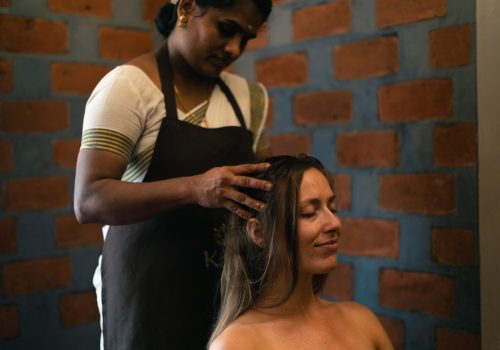
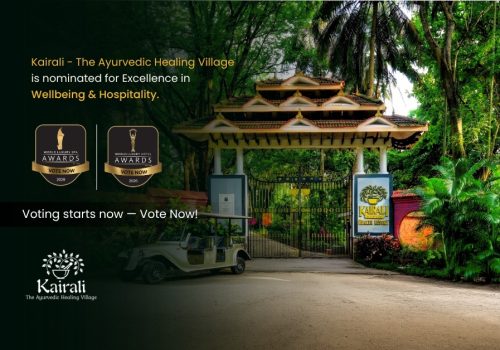
Kairali – The Ayurvedic Healing Village in Kodumbu, Palakkad, is an NABH-accredited Ayurvedic hospital operating within a residential setting. Its NABH scope includes Panchakarma.
The property is part of Kairali Ayurvedic Group, founded in 1989 by K.V. Ramesh and Gita Ramesh. The group draws on four generations of Ayurvedic practice in the founders’ family.
This history should be described precisely. Kairali is not a 130-year-old company. Its relevance lies in the combination of a multi-generational family background with more than three decades of institutional development.
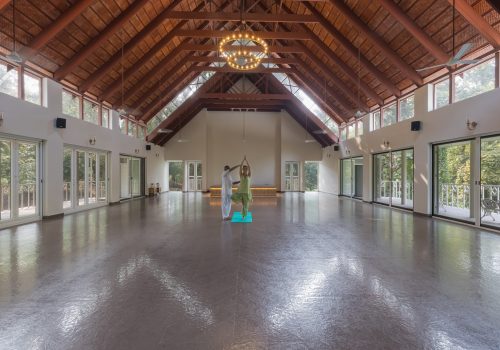
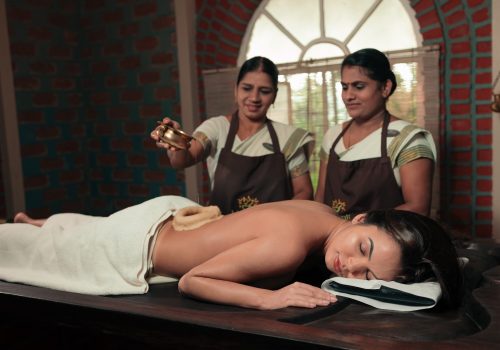
At the Healing Village, the resort environment supports the residential experience, but it does not replace the clinical structure. Physician consultations, treatment planning, Ayurvedic therapies, food and daily routines are organised as parts of a supervised programme rather than as disconnected wellness services.
NABH accreditation provides an external framework against which the hospital’s systems can be assessed. It should be understood as a baseline for accountable healthcare delivery, not as a marketing decoration or a promise of results.
Accreditation does not make treatment suitable for everyone
Even at an accredited hospital, not every therapy is appropriate for every person.
Age, pregnancy, acute illness, physical strength, medication use and existing medical conditions can influence whether an Ayurvedic procedure is suitable. Certain patients may require additional investigations, coordination with their treating physician or a different level of medical care.
A responsible centre should be willing to advise against a requested therapy when it is not appropriate. It should also avoid suggesting that Ayurveda must replace necessary conventional care.
This is another useful distinction between medically responsible practice and package-led wellness tourism: the clinical answer is sometimes “not now,” “not this procedure” or “not without further assessment.”
A more useful definition of a safe Ayurveda retreat
No accreditation can guarantee that a patient will experience a particular outcome. Safety depends on the facility, the practitioners, the individual patient and the appropriateness of the treatment plan.
NABH accreditation nevertheless gives patients something concrete to examine. It shifts the conversation away from ambience and promotional language towards systems, qualifications, documentation and accountability.
For travellers choosing between Kerala Ayurveda retreats, that is a more useful starting point than asking which property looks the most traditional or offers the longest treatment menu.
The central question is simpler:
Is this organisation equipped to take clinical responsibility for the care it proposes to provide?
For substantial Ayurvedic treatment, particularly residential Panchakarma, the answer should be supported by more than a brochure. It should be visible in the centre’s accreditation, practitioners, procedures and willingness to explain how patient safety is managed.
Website: www.ktahv.com
Call: +91-9555156156