






















Most people imagine an Ayurvedic retreat working in a fairly simple way.
You arrive, meet the doctor, receive a treatment plan, and follow that plan until the end of your stay.
But physician-led Ayurveda is not necessarily that static.
A consultation gives the physician a starting point. What happens next can depend on how the individual responds to food, therapies, sleep, activity, and the overall routine of the programme.
That is why personalisation in Ayurveda is better understood as an ongoing process rather than a decision made only on the first day.
At Kairali, The Ayurvedic Healing Village in Palakkad, guests begin with an Ayurvedic physician consultation before a programme is planned. During a residential stay, that programme can be reviewed and adjusted where appropriate.
The important point is not that every treatment must change every day.
It is that the programme should be capable of changing when the person does.
The first consultation is only the beginning
Ayurveda traditionally considers the individual before deciding on care.
A physician may assess prakṛti (natural constitution) and vikṛti (the present state of imbalance), alongside appetite, digestion, sleep, strength, medical history, current symptoms, and daily habits.
That assessment helps shape the initial programme.
But a residential stay provides information that cannot always be gathered during a single consultation.
How is the guest sleeping after several days?
Has appetite changed?
How well are meals being tolerated?
Did a particular therapy feel comfortable?
Is the person unusually tired after treatment?
Does the planned level of yoga or activity still feel appropriate?
These observations can help the physician decide whether the programme should continue as planned or be reconsidered.
That is where personalisation becomes practical.
Personalisation does not mean constant intervention
There is a tendency in wellness marketing to make individualisation sound dramatic.
Every day is different. Every therapy changes. Every response reveals a new imbalance.
That is not necessary.
Sometimes the best decision is to continue with the existing plan.
Personalisation means having a clinical reason for what is done, and reviewing that decision when circumstances change.
A guest who is responding comfortably may not need major adjustments. Someone who develops discomfort, fatigue, digestive changes, or another concern may need the programme altered.
The value lies in observation rather than constant novelty.
Why residential Ayurveda makes this easier
A residential Ayurvedic programme gives physicians something that an occasional appointment cannot: continuity.
The guest is living within the programme.
Meals are being taken at the property. Therapies happen according to a schedule. Sleep, rest, yoga, and daily activity can all be discussed during follow-up consultations.
This creates a clearer picture of how the person is responding.
At home, many variables change from one day to the next. Work becomes busy. Meals are delayed. Sleep is interrupted. Medication schedules may change. Travel intervenes.
In a residential setting, some of those variables become more consistent.
That can make observation easier.
It does not guarantee better results. It simply gives the physician more context in which to make decisions.
Panchakarma is a good example
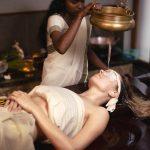
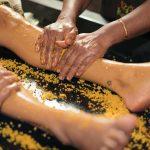
The importance of review becomes particularly clear with Pañcakarma, the classical Ayurvedic system of physician-supervised procedures.
Panchakarma should not be treated as a fixed sequence that every guest completes in exactly the same way.
The specific procedures, preparation, timing, and recovery period depend on the individual.
A physician may consider the guest’s strength, digestion, age, medical history, and response during the programme before deciding what comes next.
This is also why it is misleading to reduce Panchakarma to a pre-designed “detox itinerary.”
The name of the programme may be fixed.
The clinical decisions within it should remain individual.
Food may need adjustment too
Treatment is only one part of a residential Ayurvedic programme.
Food is another.
A meal plan that appears appropriate at the beginning of a stay may need to be reconsidered if appetite or digestion changes.
The same principle applies to portion size, preparation, meal timing, and the broader dietary recommendations made by the physician.
This does not mean that every change in appetite requires a new diet.
It means food is treated as part of the programme rather than as a separate hospitality service.
For guests, this can be one of the clearest differences between a physician-led Ayurvedic stay and a conventional wellness holiday.
Yoga should follow the person as well
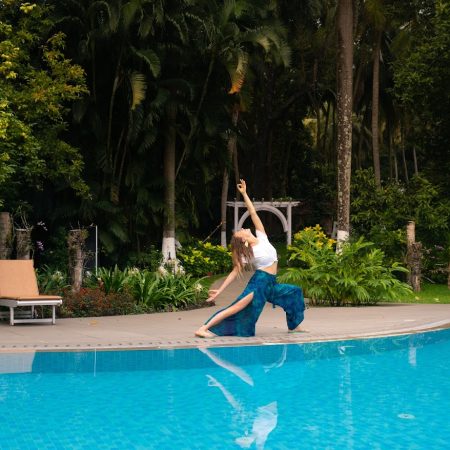
Yoga is often included in residential Ayurveda programmes.
But here too, personalisation matters.
A guest who arrives with good mobility and an established yoga practice may be comfortable with one level of activity. Someone who is older, fatigued, recovering from illness, or unused to exercise may need a gentler approach.
The practice may also need to change during an intensive Ayurvedic programme.
More is not always better.
Some days may call for movement. Others may require greater emphasis on rest.
The useful question is not whether every guest attends the same yoga session.
It is whether the activity is appropriate for the individual at that stage of the programme.
Longer stays create more opportunity for observation
Ayurvedic residential programmes are often offered over several days or weeks.
The value of a longer stay should not be reduced to the idea that “more treatment means more healing.”
That would be too simplistic.
What time can provide is the opportunity to observe.
A physician can see how the person responds over more than one day. Daily habits become clearer. Changes in appetite, sleep, comfort, or energy can be discussed over time.
This may be especially relevant when the programme includes several stages of physician-supervised care.
The appropriate duration, however, depends on the individual and the purpose of the stay. There is no universal rule that everyone needs 14, 21, or 28 days.
What a personalised programme should look like
For a prospective guest, personalisation can be difficult to judge from a website.
The easiest way is to ask practical questions.
Who carries out the first consultation?
How often is the programme reviewed?
What happens if a treatment is uncomfortable?
Can food recommendations change during the stay?
Who decides whether yoga or other activities should be modified?
Are therapies prescribed by the physician or selected by the guest?
These questions reveal more than phrases such as “customised wellness” or “tailor-made Ayurveda.”
Personalisation should be visible in the way care is delivered.
The Kerala setting is useful, but it is not the reason Ayurveda works
Kerala has a long association with Ayurvedic practice, and Palakkad provides a residential setting in which guests can step away from ordinary routines.
That environment can support a structured programme.
But geography alone does not make a treatment personalised.
Nor does being surrounded by greenery automatically improve the clinical quality of Ayurveda.
The more meaningful factors are physician involvement, appropriate practitioner standards, clear treatment processes, and the ability to reassess care when necessary.
At Kairali, The Ayurvedic Healing Village, those processes sit within an NABH-accredited Ayurvedic hospital in Kodumbu, Palakkad.
That accreditation is more useful to a prospective guest than broad claims about “authentic Kerala Ayurveda.”
Personalisation also has limits
There is another point worth making.
A programme can be highly individualised and still not guarantee a particular outcome.
Changing therapies, meals, or routines in response to the guest does not mean every health concern will resolve during the stay.
Some conditions require conventional medical care. Others may need longer-term management after the residential programme ends.
A responsible Ayurvedic centre should be comfortable saying this.
Personalisation is a method of care.
It is not a promise of success.
The difference between a package and a clinical programme
There is nothing inherently wrong with having a programme name, a set duration, or a sample schedule.
Guests need to understand what they are booking.
The problem begins when the package becomes more important than the person.
A good Ayurvedic programme provides structure while leaving room for clinical judgement.
That means the broad framework can be planned in advance, while the details remain responsive to the individual.
This is the distinction that matters.
Not “fixed retreat versus personalised retreat.”
Not “real Ayurveda versus false Ayurveda.”
Simply this:
Does the programme have enough clinical flexibility to respond when the guest’s needs change?
At Kairali, that process begins with physician assessment and continues through review during the residential stay.
Ayurveda has always placed the individual at the centre of care.
In a modern retreat setting, the challenge is to make sure that principle survives beyond Day One.
Website: www.ktahv.com
Call: +91-9555156156