




























What makes Navara rice different from ordinary rice? Exploring its nutritional properties, traditional Ayurvedic applications and relevance to everyday wellbeing.
In Kerala, a bowl of rice porridge has traditionally been considered a nourishing meal during periods of recuperation. Among the rice varieties used in such preparations, Navara, also known as Njavara, holds a distinctive place.
A recent article published by The Indian Express on 21 November 2026 explored the nutritional properties and medicinal reputation of this indigenous rice variety. It also raised an important question: how much of its traditional reputation is supported by modern scientific evidence?
In Ayurveda, the significance of Navara rice extends beyond its nutritional composition. Its preparation, method of application and suitability for an individual’s constitution are equally important.
What Is Navara Rice?
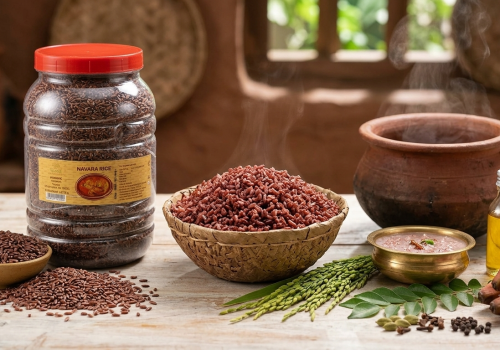
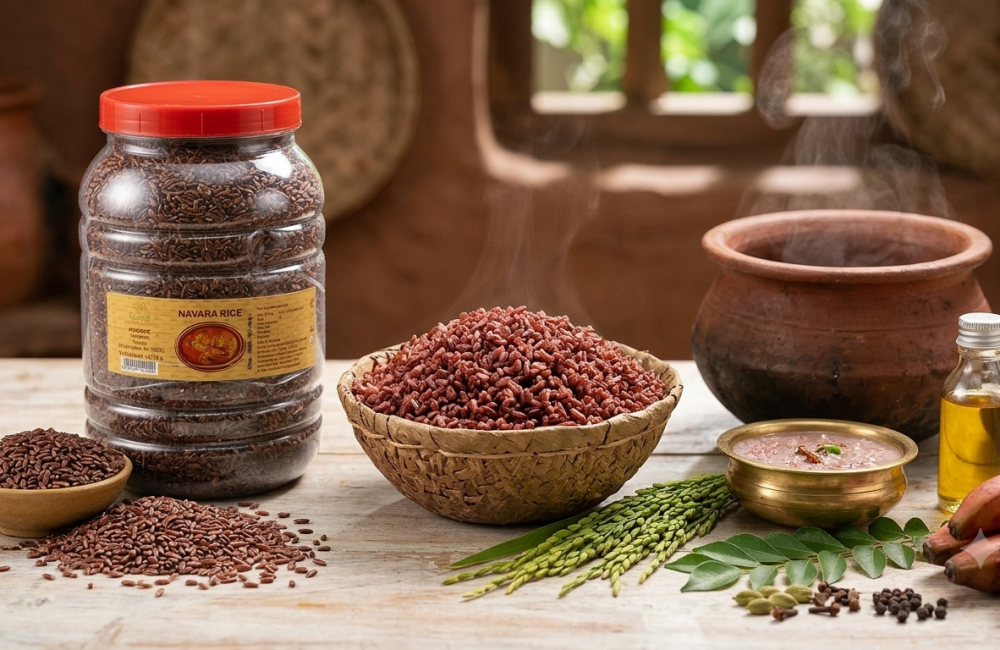
Navara (Oryza sativa) is an indigenous rice variety cultivated in Kerala and recognised for its association with Ayurvedic practice.
The grain has a characteristic brownish-red appearance. When minimally processed, it retains its outer bran layer, which contains fibre, nutrients and naturally occurring plant compounds.
Navara is particularly interesting because of its two distinct applications in Ayurveda:
- As a food ingredient in traditional nourishing preparations.
- As an external application in supervised Ayurvedic therapies.
This dual role illustrates the close relationship between food and therapeutic practice in Ayurveda.
Why Is Navara Rice Important in Ayurveda?
Ayurveda pays considerable attention to Ahara (āhāra, food and diet), recognising that nourishment depends on both the food consumed and the individual’s capacity to digest it.
Navara rice is traditionally associated with Brimhana (bṛṃhaṇa, nourishment and strengthening), an Ayurvedic approach concerned with supporting bodily nourishment.
In traditional Kerala households, Navara is often prepared as kanji, a soft rice porridge. Its preparation reflects the Ayurvedic emphasis on choosing food according to digestive capacity, physical condition and individual requirements.
The same ingredient also features in external Ayurvedic procedures, where its role differs considerably from its use as food.
Health Benefits of Navara Rice: What Does Science Say?
A source of natural antioxidants
A 2012 study published in the Journal of Herbs, Spices & Medicinal Plants examined the antioxidant properties of Njavara and other Indian rice varieties.
Researchers found that Njavara exhibited higher levels of certain phenolic acids and greater antioxidant activity than the non-pigmented rice variety studied.
These findings make Navara an interesting subject for nutritional research. However, laboratory antioxidant activity does not establish specific health outcomes in humans.
Dietary fibre and digestive wellbeing
Unpolished Navara rice retains its bran layer, making it a source of dietary fibre.
Fibre is an important component of a balanced diet, contributing to bowel regularity and digestive health. The extent of these nutritional advantages depends on how extensively the rice has been processed.
Nutritional diversity
Navara contains carbohydrates, plant-based protein and naturally occurring micronutrients and phytochemicals.
Including traditional grains alongside pulses, vegetables and other nutrient-rich foods can contribute to greater dietary diversity.
However, existing research does not establish that Navara is nutritionally superior to every other whole-grain rice variety.
Navarakizhi: The Ayurvedic Therapy That Uses Rice
One of the most distinctive uses of Navara rice is in Navarakizhi, a traditional Ayurvedic procedure also known as Shashtika Shali Pinda Sweda (ṣaṣṭika śāli piṇḍa sveda, fomentation using rice-filled bundles).
Unlike conventional massage, this procedure incorporates specially prepared rice, milk and herbal decoctions.
The cooked rice is enclosed in cloth bundles, which trained therapists apply to the body with controlled warmth and rhythmic movements.
Navarakizhi is traditionally associated with:
- Nourishment and physical comfort.
- Relaxation of the body.
- Comfort in areas experiencing muscular stiffness.
- External nourishment of the skin.
The procedure combines several elements, including warmth, massage and the properties of the preparation itself.
While warmth and massage may contribute to temporary physical comfort and relaxation, further clinical research is needed to understand the specific contribution of Navara rice to these effects.
Navarakizhi should be performed under the supervision of a qualified Ayurvedic practitioner.
Navara Rice and Kairali Ayurvedic Products
The continued use of traditional ingredients such as Navara rice depends partly on their availability to practitioners and Ayurvedic institutions.
Kairali Ayurvedic Products Pvt. Ltd., a WHO-GMP-certified Ayurvedic pharmaceutical manufacturer, includes Navara Rice and Navara Rice Powder in its product portfolio.
Kairali Navara Rice
Kairali Navara Rice is a single-ingredient product containing 100% Navara rice (Oryza sativa).
It is supplied for appropriate preparations and applications according to professional guidance and product-specific directions.
Kairali Navara Rice Powder
Navara Rice Powder is also listed in the company’s catalogue, offering the traditional ingredient in powdered form.
The choice between whole rice and powdered rice depends on the specific preparation and its intended application.
Maintaining access to clearly identified traditional ingredients is important in Ayurvedic practice, where the selection and preparation of ingredients form part of the therapeutic methodology.
Readers can learn more about Kairali Navara Rice through the official product information.
Is Navara Rice Suitable for Everyone?
Ayurveda recognises that a food’s suitability depends on individual constitution, digestive capacity and physical condition.
From a modern nutritional perspective, Navara remains a carbohydrate-rich grain. Its traditional medicinal associations do not automatically make it suitable for every dietary requirement.
People following medically prescribed diets should consult their healthcare professional before making substantial dietary changes.
Similarly, Ayurvedic preparations and external therapies involving Navara rice require appropriate professional assessment.
Preserving Kerala’s Traditional Ayurvedic Ingredients
Navara rice represents an important intersection of agriculture, nutrition and Ayurvedic practice.
Preserving indigenous rice varieties helps maintain agricultural biodiversity, regional culinary traditions and access to ingredients used in classical Ayurvedic procedures.
Modern research offers a useful opportunity to examine why these ingredients have remained significant in traditional practice. It also helps distinguish their established nutritional properties from therapeutic claims that require further investigation.
Navara’s significance lies in understanding how it is selected, prepared and used within its appropriate context. Its value as a traditional ingredient deserves continued scientific attention without overstating what the current evidence supports.
Website: www.kairaliproducts.in
Call: +91-9555156156






Leave a Reply