




























Every few months, the wellness industry discovers a new ingredient and calls it a superfood.
Karkidaka Kanji deserves a more careful introduction.
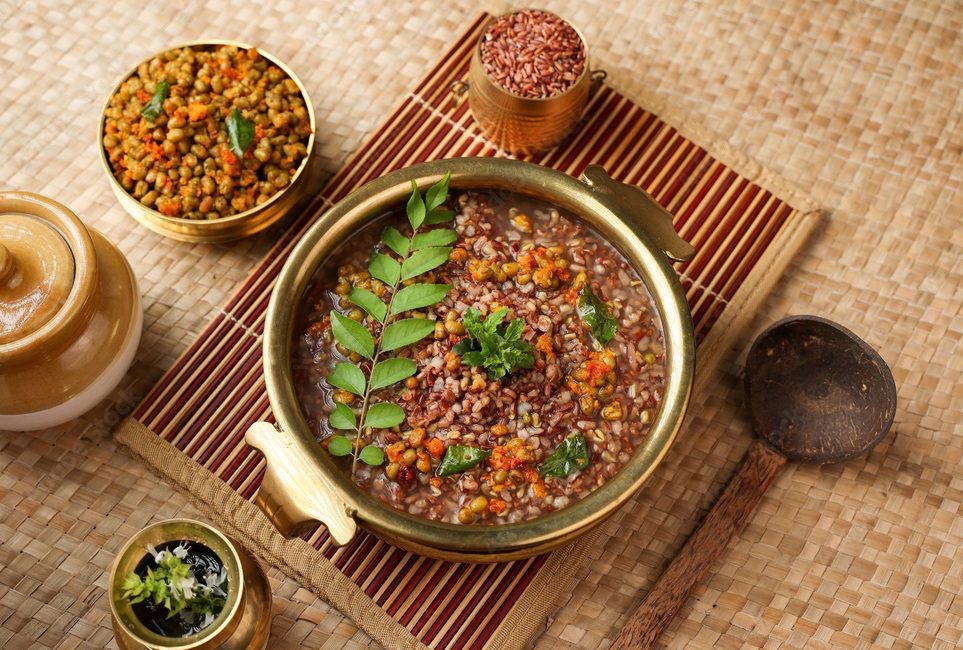
This rice-based medicinal gruel is traditionally prepared in Kerala during Karkidakam, the final month of the Malayalam calendar. It usually falls between mid-July and mid-August, during the southwest monsoon.
Karkidaka Kanji is not a miracle food, a cleanse, or a substitute for medical care. It is a seasonal preparation shaped by Kerala’s climate and Ayurveda’s understanding of digestion during the rains.
That context is what makes it worth exploring.
What Is Karkidaka Kanji?
Karkidaka Kanji, also called Oushadha Kanji, is a porridge made by cooking rice with selected herbs and spices.
There is no single standard recipe. Ingredients vary between households, regions, and Ayurvedic practitioners.
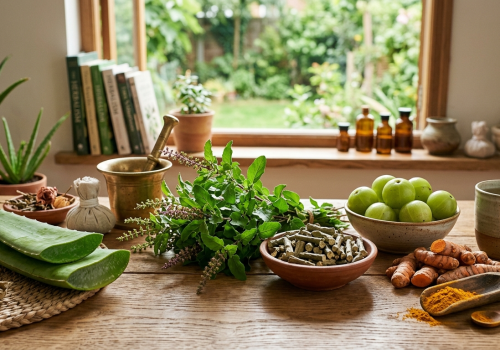
Njavara rice is often used, although not every version includes it. Depending on the recipe, the porridge may also contain cumin, fenugreek, dry ginger, coriander, pepper, garlic, coconut milk, or prescribed herbal combinations.
The result is usually a warm, soft meal that is easier to eat than rich or heavy food when appetite is low.
Why Is It Eaten During Karkidakam?
Karkidakam arrives during a period of sustained rain, humidity, reduced sunlight, and changing daily routines.
Traditionally, this month was also associated with physical fatigue, seasonal illness, and food scarcity.
Ayurveda responds to seasonal changes through ṛtucaryā, or a seasonal regimen of diet and daily habits. The principle is simple: food and routine should change when the climate changes.
Within Ayurvedic thought, digestion may become less dependable during the rainy season. Agni, meaning digestive capacity, is believed to fluctuate. Heavy, stale, oily, or difficult-to-digest meals may therefore feel less suitable.
Karkidaka Kanji fits this seasonal logic. It is warm, cooked, moist, and usually simple.
Its traditional value does not lie in a claim that one bowl can “heal the gut.” The idea is that a carefully prepared seasonal meal may place less strain on digestion.
Why Njavara Rice Matters
Njavara, also written Navara, is a rice variety closely associated with Kerala and Ayurvedic food traditions.
It has been studied for its genetic, nutritional, and phytochemical characteristics. Researchers have identified differences between Njavara and commonly cultivated rice varieties.
That makes it an interesting subject for food and agricultural research.
It does not, however, prove that Njavara rice or Karkidaka Kanji can treat digestive disorders or produce specific medical outcomes.
A traditional food may contain useful compounds without becoming a treatment for a named condition.
Is Karkidaka Kanji Good for Gut Health?
It is more accurate to describe Karkidaka Kanji as digestively gentle for some people than to call it “gut-healing.”
Rice porridge is soft, thoroughly cooked, and often easier to eat than a rich or highly processed meal.
Ingredients such as cumin, ginger, coriander, and fenugreek are traditionally used in Indian cooking and Ayurveda to support appetite and digestion.
However, the effect of the finished dish depends on several factors:
- The type of rice used
- The herbs and spices included
- The portion size
- The method of preparation
- The person’s appetite and health
- The rest of the diet
A plain rice gruel and a strongly medicated kanji are not the same preparation.
There is not enough clinical evidence to claim that Karkidaka Kanji treats irritable bowel syndrome, repairs “leaky gut,” restores the microbiome, removes toxins, cures fatigue, or prevents seasonal illness.
Its more credible value is as a warm, adaptable meal within a broader seasonal routine.
Seasonal Food, Not a Universal Prescription
Interest in gut health, minimally processed food, and traditional diets has made preparations such as Karkidaka Kanji more visible.
But it should not be forced into the modern language of probiotics, anti-inflammatory protocols, or detox diets simply because those terms are popular.
Karkidaka Kanji belongs to a different framework.
Ayurveda does not assess food only by calories, vitamins, or minerals. It also considers warmth, heaviness, freshness, digestibility, appetite, season, and individual constitution.
This means the same recipe may not suit everyone.
A person with low appetite may need a thinner, lightly seasoned preparation. Another person may be advised a richer version. Some herbs may be unsuitable during pregnancy, while taking medication, or in the presence of certain health conditions.
For that reason, medicinal versions should not be copied casually from the internet and treated as universal recipes.
How It May Be Used at an Ayurvedic Retreat
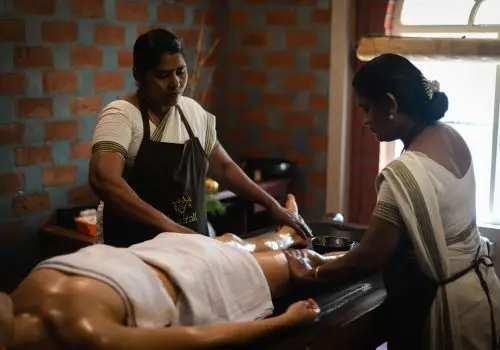
At a physician-led Ayurvedic retreat, food forms part of the wider treatment routine.
Meals may be adjusted according to the guest’s consultation, appetite, therapies, digestive response, and stage of treatment.
A kanji preparation may be included because it suits an individual plan, not because every guest is expected to eat the same “healing bowl.”
At Kairali – The Ayurvedic Healing Village, dietary planning may include meal timing, food texture, spices, portion size, rest, therapies, and observation of how the guest responds.
The key principle is personalisation.
A traditional dish becomes clinically relevant only when it is used with attention to the person eating it.
What Karkidaka Kanji Can Teach Modern Wellness
The strongest lesson of Karkidaka Kanji is not that the world has overlooked another exotic superfood.
It is that traditional food cultures paid close attention to season.
Modern diets often remain unchanged throughout the year. The same breakfasts, salads, supplements, snacks, and processed foods appear in every climate and every month.
Karkidaka Kanji represents another approach:
Notice the weather.
Notice appetite.
Cook accordingly.
Simplify when digestion feels burdened.
That principle can travel beyond Kerala, even when the exact recipe does not.
Someone in Mumbai, Munich, or Melbourne does not need to recreate a complex medicinal kanji to learn from it. The more useful question is whether their meals suit the climate, their appetite, and their present state of health.
A Bowl That Does Not Need Hype
Karkidaka Kanji has endured because it is practical, adaptable, and deeply connected to Kerala’s monsoon season.
It does not need exaggerated claims about curing the gut or boosting immunity to remain relevant.
Its value lies in a simpler idea: during the rains, families have long turned to a warm rice-based preparation designed around the demands of the season.
That is not a wellness trend.
It is a food tradition with a clear seasonal logic, and it deserves to be understood without exaggeration.