











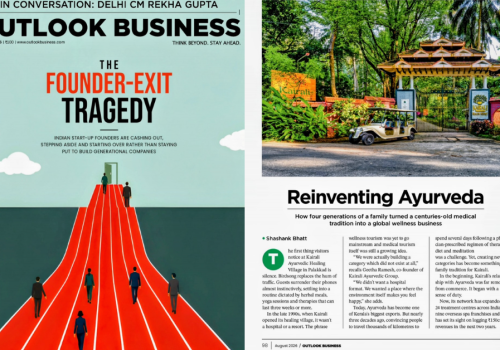
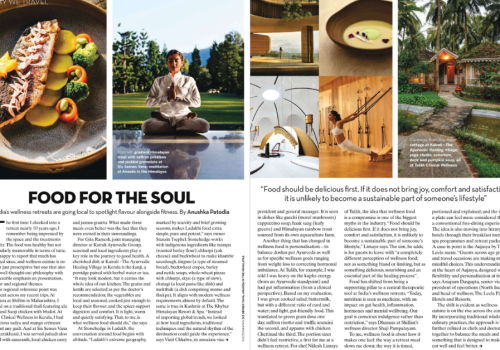



Kairali – The Ayurvedic Healing Village has been featured in the 2025 Spa & Wellness Collection published by National Geographic Traveller (UK). The inclusion brings Kairali’s physician-led approach to Ayurveda before an international audience of wellness travellers.
The National Geographic Traveller (UK) Spa & Wellness Collection examines developments across the international wellness-travel sector. Its 2025 edition covers areas including sleep programmes, burnout retreats, menopause-focused spas and other approaches to health-oriented travel.
Kairali – The Ayurvedic Healing Village is included among the retreats featured in the collection. For Kairali, the value of this visibility lies in the opportunity to explain what a residential Ayurvedic programme involves and how it differs from a conventional spa stay.
Ayurveda Within a Changing Wellness Landscape
Wellness travel has expanded rapidly in scope.
Travellers are no longer looking only for massages, fitness classes or a short break from work. Many now seek programmes built around sleep, stress, healthy ageing, nutrition and long-term lifestyle habits.
This wider interest has created space for Ayurveda. It has also made accurate communication more important.
Ayurveda should not be reduced to oil massage, herbal products or a loosely defined cleanse. In clinical practice, it begins with an assessment of the individual. Food, daily routine, therapeutic procedures, movement and rest may then be organised around the physician’s findings.
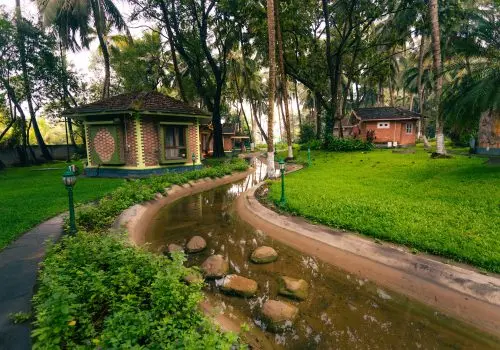
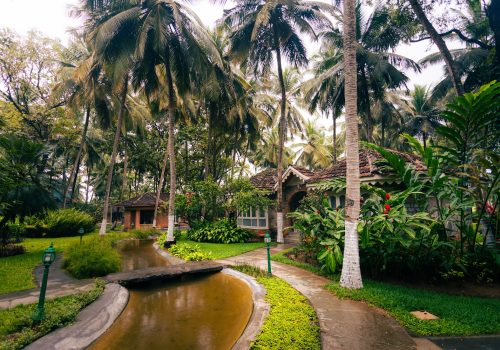
At Kairali – The Ayurvedic Healing Village in Kodumbu, Palakkad, this work takes place within an NABH-accredited Ayurvedic hospital-resort. Its Panchakarma programmes are physician-led and follow an individual treatment plan rather than a standard spa menu.
What Defines the Kairali Approach?
The setting is part of the experience, but the clinical structure matters more.
Guests begin with an Ayurvedic consultation. The physician considers their constitution, current concerns, digestion, sleep, strength, medical history and reason for travelling.
This assessment informs the daily programme.
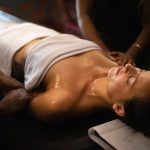
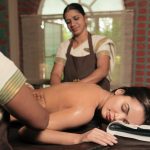
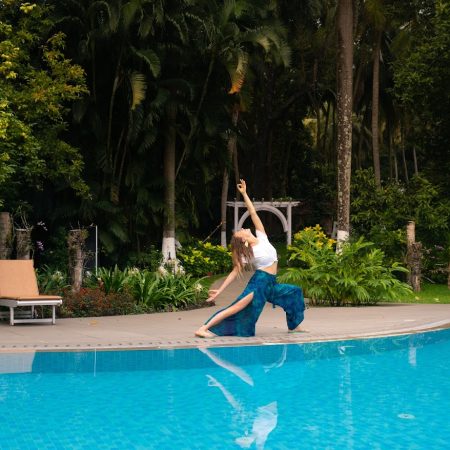
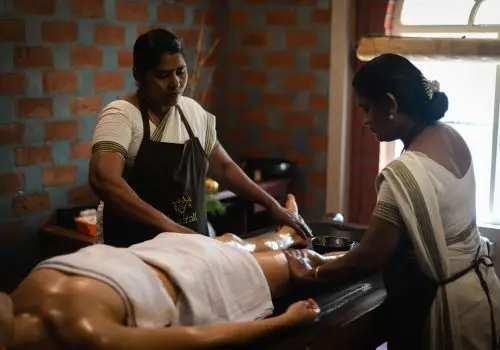
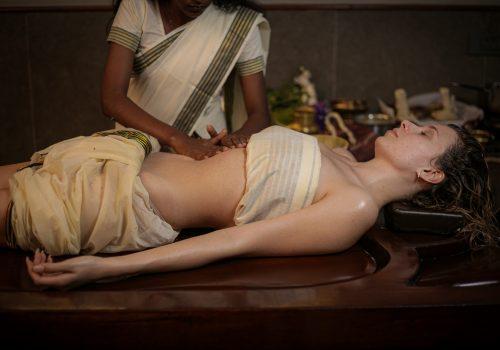
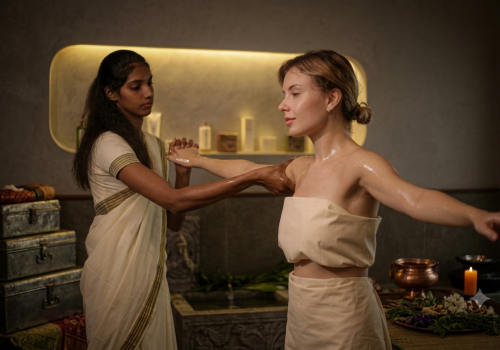
Depending on the individual, the stay may include prescribed Ayurvedic procedures, meals prepared around the treatment plan, yoga, movement and periods of rest. Not every guest receives the same therapies, and a programme may be adjusted as the physician observes the person’s response.
This level of individualisation is one of the main differences between physician-led Ayurveda and a general wellness package.
Food as Part of the Programme
Meals at a residential Ayurvedic centre are not separate from care.
Ayurveda places considerable importance on agni (digestive capacity). The type of food, its preparation, the timing of meals and the person’s ability to digest them are all considered.
At Kairali, food forms part of the daily schedule. It supports the wider programme rather than functioning only as a hospitality offering.
This does not mean every guest follows an identical menu. Dietary guidance may vary according to constitution, digestion, treatment stage and medical needs.
The Importance of Qualified Supervision
As Ayurveda becomes more visible internationally, travellers need clear ways to assess a retreat’s standards.
The most useful questions are practical:
- Who conducts the initial assessment?
- What qualifications do the physicians hold?
- How are procedures selected?
- Is the guest reviewed during the stay?
- How are medicines and oils sourced?
- What happens when a therapy is unsuitable?
Kairali’s NABH accreditation provides an important institutional signal. The precise wording matters: it is an NABH-accredited Ayurvedic hospital and NABH-accredited Panchakarma clinic, not simply a spa using Ayurvedic treatments.
More Than Three Decades of Institutional Work
Kairali Ayurvedic Group was founded in 1989 by K.V. Ramesh and Gita Ramesh. The Group draws on four generations of Ayurvedic practice in the founders’ family.
That distinction is important.
Kairali is not a century-old company, nor should its history be described through an invented number of years. Its institutional journey began in 1989, while the family association with Ayurvedic practice extends across four generations.
Over that period, the Group has developed three principal divisions: Kairali – The Ayurvedic Healing Village, Kairali Ayurvedic Products Pvt. Ltd. and Villa Raag in Goa.
Visibility Is Not the Same as Validation
A media feature can introduce a retreat to new readers. It does not, by itself, prove that every programme is effective for every person.
This is an important distinction in wellness travel.
Prospective guests should still examine practitioner qualifications, medical supervision, safety information and the structure of the programme before booking. They should also be cautious of any centre promising guaranteed outcomes or presenting Panchakarma as suitable for everyone.
The value of Kairali’s inclusion in the Spa & Wellness Collection is therefore not that it settles every question. It places physician-led Ayurveda within a wider international discussion about what serious wellness travel can involve.
Bringing Kerala Ayurveda to International Readers
For international travellers, Kerala remains closely associated with Ayurveda. But location alone does not guarantee clinical rigour.
A credible residential programme depends on assessment, appropriate sequencing, qualified supervision and enough time for rest and recovery.
Kairali’s appearance in the National Geographic Traveller (UK) Spa & Wellness Collection offers an opportunity to bring those distinctions before a broader audience.
It also carries a responsibility: to describe Ayurveda clearly, avoid inflated promises and explain what a guest can realistically expect.
That is how international visibility becomes useful. Not by turning Ayurveda into another travel trend, but by giving readers the information needed to recognise careful practice.