
















A Panchakarma programme may last seven, fourteen, twenty-one days or longer. There is no universally correct duration: the appropriate length depends on the procedures indicated, the time needed for preparation and recovery, and the physician’s assessment of the individual.
“How many days do I need for Panchakarma?” sounds like a straightforward question.
It rarely has a straightforward numerical answer.
Retreat programmes are often organised into familiar seven-, fourteen- and twenty-one-day formats. These options make planning easier, but they should not be mistaken for fixed clinical prescriptions. Two guests booking the same length of stay may receive different procedures, diets and daily schedules.
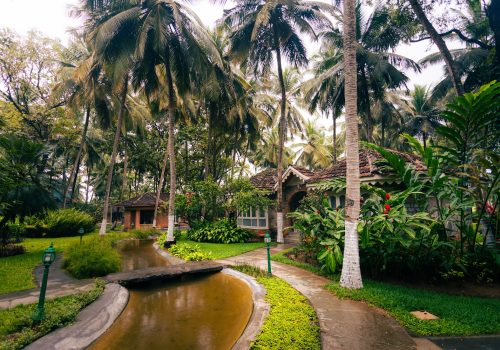
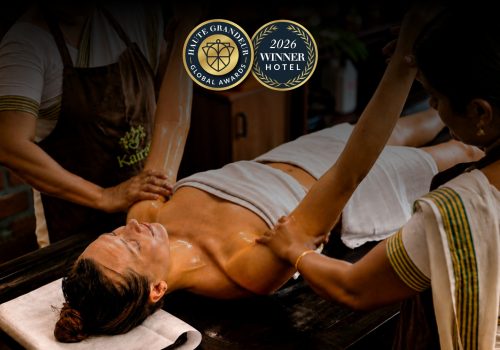
At Kairali, The Ayurvedic Healing Village in Palakkad, Panchakarma programmes are offered within a physician-led setting. The duration is considered alongside the guest’s health history, strength, digestion, present symptoms and suitability for particular procedures.
The number of days matters. What happens within those days matters more.
Why Panchakarma takes time
Panchakarma is not simply a collection of oil treatments or massages.
In classical practice, it is organised around three broad stages:
- Pūrvakarma — preparatory measures
- Pradhānakarma — the principal procedure or procedures
- Paścātkarma — post-procedure care and recovery
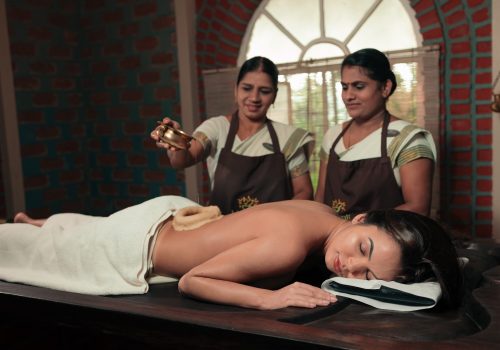
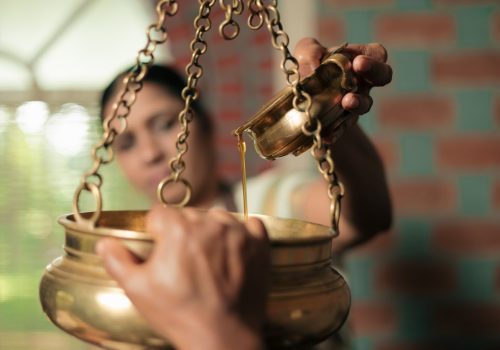
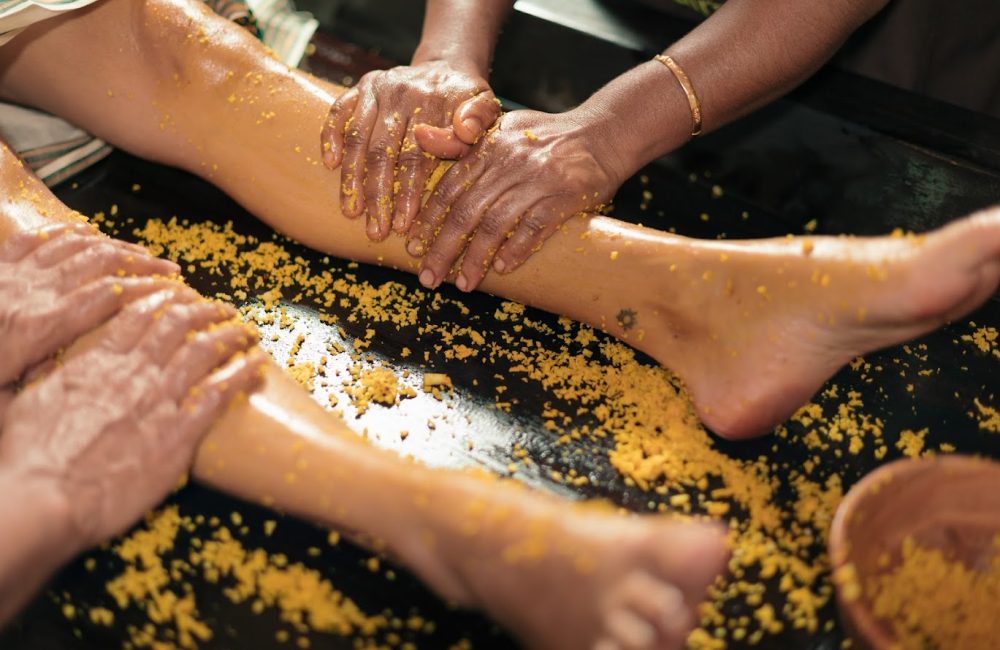
Preparation may involve changes to food and routine, along with physician-prescribed measures such as snehana (oleation) and svedana (therapeutic heat or sudation).
The main procedure is selected according to the physician’s assessment. Post-procedure care may include rest, observation and the gradual reintroduction of food.
These stages cannot always be compressed safely into a short stay. Kerala Tourism’s overview, for example, describes the preparatory stage alone as commonly lasting three to seven days, although actual practice varies by person and protocol.
This is why programme length should follow clinical sequencing rather than the assumption that more treatments can simply be fitted into fewer days.
What determines the length of Panchakarma?
Several factors influence how long a programme may need to be.
The purpose of the programme
A guest seeking an introduction to Ayurvedic routines may require a different programme from someone being assessed for a more involved therapeutic procedure.
The word “Panchakarma” is sometimes used loosely for general wellness stays. Before comparing durations, travellers should ask what the programme actually includes.
Physical strength and current health
Age, appetite, digestion, mobility, sleep, medical history and general strength can all affect what is appropriate.
A longer or more intensive programme is not automatically better. In some cases, a milder plan may be more suitable.
The procedure being considered
Panchakarma is traditionally associated with principal procedures that include therapeutic emesis, purgation, medicated enemas and nasal administration.
Not every person receives every procedure.
The name “Panchakarma” should not be interpreted to mean that all five must be completed during one stay. Procedure selection, sequencing and intensity are clinical decisions.
Preparation and recovery
The principal procedure may occupy only part of the programme.
Adequate preparation helps establish whether the person is ready to proceed. Recovery allows digestion, diet and routine to be restored gradually. Reducing either stage simply to meet a package length may undermine the logic of the programme.
Medication and existing conditions
People taking prescription medicines or managing a diagnosed condition require careful screening. Panchakarma should not be used as a reason to stop or alter conventional treatment without advice from the clinician responsible for that care.
Is seven days enough for Panchakarma?
A seven-day stay may provide time for consultation, dietary adjustment, preparatory therapies and a limited physician-led programme.
It can suit guests who:
- are new to residential Ayurveda
- have limited travel time
- are seeking a lighter introduction
- have been assessed as suitable for a less involved plan
Seven days should not automatically be described as a complete or “deep” Panchakarma cycle.
Depending on the person, the available period may be too short for extensive preparation, a principal procedure and a full recovery sequence. The physician may instead recommend a focused programme that does not attempt to compress every stage.
A short stay can still be worthwhile when its scope is stated honestly.
What can a fourteen-day programme allow?
Fourteen days gives the medical team more time to observe how the guest responds to changes in food, routine and preparatory therapies.
Where clinically suitable, it may allow:
- a more gradual preparatory stage
- closer monitoring before a principal procedure
- adjustment of therapies during the stay
- more time for post-procedure care
- practical guidance before returning home
This does not mean a fourteen-day programme guarantees better digestion, stronger immunity, pain relief or a specific health result.
It means there is more time available for clinical sequencing and observation.
Whether those additional days are necessary depends on the individual rather than on a standard promise attached to the package.
When might twenty-one days be considered?
A twenty-one-day stay may be considered when the proposed plan requires more preparation, observation or recovery.
It may also suit guests who need time to settle into a structured routine or whose physician recommends a more gradual approach.
Three weeks can provide greater space for:
- consultation and reassessment
- phased therapies
- adjustments to diet and routine
- supervised rest and movement
- a measured recovery period
- planning for life after the retreat
However, twenty-one days does not guarantee “complete detoxification,” cellular renewal or resolution of a chronic condition.
It also does not mean every principal Panchakarma procedure will be performed. Giving unnecessary procedures merely to fill a longer programme would contradict the principle of individualised care.
The extra time is useful when it serves the treatment plan.
Is a longer programme always better?
No.
Duration should not be confused with intensity or quality.
A longer stay cannot compensate for weak medical supervision, standardised therapies or poor communication. Similarly, a shorter, carefully planned programme may be more appropriate than an intensive schedule that does not suit the guest.
Travellers should be cautious of claims such as:
- “seven days removes all toxins”
- “fourteen days balances every dosha”
- “twenty-one days cures chronic illness”
- “all five procedures are included for everyone”
- “the longer the programme, the better the result”
These statements overlook the differences between individuals and make outcomes sound predictable when they are not.
What happens during a stay at Kairali?
At Kairali – The Ayurvedic Healing Village, the programme begins with physician assessment within an NABH-accredited Ayurvedic setting.
The plan may consider:
- the guest’s current concerns
- health and medication history
- constitution and present Ayurvedic assessment
- digestion, appetite and sleep
- physical strength
- available length of stay
- suitability for specific procedures
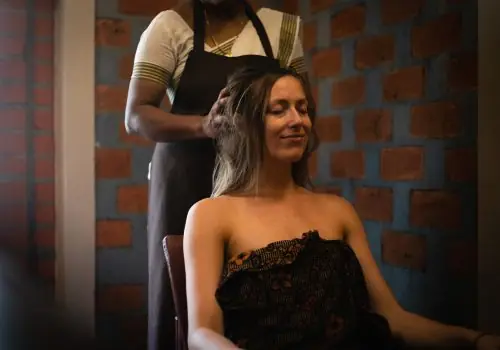
Therapies, meals, yoga and rest are then organised around the physician’s plan. Follow-up consultations allow the programme to be reviewed and adjusted.
This is more important than choosing a seven-, fourteen- or twenty-one-day label before the assessment has taken place.
Questions to ask before booking
Before selecting a Panchakarma programme, ask the retreat:
- Will a physician assess me before confirming the procedures?
- What can realistically be completed during my available stay?
- How much time is allowed for preparation and recovery?
- Are all guests given the same programme?
- How often will the physician review me?
- What medical records and medication details should I provide?
- What happens if I am found unsuitable for a proposed procedure?
- What post-programme diet or routine will I need to follow?
Clear answers will tell you more than a list of promised benefits.
Plan for the days after Panchakarma
The programme does not necessarily end when the guest checks out.
After certain procedures, the physician may recommend a gradual return to ordinary meals and activity. Travel, restaurant food, alcohol, intense exercise or an immediate return to a demanding schedule may not be appropriate.
Before fixing the departure date, ask whether the plan requires:
- a gradual dietary transition
- additional rest
- continued medicines
- restrictions on exercise or travel
- a follow-up consultation
- coordination with an existing doctor
A twenty-one-day residential programme followed by an exhausting overnight journey may be less sensible than a slightly shorter programme with enough time for recovery.
The complete time commitment therefore includes both the stay and the transition afterwards.
So, how many days do you need?
For many retreats, seven, fourteen and twenty-one days are practical programme categories.
They are not universal prescriptions.
Seven days may suit a focused introduction. Fourteen days may provide more room for preparation, reassessment and recovery. Twenty-one days may support a more extended physician-led sequence when that is clinically appropriate.
The correct duration can only be determined after considering the individual, the intended procedures and the time required for each stage.
Choose the programme after the assessment, not the assessment after choosing the programme.
In Panchakarma, the aim is not to complete the greatest number of therapies in the fewest days.
It is to allow the right procedure, for the right person, with enough time to prepare and recover.
Website: www.ktahv.com
Call: +91-9555156156