























Nasal congestion, facial pressure, headaches and difficulty breathing can make everyday life uncomfortable. These symptoms may appear during seasonal changes, allergies, infections or periods of repeated respiratory irritation.
Ayurveda approaches such concerns by looking beyond the symptom alone. It considers digestion, diet, environment, daily routine and the individual’s constitutional pattern.
At Kairali – The Ayurvedic Healing Village in Palakkad, Kerala, guests presenting with sinus discomfort undergo an assessment by an Ayurvedic physician. Any therapies, herbal preparations or dietary changes are selected according to the individual rather than offered as a standard sinus programme.
How Ayurveda Understands Sinus Problems
In Ayurveda, persistent mucus and heaviness in the head are often associated with an increase in Kapha doṣa, the functional principle connected with structure, stability and moisture.
Vāta doṣa, associated with movement and circulation, may also be involved when there is dryness, variable congestion or discomfort around the forehead and face.
This does not mean every case has the same cause.
Allergies, infections, nasal polyps, a deviated septum and other medical conditions can produce similar symptoms. A proper diagnosis is therefore important, especially when symptoms are severe or keep returning.
An Ayurvedic physician may consider:
- The nature and duration of the congestion
- Whether the mucus is thick, dry or excessive
- Digestive comfort and appetite
- Sleep and daily routine
- Seasonal or environmental triggers
- Existing medical conditions and medication
The purpose of this assessment is to understand the wider pattern before recommending care.
A Personalised Approach at Kairali
At Kairali – The Ayurvedic Healing Village, care begins with a physician consultation.
The practitioner assesses the guest’s prakṛti (constitutional pattern) and vikṛti (current imbalance). The treatment plan may then combine supervised therapies, food, rest, movement and daily routines.
Not every guest will receive the same therapies. A procedure that may be appropriate for one person could be unsuitable for another.
The following Ayurvedic practices may be considered in the management of nasal and respiratory discomfort, depending on the physician’s assessment.
Nasya: Supervised Nasal Therapy
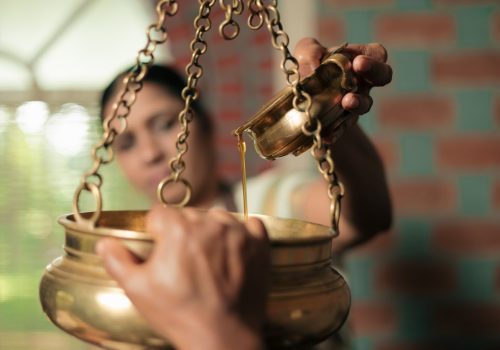
Nasya is an Ayurvedic procedure in which a prescribed substance, often a medicated oil, is administered through the nasal passages under supervision.
Traditionally, Nasya is used in conditions affecting the region above the shoulders. It may be considered when the aim is to support nasal comfort and address accumulated mucus or dryness.
The formulation and timing vary according to the individual.
Nasya is not a home remedy for every blocked nose. It may be unsuitable during acute illness, active infection or in certain medical situations. It should be performed only after assessment by a qualified Ayurvedic practitioner.
Swedana: Therapeutic Steam
Swedana refers to supervised heat or steam therapy.
In some Ayurvedic programmes, gentle steam may be used to support comfort when heaviness and accumulated mucus are present. The warmth may help loosen secretions and prepare the body for other procedures.
The intensity and duration must be selected carefully.
Steam is not suitable for everyone. People with heat sensitivity, certain cardiovascular concerns or acute inflammatory symptoms may require a different approach.
Abhyanga: Medicated Oil Application
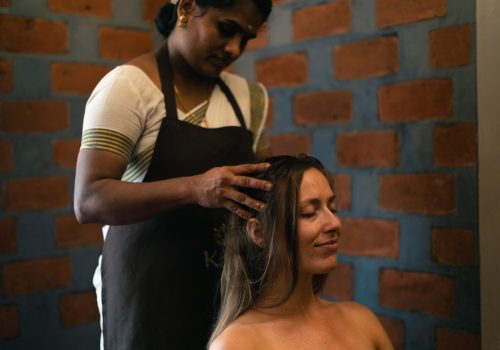
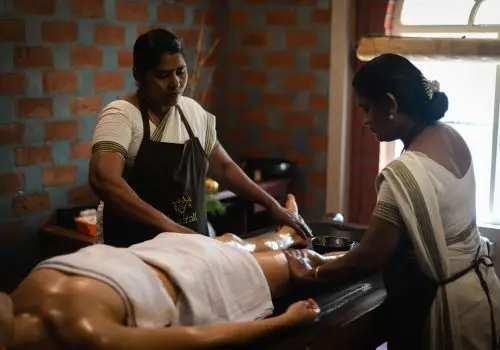
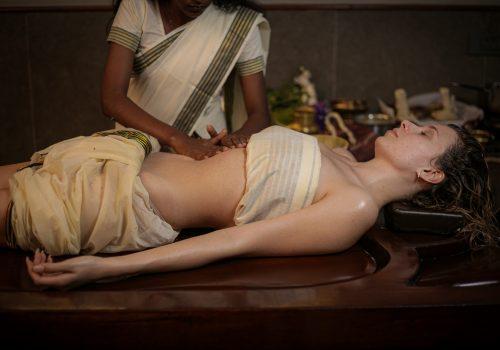
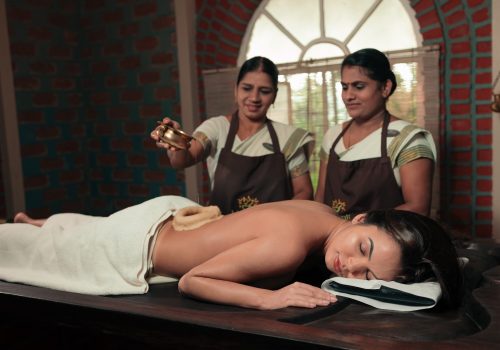
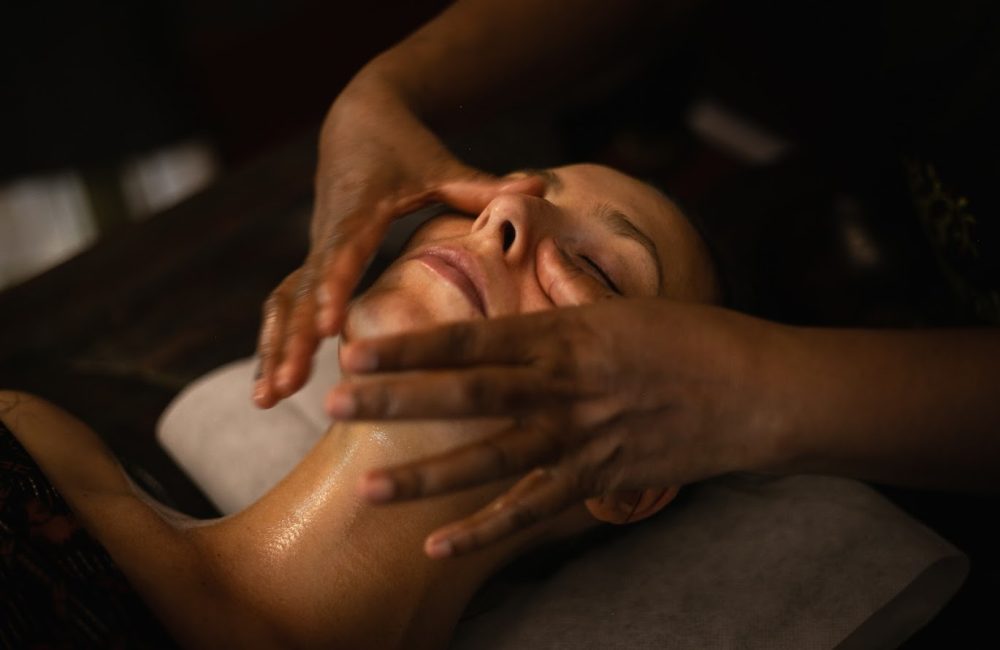
Abhyanga is the application of warm medicated oil to the body using structured massage techniques.
It is not a direct treatment for sinusitis. However, an Ayurvedic physician may include it within a wider programme to support relaxation, sleep and general comfort.
Reducing physical and mental strain can be helpful because poor sleep and stress may make respiratory discomfort feel more difficult to manage.
The oil used in Abhyanga is chosen according to the guest’s constitution, present imbalance and wider programme.
Kizhi: Warm Herbal Bundles
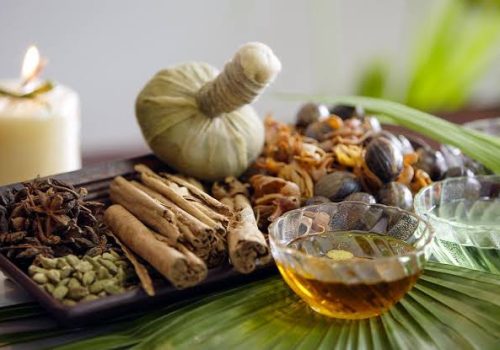
Kizhi involves the application of warmed herbal bundles to selected areas of the body.
Where appropriate, a physician may consider local warmth to support comfort around the neck, shoulders or other areas associated with tension. The contents of the bundle and the treatment area vary according to the clinical purpose.
Kizhi should not be described as a universal therapy for facial pain or sinus inflammation. Its use must be decided by the treating physician.
Is Panchakarma Used for Sinus Concerns?
Panchakarma is a structured group of physician-supervised Ayurvedic procedures. It is not a single “detox treatment” and is not automatically recommended for everyone with sinus symptoms.
A physician may consider elements of Panchakarma when nasal congestion appears within a broader pattern involving digestion, metabolism, seasonal imbalance or recurring Kapha-related symptoms.
The decision depends on the person’s strength, age, medical history and suitability for the procedure.
Panchakarma should never be presented as a guaranteed way to eliminate toxins, prevent infections or provide permanent relief from sinusitis. It is an individualised clinical programme that requires medical supervision.
Food and Daily Routine
Ayurvedic care often includes changes to food and routine alongside therapies.
When heaviness and excess mucus are present, a physician may recommend warm, freshly prepared meals that are easy to digest. Very cold foods, excessive dairy or heavy meals may be reduced when they appear to worsen symptoms.
This advice is not universal. Dietary recommendations should reflect the individual’s constitution, digestion and medical needs.
Warm fluids may also help maintain hydration and provide temporary comfort. Herbal drinks containing ingredients such as ginger or tulsi may be considered, but they are not appropriate for every person.
Liquorice, for example, may be unsuitable for people with certain medical conditions or those taking particular medicines.
Yoga and Breathing Practices
Gentle movement and breathing practices may form part of a residential Ayurvedic programme.
The aim is not to force open the nasal passages. Instead, carefully selected practices may support relaxation, posture and comfortable breathing.
Strong breathing exercises should be avoided when there is acute congestion, dizziness, fever or respiratory distress.
At Kairali, yoga and prāṇāyāma (regulated breathing practices) should be guided by trained professionals and adapted to the guest’s condition.
What Ayurvedic Care Can and Cannot Promise
Ayurvedic care may help some people manage recurring discomfort by examining factors such as diet, routine, digestion and environmental exposure.
It cannot promise a permanent cure for sinusitis.
It should also not replace conventional assessment when symptoms suggest an infection, structural obstruction or another medical condition.
Seek prompt medical care when sinus symptoms are accompanied by:
- High or persistent fever
- Swelling around the eyes
- Changes in vision
- Severe headache
- Neck stiffness
- Difficulty breathing
- Symptoms that worsen or do not improve
- Frequent or unexplained recurrence
A qualified practitioner should also review any herbs or therapies alongside existing medication.
Why the Setting Matters
A residential Ayurvedic environment can make it easier to follow a structured routine.
At Kairali – The Ayurvedic Healing Village, physician consultations, supervised therapies, food, yoga and rest can be coordinated within one programme. The peaceful surroundings may also help guests step away from routines that contribute to poor sleep, irregular meals or accumulated stress.
The environment itself does not treat sinus disease. Its value lies in supporting consistency and allowing care to be monitored.
A More Individual View of Sinus Health
Ayurveda does not treat every blocked nose in the same way.
It considers the quality of the symptoms, the individual’s constitution and the wider factors that may be contributing to discomfort. At Kairali, this assessment guides whether therapies such as Nasya, Swedana or other supervised procedures are appropriate.
The aim is not to make exaggerated promises. It is to offer structured, individualised Ayurvedic care while recognising when conventional medical evaluation is necessary.
Book FREE doctor consultation to understand whether a supervised programme is appropriate for your symptoms and medical history.
Website: www.ktahv.com
Call: +91-9555156156