




























Breathing is easy to ignore when it feels effortless. It becomes much harder to overlook when congestion, seasonal irritation, environmental pollution or changes in weather make the respiratory system feel more sensitive.
Ayurveda has long approached respiratory wellbeing as part of a wider physiological picture. Rather than viewing the lungs in isolation, traditional Ayurvedic assessment considers digestion, constitution, environmental exposure, mucus production, dryness, sleep, daily routine and the balance of the doshas.
At Kairali – The Ayurvedic Healing Village in Palakkad, this broader assessment forms the starting point of physician-led Ayurvedic care. Kairali is an NABH-accredited Ayurvedic hospital-resort, where programmes are designed after consultation rather than selected as individual spa treatments.
How Ayurveda traditionally understands respiratory balance
In Ayurvedic terminology, respiratory discomfort is often discussed in relation to Kapha and Vāta.
Kapha is associated with heaviness, moisture and stability. When its qualities become excessive, Ayurveda traditionally associates this with congestion and an increased sense of heaviness in the respiratory passages.
Vāta, by contrast, is associated with movement and dryness. An imbalance in these qualities may be considered when breathing feels dry, irregular or strained.
This is a traditional Ayurvedic framework, not a biomedical diagnosis. Conditions such as asthma, chronic bronchitis and COPD require conventional medical assessment and ongoing medical care. Ayurvedic support should be considered alongside, not instead of, that care.
Why assessment comes before therapy
One of the most important principles in Ayurveda is individualisation.
Two people with similar respiratory complaints may not necessarily receive the same recommendations. A physician may consider constitution, current imbalance, digestion, strength, season, age, lifestyle and existing medical treatment before deciding what is appropriate.
That is why therapies should not be selected simply because they are associated online with “respiratory health.”
At Kairali, physician consultation comes first. Treatments, food, yoga and the daily schedule are then considered within the wider programme.
Where Nasya fits into Ayurvedic practice
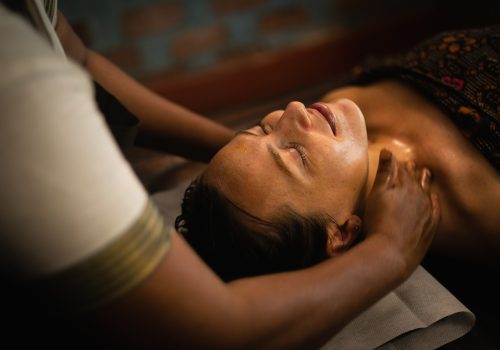
Nasya refers to the administration of prescribed substances through the nasal passages under practitioner supervision and is one of the procedures described within the broader Panchakarma tradition.
In Ayurveda, Nasya is traditionally used in contexts involving the head and upper respiratory passages. The exact substance, timing and suitability depend on the individual and should be determined by a qualified practitioner.
It is not an at-home substitute for medical treatment, particularly for anyone with an established respiratory condition.
Steam, oil therapies and supervised care
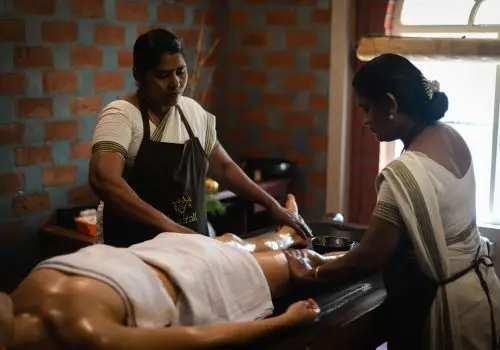
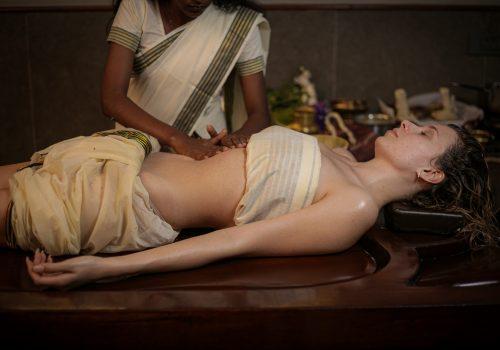
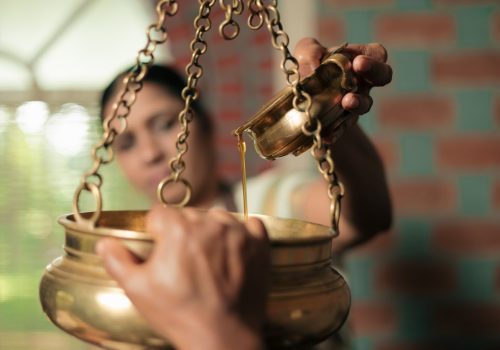
Ayurvedic programmes may also include procedures involving warmth, oil application or herbal preparations where the physician considers them appropriate.
Swedana refers broadly to therapeutic sudation or heat-based procedures. In Ayurvedic practice, it is often used as part of a wider sequence rather than as a standalone answer to a health complaint.
The same is true of more intensive Panchakarma procedures. Therapies such as Vamana are supervised clinical interventions with specific indications and contraindications. They should never be presented as general home remedies or universal solutions for respiratory symptoms.
This distinction matters because the names of Ayurvedic therapies are now widely available online, while the clinical reasoning behind them is often missing.
Food and routine also matter
Ayurveda does not separate respiratory wellbeing from digestion and daily routine.
Warm, freshly prepared meals may be preferred in some situations, while physicians may adjust dietary recommendations according to constitution, appetite and the season. Spices and herbs may also feature in traditional Ayurvedic dietary practice, but their suitability varies by individual and context.
The more important principle is consistency.
Irregular meals, poor sleep, inadequate hydration and persistent environmental exposure can all make it harder to maintain a stable routine. Ayurveda therefore treats lifestyle as part of the wider picture rather than an afterthought.
The role of yoga and breathing practices
Yoga and prāṇāyāma (regulated breathing practices) are commonly included in Ayurvedic wellness programmes.
For many people, gentle breathing practices can support awareness of breathing patterns, relaxation and a more structured daily routine. But breathing exercises also need to be appropriate to the individual.
Someone with an established respiratory condition should not use forceful breathing techniques without appropriate guidance, and yoga or pranayama should never replace prescribed medical care.
Respiratory wellbeing is not a do-it-yourself treatment plan
This is where Ayurvedic content needs to be especially careful.
It is tempting to turn a traditional framework into a list of remedies: use this herb, perform this therapy, drink this preparation.
That is not how rigorous Ayurvedic care works.
The more credible approach begins with assessment. A qualified practitioner looks at the individual rather than the condition label alone, and any Ayurvedic programme should be adapted around existing diagnoses, medications and medical supervision.
For people living with asthma, COPD or another diagnosed respiratory disease, conventional medical treatment remains essential. Ayurvedic care, where appropriate, should be discussed with both a qualified Ayurvedic practitioner and the treating physician.
At Kairali, that physician-led approach is more important than any single therapy.
Because in Ayurveda, the question is rarely simply, “Which treatment is used for breathing?”
The better question is: what is happening in this person, in this season, with this constitution and this wider health context?
That is where individualised care begins.