
















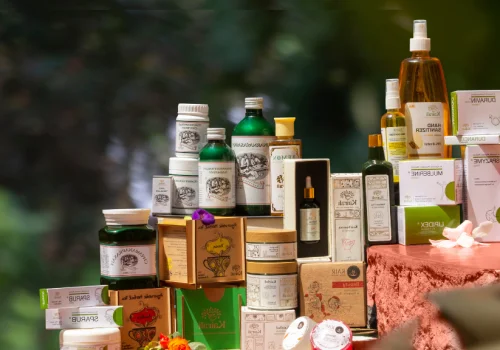
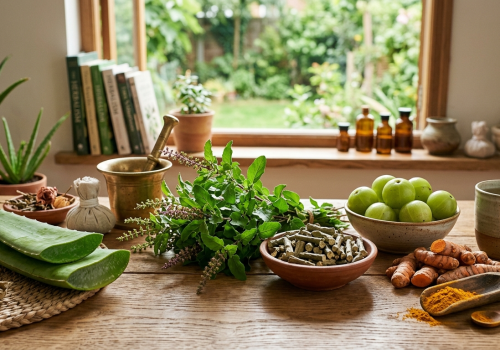















Returning home from an Ayurvedic retreat often comes with a simple question: where can you buy the same herbs, oils and pantry products in Europe?
The answer depends on the product and the country.
An oil may be sold as a cosmetic. A herbal capsule may be classified as a food supplement. A formulation available in India may not be permitted for sale in the same form in the United Kingdom or European Union.
The safest approach is to buy fewer products, use authorised sellers and check the label carefully.
Start with what your practitioner recommended
Do not try to recreate an Ayurvedic pharmacy at home.
Begin with the products listed in your discharge plan or recommended during your retreat. Divide them into three groups:
- Food and kitchen ingredients
- External-use oils
- Herbs or formulations taken by mouth
This makes the buying process easier and reduces the risk of choosing the wrong product.
What is useful to keep at home?
A practical home supply may include a few kitchen staples, one external oil and only the herbs already approved for you.
Kitchen basics
Common options include:
- Ghee, where suitable
- Cumin
- Coriander
- Fennel
- Ginger
- Turmeric
- Black pepper
- Simple herbal infusions
These are often easier to source locally than specialised formulations.
External-use oils
Body and scalp oils can be useful for maintaining a simple home routine.
Check that the label clearly states:
- Where the oil should be used
- Whether it is for external use only
- How it should be stored
- When it should be used after opening
Do not ingest an oil labelled as a cosmetic or external-use product.
Herbs and formulations
Only continue herbs or formulations that your practitioner has already recommended.
Products with similar names may contain different ingredients or strengths. Do not substitute one for another without checking.
Five checks before you buy
1. Read the full label
The pack should show:
- Ingredients
- Batch or lot number
- Expiry or best-before date
- Storage instructions
- Recommended use
- Warnings
- Importer or distributor details
Avoid products with incomplete labels or unclear translations.
2. Check the product category
Look for a clear description such as:
- Food
- Food supplement
- Cosmetic
- Herbal medicinal product
The category tells you how the product is intended to be used.
3. Confirm the seller
Choose sellers that clearly identify:
- The business name
- Physical address
- Customer-service details
- Returns policy
- Importer or distributor
A brand name in a marketplace listing is not enough.
4. Check traceability
Keep the invoice and note the batch number.
This makes it easier to reorder the same product or report a problem.
A QR code can help, but it should lead to real product or batch information, not only a marketing page.
5. Avoid exaggerated claims
Be cautious with products promising:
- Guaranteed results
- Rapid weight loss
- Disease reversal
- Complete detoxification
- Universal benefits
Responsible product information should explain what the product contains and how it is intended to be used. It should not promise a cure.
Where to buy Kairali products in Europe
Availability changes by country and by product category.
The best starting point is to contact Kairali through an official channel and ask for the current authorised seller, importer or clinic partner in your country.
Include:
- The full product name
- Pack size
- Your country
- Whether you need the food, supplement or external-use version
The safest buying routes
Official Kairali channels
These are the first place to check for current availability and product guidance.
Confirm whether the exact item can be shipped to your country.
Authorised distributors
A local distributor may offer:
- Faster delivery
- Local-language labels
- Easier returns
- Clearer importer information
Confirm that the distributor is authorised for the specific product category you need.
Ayurvedic clinics
Some clinics stock a small range of oils, teas and formulations.
This can be useful when the clinic can confirm the source and help you match the product to your original recommendation.
Online marketplaces
Use extra caution.
Avoid listings that do not show:
- The actual seller
- The full label
- The batch number
- Importer details
- A returns policy
Deep discounts are not worth uncertain storage or unclear provenance.
A simple post-retreat shopping list
A manageable home basket may include:
Pantry
- One cooking fat from your plan
- A small set of familiar spices
- One or two herbal infusions
External care
- One body oil
- One scalp oil, where needed
Practitioner-directed products
- Only the herbs or formulations already recommended
- A small initial quantity
- A copy of the label and batch details
Buying one or two months’ supply is usually more practical than buying in bulk.
Storage in European weather
Cold weather may cause some oils to thicken or partly solidify.
Let them return to room temperature before use. Follow the label rather than heating the bottle aggressively.
In hot weather, avoid parcels being left in direct sunlight or inside vehicles.
Keep powders and capsules away from moisture.
Ten questions to ask before ordering
- Is this the exact product recommended to me?
- Is it for oral or external use?
- What product category appears on the label?
- Are all ingredients listed?
- Is there a batch number?
- Is the expiry date clear?
- Is the importer identified?
- Is the seller authorised?
- Are the claims reasonable?
- Can my practitioner review the label?
Do not change the plan on your own
Herbs and supplements can interact with medicines. They may also be unsuitable during pregnancy, lactation or in certain health conditions.
Do not increase the amount because progress feels slower at home.
Do not begin several new products at the same time.
Stop using a product and seek professional advice if you notice an unexpected reaction.
A smaller routine often works better
The purpose of post-retreat care is not to fill a cupboard.
It is to protect the routine you established: regular meals, consistent sleep, appropriate movement and a small number of products used correctly.
Buy fewer items. Check them carefully. Match the label to the intended use. Keep your practitioner informed.
That is a more reliable way to carry an Ayurvedic routine from Kerala into everyday life in Europe.
Website: www.kairaliproducts.com
Call: +91-9555156156