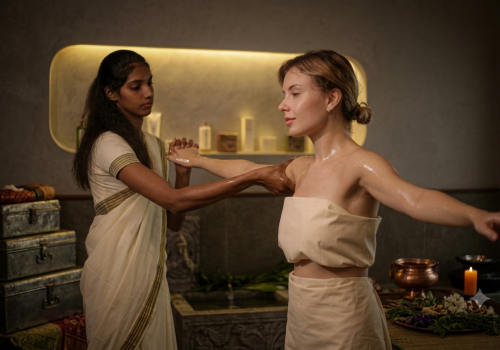






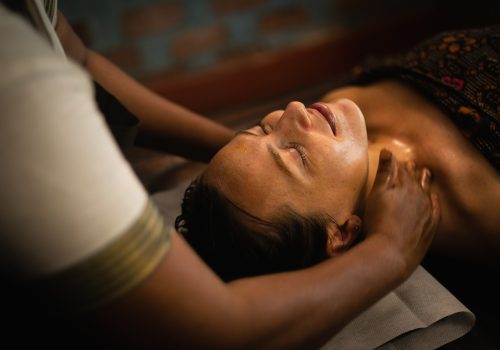
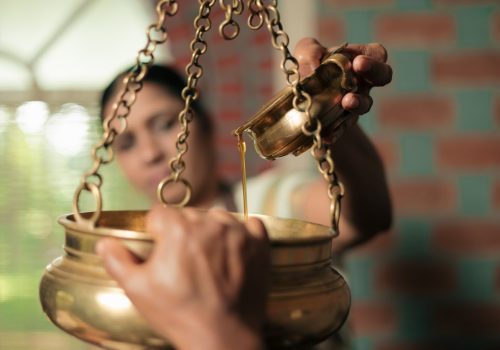















Abhyanga is the Ayurvedic practice of applying oil to the body through deliberate, rhythmic massage. It may be used as part of a daily routine, as an independent therapeutic procedure or during preparation for a physician-led Panchakarma programme.
Abhyanga is often introduced as an Ayurvedic version of a full-body massage.
The comparison is understandable, but incomplete.
Both practices involve touch, pressure and movement across the body. In Abhyanga, however, the choice of oil, method of application and place of the procedure within a wider programme are traditionally guided by Ayurvedic assessment.
It is not simply a relaxation treatment with herbal oil added.
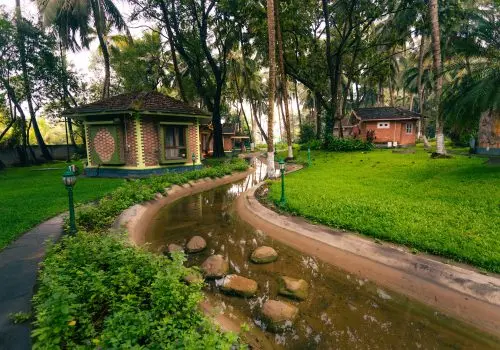
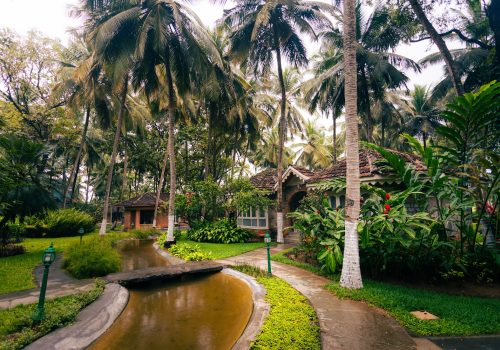
At Kairali, The Ayurvedic Healing Village in Palakkad, Abhyanga may form part of a physician-led programme that also considers food, rest, movement and other prescribed procedures. The purpose and method can differ from one guest to another.
Understanding those differences helps separate the traditional practice from the expansive health claims now frequently attached to it.
What is Abhyanga?
Abhyanga is an Ayurvedic oil-application and massage practice.
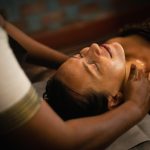
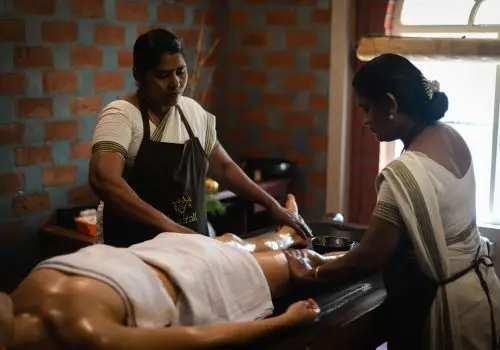
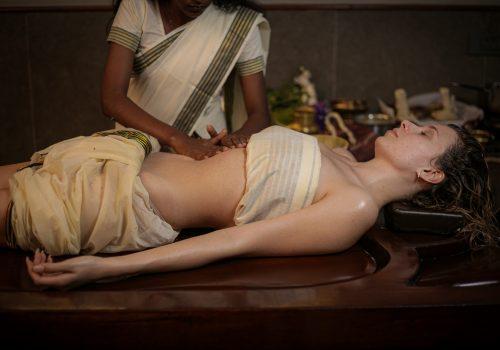
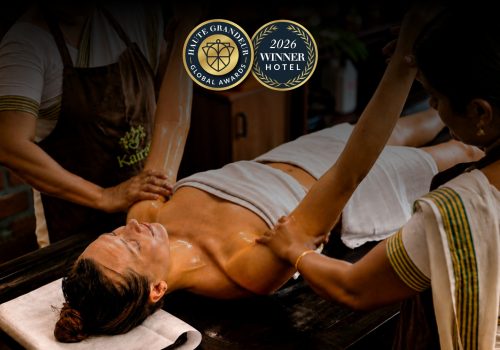
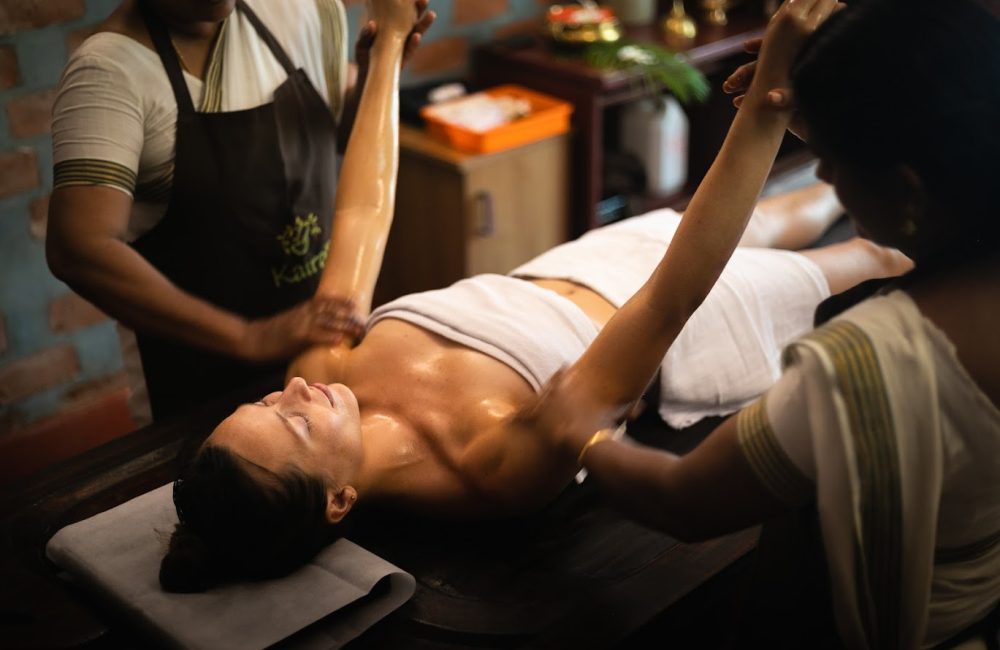
The word is commonly used for a full-body procedure in which oil is applied using continuous, rhythmic strokes. Depending on the setting, it may be performed by one therapist, by two therapists working in coordination, or as a simpler form of self-massage.
Ayurveda also describes oil application to particular areas of the body rather than always treating Abhyanga as one fixed, head-to-toe routine.
The oil may be plain or processed with herbs. Its selection can depend on factors such as:
- the purpose of the procedure
- the person’s constitution and current Ayurvedic assessment
- skin condition and sensitivity
- climate and season
- physical strength
- whether Abhyanga is being used independently or before another procedure
This means there is no single oil or technique that is ideal for everyone.
Is Abhyanga a massage or a treatment?
It can be presented as either, depending on the context.
A general wellness centre may offer Abhyanga mainly for relaxation. In a clinical Ayurvedic setting, it may be prescribed for a defined purpose and coordinated with other parts of the treatment plan.
Abhyanga may also be used during pūrvakarma (preparatory care) before selected Panchakarma procedures. In this setting, it should not be understood as a standalone spa service.
The distinction matters because the term alone does not tell the reader:
- who selected the oil
- whether a physician assessed the guest
- what pressure and technique were used
- whether heat therapy followed
- how the procedure related to the wider programme
- whether the person had any contraindications
Travellers comparing Ayurvedic treatments should therefore ask how Abhyanga is assessed and delivered, not simply whether it appears on the therapy menu.
What does Ayurveda traditionally say about Abhyanga?
Classical Ayurvedic discussions place oil application within dinacaryā (daily routine) and within therapeutic care.
The practice is traditionally associated with qualities such as lubrication, warmth, steadiness and nourishment. It is frequently discussed in relation to Vāta, the dosha characterised by movement, dryness, lightness and coldness.
In this framework, warm oil and rhythmic touch are considered particularly relevant where dryness, irregularity or a sense of physical restlessness is present.
These are traditional Ayurvedic explanations. They should not be converted directly into claims that Abhyanga cures neurological disease, removes toxins or corrects every Vata-related condition.
Traditional classification describes how Ayurveda understands and applies the practice. Modern clinical evidence asks a different question: what measurable effects have been demonstrated in people?
Can Abhyanga reduce stress?
Relaxation is one of the more reasonable contemporary descriptions of Abhyanga.
A small 2011 pilot study examined one-hour Abhyanga sessions in 20 healthy adults. Participants reported lower subjective stress after the massage, and researchers also observed a reduction in heart rate. Blood-pressure changes were limited to a subgroup, and the study did not establish lasting clinical effects.
The small sample, absence of a strong comparison design and short follow-up mean the findings should be treated as preliminary.
It is therefore reasonable to say that some people may find Abhyanga calming or relaxing.
It is not reasonable to claim that it treats anxiety disorders, depression, chronic stress or other mental-health conditions.
Does Abhyanga improve sleep?
Many people report feeling relaxed after massage, and a calm evening routine may make it easier to prepare for sleep.
Evidence specific to Abhyanga and diagnosed sleep disorders remains limited. Claims that it treats insomnia or guarantees deeper sleep go beyond what has been established.
Sleep problems may be linked to pain, medication, breathing disorders, hormonal changes, mental health or several other factors. Persistent insomnia requires appropriate assessment.
Within an Ayurvedic programme, Abhyanga may be one supportive part of a broader routine involving sleep timing, meals, activity and physician-selected treatment.
It should not be presented as a substitute for investigating the cause of ongoing sleep disturbance.
Does Abhyanga detoxify the body?
“Detoxification” is frequently used in descriptions of oil massage, but it is rarely defined.
Claims that oil penetrates deeply into the tissues, binds toxins and removes them through the skin have not been established through strong human clinical evidence.
Massage may temporarily affect local blood flow, skin temperature and relaxation. Oil can also reduce dryness by coating the skin and limiting moisture loss.
These effects do not demonstrate the removal of unspecified toxins from the body.
In traditional Ayurveda, Abhyanga may be used as part of the preparation for selected cleansing procedures. That does not mean the massage itself should be described as directly flushing toxins from the lymphatic system or cells.
The more accurate wording is that Abhyanga may support preparation and comfort within a supervised Ayurvedic programme.
What can Abhyanga do for the skin?
The most direct effect of oil application is on the surface of the skin.
Oil can soften dry skin and reduce the sensation of roughness. Massage also creates friction and temporary warmth. The experience may leave the skin feeling smoother immediately after treatment.
The result depends partly on the oil used and the person’s skin.
Herbal oils can contain ingredients that cause irritation or allergic reactions. Fragrance, heat and vigorous rubbing may also aggravate some skin conditions.
Abhyanga should generally be avoided over:
- open wounds
- burns
- active skin infections
- unexplained rashes
- inflamed or acutely painful areas
- skin known to react to the selected oil
A patch test or practitioner review may be appropriate when the oil is unfamiliar.
Abhyanga should not be advertised as a treatment for eczema, psoriasis, pigmentation or other diagnosed skin disorders without suitable evidence and medical oversight.
How is Abhyanga performed at Kairali?
At Kairali, The Ayurvedic Healing Village, treatment programmes begin with physician assessment within an NABH-accredited Ayurvedic setting.
Where Abhyanga is considered suitable, the medical team may determine:
- its role within the programme
- the type of oil to be used
- the frequency of sessions
- whether one or two therapists are appropriate
- the intensity and focus of the massage
- whether it should be followed by rest, bathing or another procedure
The therapist then follows the prescribed method and communicates relevant observations to the medical team.
This is the main difference between a standard massage booking and a therapy included within a supervised programme: the procedure is connected to an assessment and a wider plan.
Why synchronised massage is sometimes used
Some Ayurvedic settings use two therapists who apply strokes in a coordinated rhythm.
The purpose is not to make the treatment more luxurious. It is a particular method of administering oil and massage across the body in a consistent sequence.
Synchronised therapy requires training and communication. Two therapists moving without coordination do not automatically produce a better result than one appropriately trained therapist.
The number of therapists should therefore be understood as part of the method rather than as a measure of quality on its own.
Is self-Abhyanga the same as clinical Abhyanga?
No.
Simple self-application of oil can be practised as a personal care routine. It does not reproduce the assessment, therapeutic technique or supervision involved in professionally administered Abhyanga.
A basic home practice may involve applying a suitable oil gently to the arms, legs and other accessible areas before bathing. The aim may be to reduce skin dryness, slow down or create a regular self-care routine.
It should not involve copying an intensive retreat procedure or using medicated oils without guidance.
Extra care is needed because oil can make floors, baths and shower areas slippery. Oil-soaked towels and clothing also require careful laundering and storage.
People with mobility problems, reduced sensation, active illness, skin disease or significant medical conditions should seek advice before beginning regular self-massage.
When should Abhyanga be avoided?
Suitability depends on the individual and the procedure, but Abhyanga may be postponed or modified during:
- fever or acute infection
- severe indigestion, vomiting or diarrhoea
- active skin infection or open wounds
- acute injury or unexplained swelling
- severe pain requiring diagnosis
- periods when a physician advises against massage
- known allergy to the oil or herbs used
Pregnancy, recent surgery, cardiovascular conditions and other medical circumstances may require specific modifications or clearance.
Massage should never be continued through pain, dizziness, breathlessness, nausea or marked discomfort.
Abhyanga is not automatically suitable every day
Classical daily-routine discussions are sometimes interpreted as instructions for everyone to perform full-body oil massage each morning.
Modern routines, health conditions and practical needs differ.
Some people may enjoy regular light oil application. Others may find it unsuitable because of skin sensitivity, climate, work schedules or medical circumstances. A medicated therapeutic oil should not be treated as an everyday cosmetic product unless it has been recommended for that use.
Frequency should follow purpose and tolerance.
More oil, greater pressure or more frequent sessions do not necessarily produce a greater benefit.
What should you ask before booking Abhyanga?
Before receiving the procedure at a retreat or treatment centre, ask:
- Will an Ayurvedic physician assess me first?
- Who selects the oil?
- Are the therapists trained in the prescribed method?
- Is the oil reused?
- Is Abhyanga part of a wider programme or a standalone service?
- Are there reasons I should avoid the procedure?
- What should I do before and after the session?
- Will the method change if I feel uncomfortable?
Clear answers are a better sign of quality than exaggerated lists of benefits.
A practice best understood in context
Abhyanga has endured because oil, touch, warmth and rhythm can create a distinctive experience of care.
Its value does not need to be defended through claims that it purifies the blood, removes cellular toxins, reverses ageing or treats insomnia.
The traditional practice is more specific than that.
Abhyanga may be used as part of daily care, as an independently prescribed procedure or as preparation within Panchakarma. The oil and method are selected according to context. The therapist observes how the person responds. The physician decides how the procedure fits into the larger plan.
At Kairali, this clinical context is what distinguishes Abhyanga from an isolated massage on a resort menu.
The strongest reason to experience it is not that it promises transformation.
It is that, when appropriately prescribed and carefully performed, it offers a structured form of oil application, therapeutic touch and rest within the wider discipline of Ayurveda.
Website: www.ktahv.com
Call: +91-9555156156