






























Paneer sits at the center of India’s vegetarian plate—comforting, versatile, and protein‑rich. Yet Ayurveda reminds us that what we eat must suit our body, season, and digestion (agni). This guide explains how, when, and for whom paneer serves best, the role of probiotics alongside dairy, and smart alternatives for those who don’t do well with milk solids. You’ll also find Kairali‑style pairing tips (pepper, methi, cumin) and menu ideas from our Palakkad Ayurveda retreat.
Paneer Through the Ayurvedic Lens
- Guna (qualities): generally guru (heavy), snigdha (unctuous), and sheetala (cooling).
- Dosha impact: can nourish Vata when cooked warm with ghee/spices; may increase Kapha and aggravate Pitta if fried heavily, paired with chilies, or eaten late at night.
- Satmya (habitual suitability): Regions and families accustomed to dairy digest it better. If paneer feels heavy, causes mucus, or bloating, your satmya may be low or agni low.
When Paneer Helps
- You’re underweight, recovering, or have high activity needs and a steady appetite.
- Vata‑dominant constitutions needing grounding and strength.
- Winter/early spring when warmth and richness are better tolerated.
When to Go Easy or Avoid
- Kapha‑dominant tendencies (congestion, sluggishness), especially in humid monsoon or peak winter mornings.
- Pitta with acne/acid reflux when paneer is fried with chilies or eaten very late.
- IBS or lactose sensitivity—trial small, well‑spiced portions or choose alternatives below.
Cooking & Pairing: Pepper, Methi & Friends
Ayurveda uses spices to activate digestion and reduce heaviness.
- Black Pepper (maricha): sparks agni, reduces post‑meal heaviness; excellent in pepper‑paneer stir‑fries with ghee.
- Fenugreek (methi): adds mild bitterness to offset Kapha; use methi leaves/seeds tempered in ghee.
- Cumin (jeera) & Ajwain: carminatives that ease gas—ideal for paneer bhurji or light gravies.
- Ginger & Turmeric: support circulation and balance cold heaviness.
- Greens & Bitters: pair with methi, palak, mustard leaves; avoid cream‑heavy gravies if Kapha‑prone.
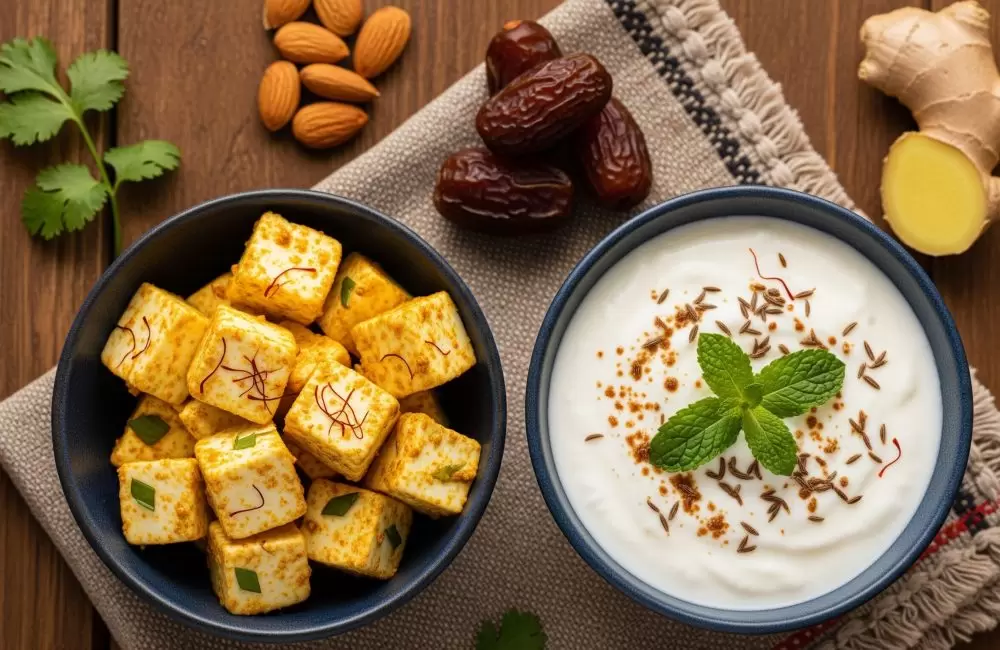
Pro Tip from Kairali Kitchen: Lightly sauté paneer cubes in ghee with cumin, ginger, and cracked pepper; fold into wilted methi leaves. Finish with warm water splash—not cream—for a lighter, dosha‑friendly dish.
Paneer & Probiotics: Where Curd, Takra and Ferments Fit
Paneer itself is not probiotic, but fermented dairy can support digestion when suitable.
- Curd (Dahi): heavier than buttermilk; take at lunch with a pinch of black pepper. Avoid at night if you’re Kapha‑prone or congested.
- Takra (Buttermilk): Ayurveda‑preferred—light, digestive, and customizable with cumin, rock salt, and coriander. Great side with paneer meals to help processing.
- Plant Ferments: kanji, fermented rice water, or pickled carrots add tang without dairy load—useful in IBS or when mucus is a concern.
- When to Skip Ferments: acute acidity, diarrhea, or immediately after very oily/fried meals.
IBS & Mucus Considerations
- Start with small portions (½ cup cooked paneer), well‑spiced, at lunch—not dinner.
- Prefer grilled/sauteed over deep‑fried or cream‑based dishes.
- Add hing (asafoetida) and ajwain for gas control; include a side of warm takra.
- If mucus, sinus, or throat congestion worsens after paneer: pause for two weeks, favor mung dal khichdi, vegetable stews, and revisit with a nutritionist.
Smart Alternatives (When Paneer Doesn’t Suit You)
- Tofu: lighter, neutral; cook warm with ginger, sesame, and pepper.
- Sprouts & Legumes: mung/matki sprouts, rajma/chole (pressure‑cooked, spiced with cumin/hing).
- Moong Dal: king of light proteins; ideal for convalescence and IBS.
- Nut/Seed Add‑ons: sesame, flax, pumpkin seeds in small doses for extra protein and minerals.
Sample Dosha‑Wise Plates from Kairali Palakkad
Vata‑Balancing Lunch: Pepper‑methi paneer sauté + red rice + sautéed ridge gourd + warm takra with cumin.
Pitta‑Soothing Lunch: Light paneer‑palak with ghee tempering (no chilies) + jeera rice + cucumber‑dill raita at noon only.
Kapha‑Light Dinner: Skip paneer; choose tofu‑methi stir‑fry + millet roti + bitter gourd ribbon salad with lemon.
Safety Notes & Integration
- Do not use paneer to replace prescribed medical nutrition in kidney, lipid, or gallbladder disorders without professional guidance.
- If on antibiotics or with active acne/reflux, favor lighter proteins and revisit paneer in 1–2 weeks.
- Athletes can periodize: higher‑protein lunches on training days; lighter vegetarian proteins on rest days.
Final Word
Paneer can be wholesome—when digestion, season, and cooking method are aligned. Use spices to lighten, choose lunch over late dinners, and rotate with tofu, legumes, and moong dal when needed. For a tailor‑made plan, join us at Kairali – The Ayurvedic Healing Village, Palakkad.
About the Author
Dr. Deepu John is a highly respected Ayurvedic physician serving as the Chief Physician and Head of Department at Kairali – The Ayurvedic Healing Village. With over 12 years of dedicated clinical experience, Dr. Deepu is known for his profound diagnostic acumen, deep-rooted knowledge of Ayurvedic principles, and a compassionate, personalized approach to healing.
Dr. Deepu believes that true healing comes from understanding the root cause of illness and restoring internal balance—not just treating symptoms. His patient consultations are comprehensive, combining classical Ayurvedic diagnostics (Nadi Pariksha, Darshana, Prashna) with modern wellness insights. He emphasizes preventive care, dietary wisdom, and mind-body harmony as cornerstones of lifelong wellness.