































Paneer (Indian cottage cheese) gives protein but no fiber. To keep digestion light and support your gut microbiome, pair paneer with legumes, seasonal vegetables, whole grains, and a small portion of fermented foods—aligned with Ayurveda’s focus on agni (digestive fire).
Paneer is comfort food for millions of Indians—but your gut needs more than comfort to thrive. Inspired by recent guidance on India’s growing “fiber gap,” this article brings an Ayurvedic lens to a simple truth: paneer is rich in protein yet naturally zero in fiber, so what you pair it with determines whether your meal supports or slows your digestion.
At Kairali, we look at every plate through agni (digestive fire) and dosha balance. In the next sections, you’ll learn how to combine paneer with high-fiber legumes, seasonal vegetables, whole grains, and gut-friendly ferments—plus the exact spice pairings that make paneer lighter for Vata, gentler for Pitta, and cleaner for Kapha. Think of this as your practical, everyday guide to enjoying paneer while feeding your microbiome and feeling light after meals, not heavy.
Science + Ayurveda: the fiber fix for paneer meals
Paneer brings protein and satiety but zero fiber; the fiber must come from plants alongside it. When you add legumes/vegetables/whole grains and a small portion of ferments, your meal feeds beneficial microbes and supports glycemic steadiness—echoing TOI’s recommendations to prioritize legumes, start meals with salads, and lean on traditional ferments.
Where Paneer Fits (Ayurvedic View)
- Qualities: Fresh paneer is madhura rasa (sweet), guru (heavy), snigdha (unctuous)—nourishing yet naturally fiber-free.
- Digestive fire (Agni): Keep preparations warm, lightly spiced, and not overly creamy to avoid dampening agni.
- Doshas (quick cues):
- Vata: Better with warmth and moisture; add cumin, ginger, black pepper.
- Pitta: Moderate portions; pair with cooling greens, coriander, fennel.
- Kapha: Smallest portion; emphasize bitter/astringent veg and heating spices (ajwain/black pepper).
The Core Principle
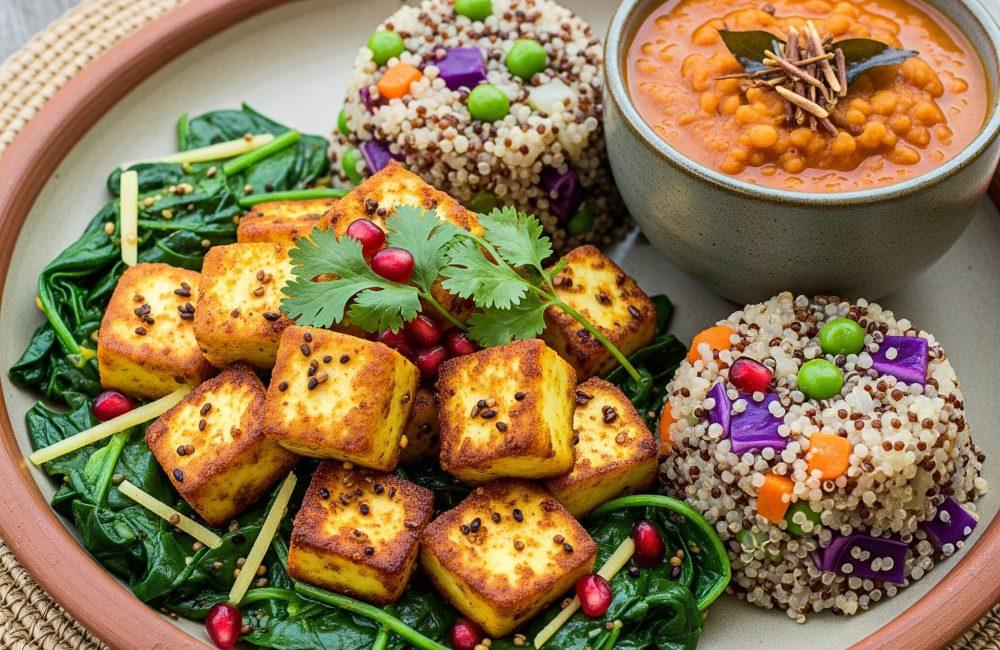
Paneer offers protein and satiety but zero fiber—so gut benefits depend on what you plate around it: legumes, diverse vegetables, whole grains, and a little fermented food. This mirrors guidance to make legumes the primary protein, start meals with fiber (salad/raw veg), and diversify grains and dals.
How to Build a Paneer Plate (No Overload, Just the Essentials)
- Open with fiber: a small raw veg/salad component to “prime” each meal.
- Half plate non-starchy veg: gourds, bhindi, leafy greens, seasonal mixes.
- One legume always: moong/masoor/chana/rajma—protein with fiber.
- Whole grain base: hand-pounded rice, millets, or atta mixed with sattu/barley for fiber diversity.
- Paneer as an accent: grill/bhurji/dry sauté; avoid cream-heavy gravies, especially at night.
- Spice for digestion: cumin, ajwain, hing, ginger, turmeric.
- Add a traditional ferment: idli/dosa batter dishes, kanji, or a little homemade pickle to complement fiber.
What to Limit (Why It Matters)
Animal products and ultra-processed dishes displace fiber-rich plants on the plate; fiber scarcity reduces beneficial gut microbes and their short-chain fatty acids—linked with inflammation control and metabolic health. Re-centering legumes/veg/fruits reverses that trend.
Quick Doshic Adjustments
- Vata: Add ghee tempering; choose moist, warm preparations.
- Pitta: Favor coriander/fennel/mint; keep chilies modest.
- Kapha: Smallest paneer portion; extra leafy/bitter veg; dry-roasted spices.
Bottom Line
Keep enjoying paneer—but let plants lead. Make legumes the daily default, pack half the plate with vegetables, choose whole grains, and add a small ferment. That’s how paneer meals become microbiome-friendly, agni-supportive, and light on the body—every day.
About the Author
Dr. Akhila Oommen is a highly experienced Ayurvedic physician at Kairali – The Ayurvedic Healing Village, with over 9 years of dedicated practice in holistic health management. Her clinical approach is deeply rooted in classical Ayurvedic principles, complemented by a compassionate, solution-oriented mindset. Her ability to treat complex and chronic conditions with precision and empathy has earned her the trust of countless wellness seekers from around the world.
Dr. Akhila believes in empowering individuals through knowledge of their own constitution and imbalances. Her treatments are guided by the Ayurvedic principle of Swasthasya Swasthya Rakshanam—preserving the health of the healthy—and she emphasizes preventive care just as much as curative protocols. Her goal is not just to treat disease but to create balance across the body, mind, and spirit for sustainable well-being.