



















When Ayurveda is offered in a clinical setting, the quality of the experience cannot be judged by treatments and surroundings alone. Patient safety, infection control, practitioner credentials and clinical systems matter too.
That is the significance of a new certification received by Kairali – The Ayurvedic Healing Village in Palakkad, Kerala.
As reported by BW Travel on 22 May 2025, Kairali received the Clinical Establishment Permanent Certificate under the Kerala Clinical Establishments Act, 2018. The certification is valid until 2030. BW Travel reported that it confirms compliance with standards relating to patient safety, infection control and Ayurvedic treatment practices.
For an Ayurvedic institution, this is more than an administrative milestone. It highlights an increasingly important question within wellness tourism: what should guests look for when Ayurveda is being delivered as healthcare rather than simply as a spa experience?
What is the Clinical Establishment Permanent Certificate?
The certificate places Kairali within Kerala’s formal framework for registered clinical establishments.
According to BW Travel, the certification reflects compliance with standards covering areas including patient safety and infection control, alongside the provision of Ayurvedic treatments.
These may sound like routine institutional requirements, but they are particularly relevant in Ayurveda.
Treatments such as Panchakarma are often discussed internationally in the language of retreats, relaxation and wellness. In clinical Ayurvedic practice, however, they involve considerably more than booking a therapy from a menu.
Assessment, practitioner supervision, hygiene protocols, treatment planning and documentation all form part of the wider system in which care is delivered.
The permanent certification therefore helps make an important distinction visible: an Ayurvedic facility may provide a retreat environment while still operating within a defined clinical framework.
Why clinical standards matter in Ayurveda
As Ayurveda becomes more visible internationally, the word itself is being used across a wide range of settings.
An Ayurvedic massage at a hotel spa, a home wellness routine and a physician-supervised Panchakarma programme may all be described as “Ayurveda”, but they are not equivalent experiences.
This is where institutional standards become useful.
A person seeking supervised Ayurvedic care should be able to ask straightforward questions:
- Who assesses the patient before treatment begins?
- What qualifications do the practitioners hold?
- How are therapies selected?
- What hygiene and infection-control procedures are followed?
- How are clinical records maintained?
- What happens when a therapy is unsuitable for an individual?
These questions may sound less appealing than conversations about rejuvenation or relaxation, but they are fundamental to responsible care.
At WhyAyurveda, we believe this is one area where the wider wellness conversation needs greater precision. A peaceful environment can support a treatment experience. It cannot substitute for clinical governance.
The Kairali model: healthcare within a retreat environment
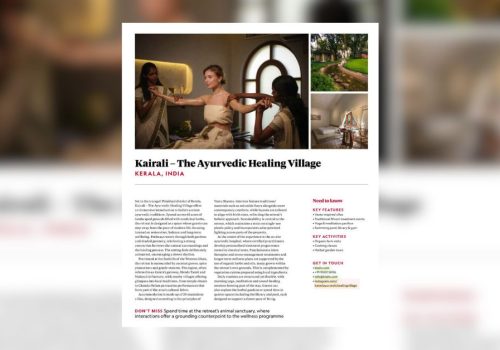
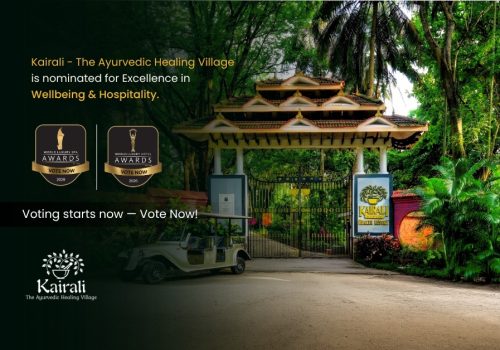
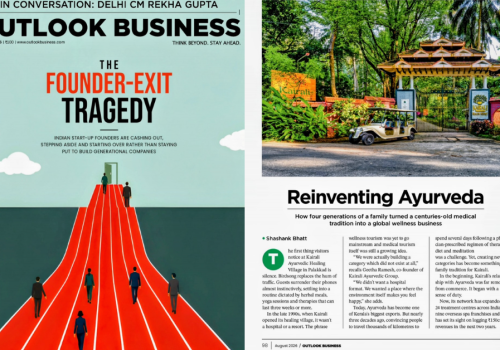
Kairali – The Ayurvedic Healing Village is Kairali Ayurvedic Group’s flagship property in Kodumbu, Palakkad. It operates as an NABH-accredited Ayurvedic hospital-resort, offering physician-led Panchakarma programmes within an Ayurvedic clinical framework.
That combination is central to the way the property is structured.
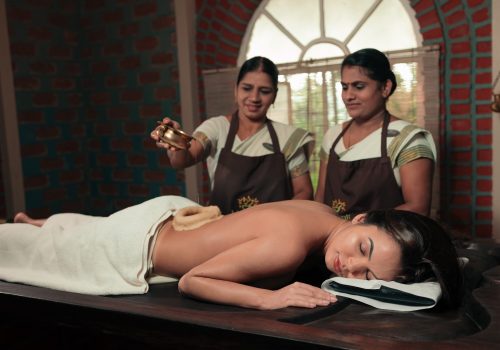
Guests may experience gardens, accommodation, meals and the slower pace associated with a residential retreat, but the Ayurvedic component is organised around physician-led care rather than a standardised spa menu.
The new Clinical Establishment Permanent Certificate adds another formal layer to that structure.
BW Travel quoted Executive Director Abhilash K. Ramesh describing the certificate as an important healthcare document that reflects the organisation’s commitment to patient care, standards and continued improvement. He also described Kairali as an NABH hospital operating within a resort environment.
That distinction is worth keeping clear.
The objective is not to make Ayurveda look more medical by borrowing the language of hospitals. It is to recognise that when an institution provides healthcare, clinical accountability should accompany the traditional system being practised.
What does the certification mean for guests?
For a guest considering an Ayurvedic programme, certifications can help answer questions that are otherwise difficult to assess from photographs or marketing material.
A retreat may look tranquil online. That tells the prospective guest very little about how care is actually organised.
Clinical certification provides another kind of signal: that standards relating to the operation of a healthcare establishment have been assessed within a regulatory framework.
For international travellers in particular, this matters.
Many people arriving for Ayurveda are encountering the system for the first time. They may understand yoga, massage or herbal wellness practices, but know much less about how physician-led Ayurveda is structured in India.
Visible standards can therefore provide useful context alongside other factors such as practitioner qualifications, consultation procedures and the scope of a programme.
They should not be interpreted as a guarantee of a particular health outcome. Certification concerns standards and systems, not promises that a therapy will work in the same way for every individual.
That distinction is important in any credible discussion of healthcare.
Beyond the language of “authentic Ayurveda”
The wellness industry often describes Ayurveda using terms such as “authentic”, “traditional” or “ancient”.
Those labels tell readers surprisingly little.
A more useful conversation asks what happens in practice.
Who makes clinical decisions? How are treatments selected? What standards govern the facility? How is patient safety approached? What qualifications sit behind the therapy being offered?
These are more concrete measures than broad claims about authenticity.
Kairali’s Permanent Clinical Establishment Certificate does not change the classical foundations of the Ayurveda being practised at the Healing Village. What it does is place the institution’s delivery of that care within an additional contemporary regulatory framework.
For Ayurveda’s international future, that combination matters.
Traditional medicine does not need to abandon its own clinical principles in order to meet modern expectations around safety, documentation and accountability. Nor should modern regulation be treated as something separate from the quality of care.
The two can coexist.
A useful benchmark for Ayurvedic wellness
BW Travel’s coverage places the certification within the wider wellness and hospitality conversation.
That is significant because wellness tourism increasingly includes programmes that sit somewhere between hospitality and healthcare.
For travellers, the challenge is knowing where that boundary lies.
Kairali’s model offers one answer: a residential Ayurvedic environment can provide the calm and space people associate with a retreat while maintaining the systems expected of a clinical establishment.
The Permanent Clinical Establishment Certificate, valid until 2030, adds a formal regulatory marker to that approach.
For Kairali, the certification is a milestone. For the wider Ayurvedic wellness sector, it points to something more important: the credibility of Ayurveda will increasingly depend not only on preserving its traditional knowledge, but also on showing clearly how that knowledge is delivered safely, professionally and accountably.
Source: Kairali Achieves Permanent Certification from Kerala Health Authorities