




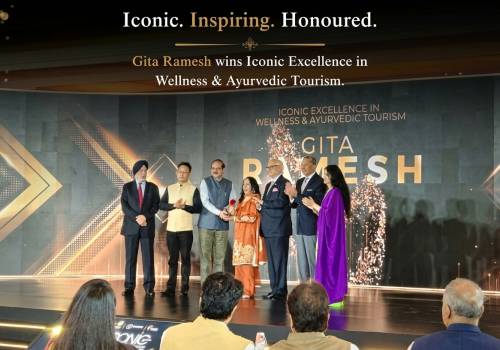








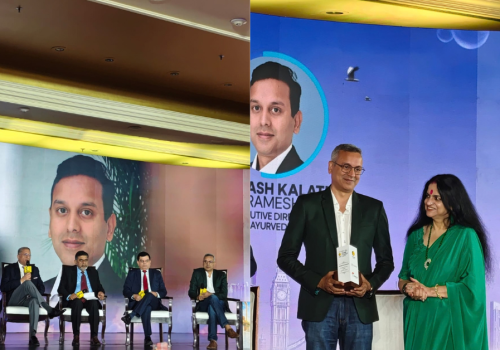

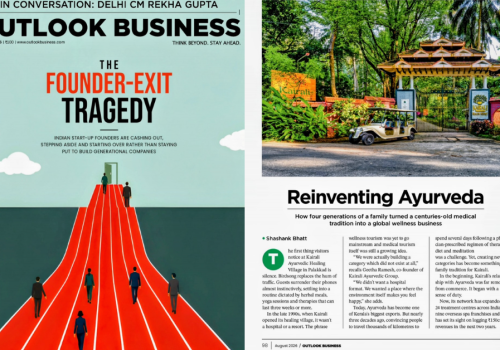


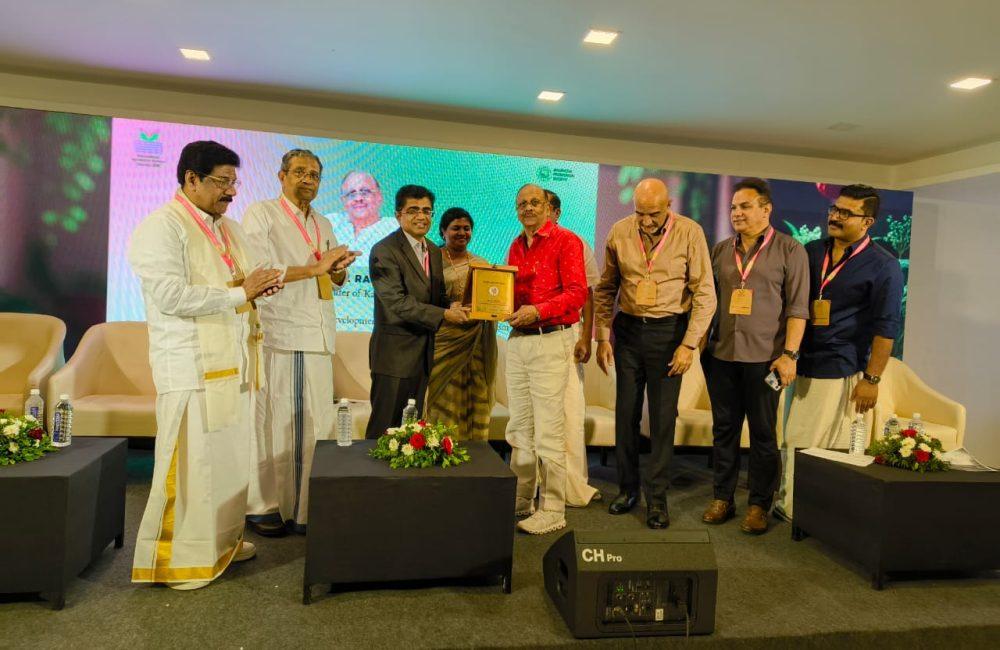
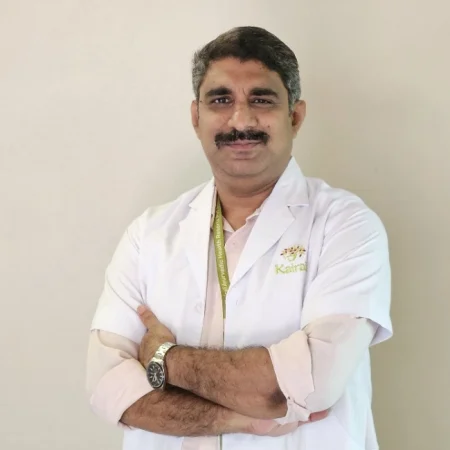
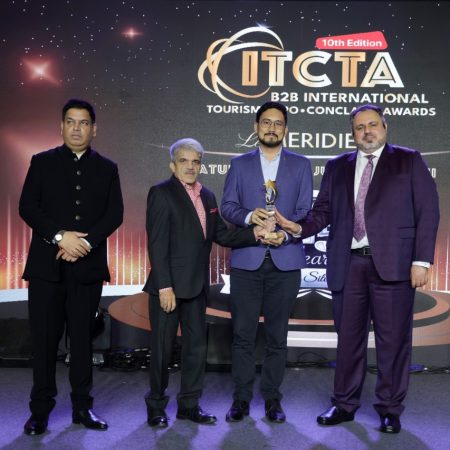
K. V. Ramesh, co-founder and Chairman and Managing Director of Kairali Ayurvedic Group, was honoured at the International Ayurveda & Wellness Conclave 2026 for his contribution to Ayurveda, wellness leadership and Ayurveda tourism. Kairali’s official awards record describes the recognition as acknowledging his work in bringing Ayurvedic care into the modern wellness-travel landscape.
The award recognises more than one individual achievement. It reflects a longer effort to build institutions around Ayurveda: clinical care, pharmaceutical manufacturing, practitioner-led programmes and hospitality shaped around Ayurvedic practice.
Building an institution around Ayurveda
Kairali Ayurvedic Group was founded in 1989 by K. V. Ramesh and Gita Ramesh. The organisation draws on four generations of Ayurvedic practice in the founders’ family.
Over time, the Group developed three principal divisions: Kairali, The Ayurvedic Healing Village in Palakkad; Kairali Ayurvedic Products Pvt. Ltd.; and Villa Raag in Goa.
The Healing Village became the Group’s central expression of Ayurveda-led wellness travel. It operates as an NABH-accredited Ayurvedic hospital, where programmes are planned under physician supervision rather than offered as standard spa packages.
This distinction has shaped K. V. Ramesh’s contribution to the sector.
His work has helped position Ayurveda tourism not simply as travel combined with massage, but as a form of supervised care that requires assessment, trained practitioners and an individual plan.
Ayurveda tourism requires more than atmosphere
The growth of wellness travel has created a wide range of retreats using Ayurvedic terminology. Yet a peaceful location, herbal oils and vegetarian food do not, by themselves, establish clinical Ayurveda.
The difference lies in how care is organised.
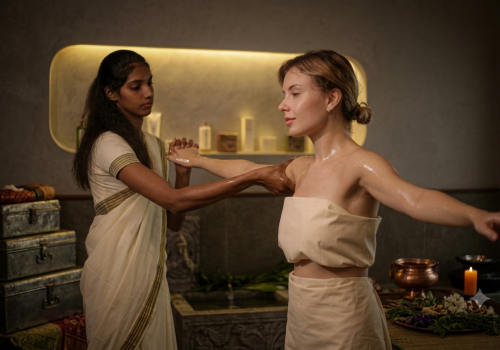
At a physician-led Ayurvedic centre, the process begins with assessment. The practitioner considers the guest’s medical history, constitution, current concerns, digestion, strength, medication use and suitability for specific procedures.
The programme may then include food, daily routine, yoga and selected therapies. It may also change during the stay according to the guest’s response.
This model asks more of both the centre and the guest. It is less convenient than selling one programme to everyone, but it is closer to the individualised reasoning on which Ayurveda is based.
The importance of classical discipline
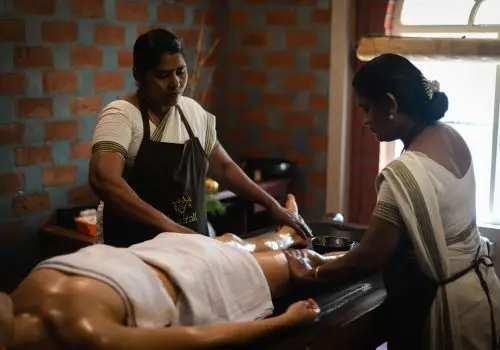
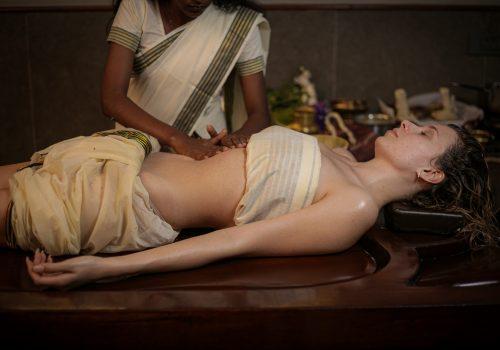
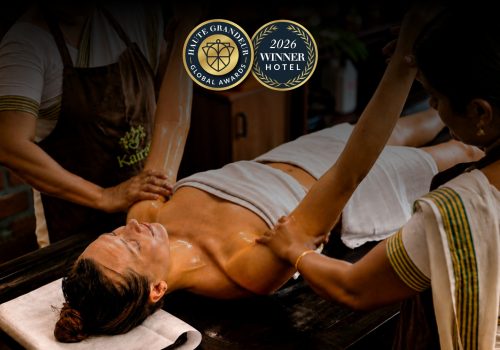
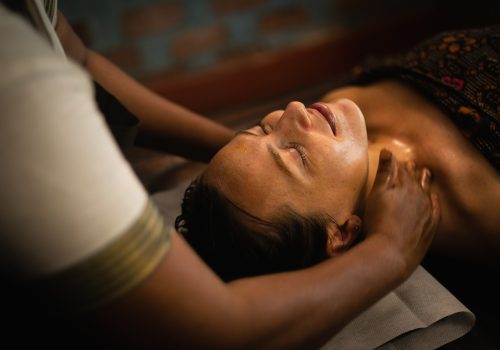
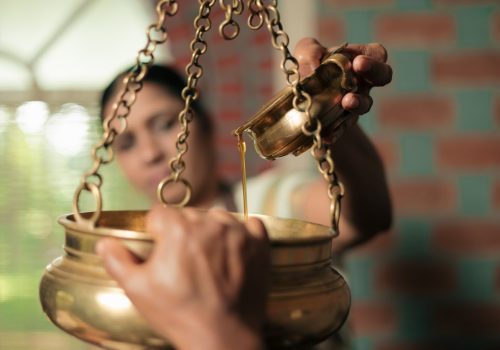
Treatments such as abhyanga (oil application), kaṭi vasti (a localised oil-retention procedure) and elakiḻi (a heated herbal-bolus treatment) are sometimes presented as standalone wellness experiences.
Within clinical Ayurveda, their use depends on context.
The oil, duration, intensity and sequence should be selected according to the individual. A therapy that is appropriate for one guest may be unnecessary or unsuitable for another.
K. V. Ramesh’s work has supported a model in which these therapies remain part of a broader clinical process. This means that hospitality serves the treatment environment, rather than treatment becoming an accessory to hospitality.
A place designed around care
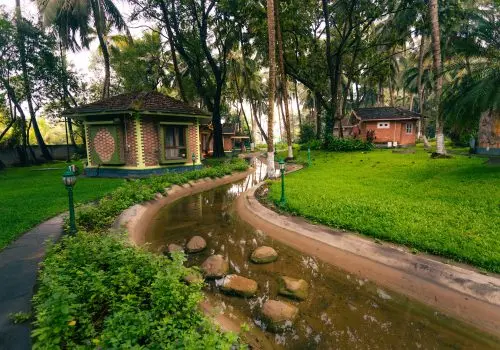
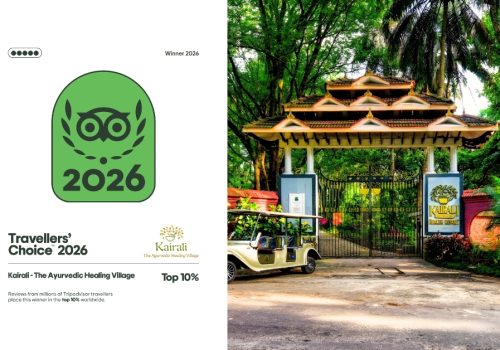
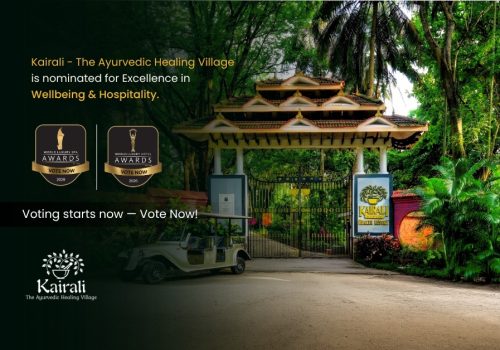
Kairali – The Ayurvedic Healing Village is located in Palakkad, Kerala.
Its setting allows the programme to extend beyond the treatment room. Meals, rest, movement, consultation and daily rhythm form part of the guest’s stay.
This does not mean that nature or food should be described as treatments in themselves. It means the environment can support a more consistent routine.
For a guest arriving after prolonged work pressure or irregular travel, the practical elements may be simple:
- eating at regular times;
- reducing unnecessary stimulation;
- following a suitable sleep schedule;
- attending physician reviews;
- participating in yoga or breathing practices when appropriate;
- allowing enough time for rest.
The value lies in structure, not spectacle.
Food as part of the Ayurvedic programme
Ayurvedic food planning considers more than whether a meal is vegetarian.
A practitioner may take into account appetite, digestive capacity, season, current imbalance and the stage of treatment. Portions, textures and ingredients may change during the programme.
This approach reflects a broader principle in Ayurveda: food should suit the person receiving it.
It also requires restraint in how outcomes are described. Meals may support the wider programme, but they should not be promoted as curing pain, reversing burnout or producing guaranteed changes in digestion or sleep.
Responsible growth in wellness tourism
The award also draws attention to the responsibilities that accompany the growth of Ayurveda tourism.
A credible retreat must protect the difference between clinical care and general wellness. It should avoid exaggerated outcomes, explain contraindications and provide clear practitioner oversight.
It should also represent Kerala’s traditions without reducing them to decorative features.
Local food, trained therapists, regional knowledge and established Ayurvedic methods should be treated as part of the institution’s operating structure, not simply as marketing material.
Kairali’s official description of the 2026 recognition links K. V. Ramesh’s contribution with Ayurveda tourism and global wellness leadership. The more meaningful interpretation is that he helped build a model through which Ayurveda could be experienced by international guests without removing the practitioner from the centre of care.
Recognition of a long-term commitment
Awards cannot measure the full impact of a person’s work. They can, however, mark a moment when that work becomes visible to a wider field.
The International Ayurveda & Wellness Conclave recognition acknowledges K. V. Ramesh’s role in developing an organisation that connects clinical Ayurveda, manufacturing, education and wellness travel.
That contribution is especially relevant at a time when Ayurveda is receiving greater international attention.
Visibility creates opportunity, but it also creates pressure to simplify. Traditional procedures can become spa rituals. Individualised care can become a fixed package. Complex ideas can be reduced to promises of rapid results.
The task for established institutions is to resist that dilution.
What the award means for Kairali
For Kairali, the recognition affirms the direction established by its founders: Ayurveda should be presented with clinical discipline, clear boundaries and respect for individual assessment.
It also creates a responsibility to keep improving the systems around that care.
That includes:
- maintaining practitioner oversight;
- communicating realistic expectations;
- protecting patient privacy;
- explaining therapies clearly;
- strengthening safety and quality processes;
- avoiding unsupported health claims.
These standards matter more than promotional language about transformation or guaranteed outcomes.
A continuing contribution to Ayurveda tourism
K. V. Ramesh’s contribution lies in helping make Ayurveda accessible to travellers while preserving the importance of physician-led care.
That work continues through the institutions he helped build.
For Kerala, it offers one model of wellness tourism grounded in place, professional practice and long-term organisational development. For guests, it provides a clearer basis on which to judge a retreat: not by the number of therapies offered, but by the quality of assessment, supervision and care.
The 2026 recognition honours a pioneer. It also points to the standard Ayurveda tourism must continue to meet as the field grows.




Your writing always inspires me to learn more.
I love how clearly you explained everything. Thanks for this.
The way you write feels personal and authentic.
You explained it in such a relatable way. Well done!