





























Monsoon or not, the way we eat shapes how we feel. At Kairali – The Ayurvedic Healing Village, a leading Kerala Ayurveda destination, mindful eating is taught as a daily, doable practice—not a diet. This guide explores the fundamentals of Ayurvedic diet and nutrition: slowing down, savoring each bite, favoring warm and simply spiced foods, and aligning meals with natural rhythms. Whether you’re planning an Ayurveda holiday India or refining your routine at home, these habits support digestion, calm, and clarity. Drawing on our physician-led education sessions and Kerala’s seasonal wisdom, we’ll share a step-by-step meal ritual, a sample menu, and travel-friendly tips you can use anywhere—clear, practical tools for Ayurvedic wellness Kerala without the hype.
Mindful Eating, the Ayurvedic Way—Why It Works
Ayurveda views food as daily medicine. Mindful eating supports:
- Agni (digestive fire): Calm, rhythmic meals help you absorb nutrients and avoid post-meal heaviness.
- Satiety awareness: Slower bites and attention to taste/texture align portions with actual hunger.
- Nervous system balance: Screens-off, brief breaths, and gratitude cue the body’s rest-and-digest mode.
- Seasonal alignment: Warm, simply spiced meals adapt to climate (especially useful in Kerala’s monsoon).
These principles are central to our education sessions at Kairali and fit seamlessly into everyday life—no strict dieting required.
The 10-Step “Savoring Stillness” Meal Practice
- Arrive: Sit down, place both feet on the floor, and take 3 slow breaths.
- Name your hunger: 1–10 scale; begin when comfortably hungry.
- Gratitude pause (30–60s): Acknowledge the people, soil, and effort behind the meal.
- First-bite attention: Notice aroma, color, temperature; chew until the texture fully changes.
- Utensils down: Rest cutlery between bites to slow the pace.
- Sense the six tastes: Sweet, sour, salty, pungent, bitter, astringent—note what’s present.
- Mid-meal check-in: At half-plate, breathe, re-rate hunger and comfort.
- Stop at “pleasantly satisfied”: ~70–80% fullness as a gentle guide.
- Close the meal: Two quiet breaths or a sip of warm water/jeera (cumin) tea.
- Light movement: 5–10 minutes of easy walking to aid digestion.
What to Eat: Foundations of Ayurvedic Diet and Nutrition
- Warm & simple: Soups, stews, khichdi, porridges; avoid heavy, late dinners.
- Cook with gentle spices: Cumin, coriander, ginger, black pepper, turmeric—supportive but not overpowering.
- Build the plate:
- ½ seasonal vegetables (steamed/sautéed)
- ¼ whole grains (red rice/millet)
- ¼ protein (mung dal, legumes; or region-appropriate alternatives)
- Ghee or cold-pressed oils in moderation
- Hydration: Warm water and herbal infusions; limit iced drinks with meals.
- Lunch as anchor: Digestive capacity is typically strongest midday.
Sample One-Day Mindful Eating Menu
Morning
- Warm water with a slice of ginger
- Breakfast: Ragi porridge with cardamom; stewed guava or papaya
Midday (main meal)
- Red rice
- Moong dal with cumin and coriander
- Steamed gourds/greens with grated coconut
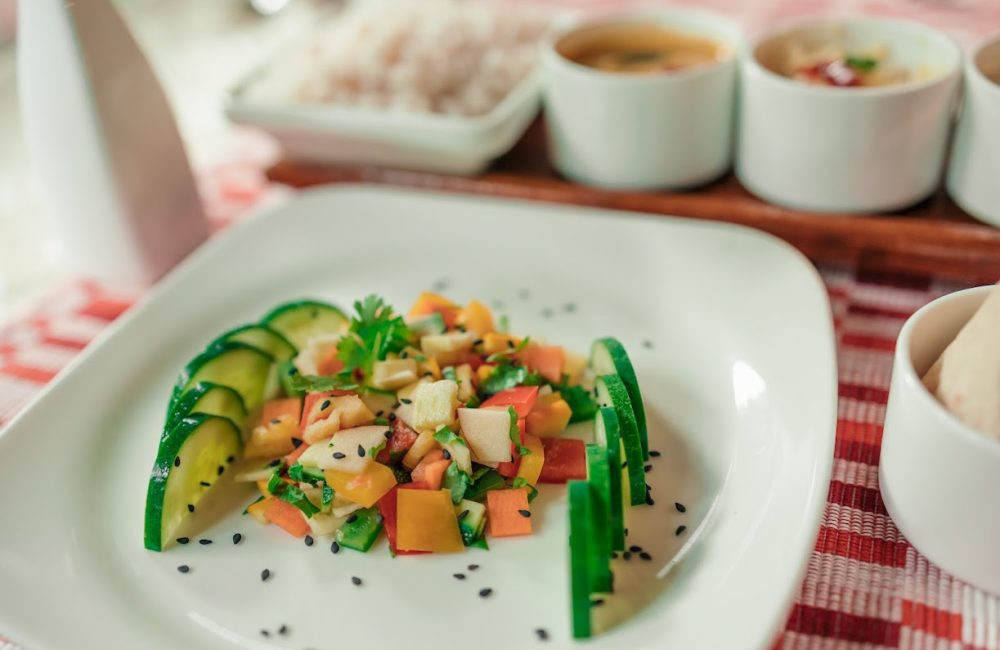
- Carrot-cucumber salad with lime and a pinch of rock salt
- A teaspoon of ghee on rice (optional)
Evening (light)
- Vegetable soup (bottle gourd/ash gourd) with black pepper
- Small millet chilla (savory pancake) with mint-coriander chutney
- CCF tea (cumin-coriander-fennel) 30 minutes after
Adjust portions to your hunger and activity; individuals with medical conditions should consult a clinician.”
Mindful Eating on an Ayurveda Holiday in India
Travel disrupts routine; mindful eating brings it back.
- Airport/Transit: Carry roasted chana, soaked almonds, or a small fruit; sip warm water when possible.
- Hotel/Retreat Buffets: Build plates with warm dishes first; add salad as a side, not the base.
- Timing: Keep lunch as your substantial meal; keep dinners early and lighter.
- Sweets & Fried Foods: Enjoy mindfully in small amounts, seated, and without multitasking.
At Kairali, guest education emphasizes these travel-proof habits so improvements persist beyond the stay—an evidence-informed approach that keeps the article focused on public education rather than selling.
Conclusion
Mindful eating is a compact, everyday practice that strengthens Ayurvedic diet and nutrition—at home, on the road, or during an Ayurveda holiday India. By slowing down, favoring warm and simply spiced meals, and aligning portions with true hunger, you help digestion and attention in equal measure. Whether you learn these habits through a class at a Kerala Ayurveda destination like Kairali or start at your own table tonight, consistency—not perfection—is what transforms mealtimes into moments of steady, restorative calm.
Website: www.ktahv.com
Call: +91-9555156156
About the Author
Gita Ramesh is a globally respected figure in the world of Ayurveda, known for her groundbreaking work in Ayurvedic spa therapies, wellness hospitality, and diet-based healing. As the Co-Founder and Joint Managing Director of Kairali Ayurvedic Group, she has played a pivotal role in shaping Kairali’s unique blend of traditional Ayurvedic healing with modern wellness sensibilities.
A passionate advocate of holistic living, Mrs. Ramesh is also the celebrated author of “The Ayurvedic Cookbook”, which reintroduces food as medicine through Ayurvedic nutrition. Her deep knowledge of Panchakarma, therapeutic wellness, and women’s health has inspired global audiences to embrace Ayurveda as a sustainable lifestyle practice.