






















Living with persistent back stiffness, spinal discomfort or painful joints can change the rhythm of ordinary life. Movement may become more cautious. Sleep can be interrupted. Exercise routines may need to change, and periods of increased discomfort can make even familiar daily activities more demanding.
For people exploring Ayurveda for spondylitis and arthritis, one of the first things to understand is that an Ayurvedic residential programme is not simply a sequence of massages or oil treatments.
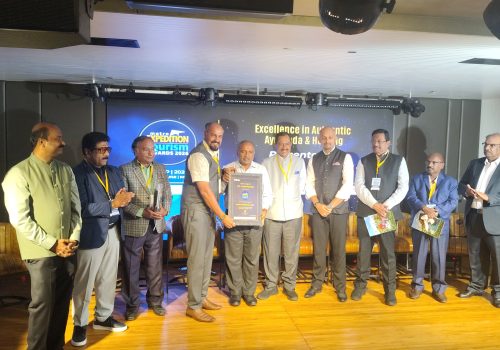
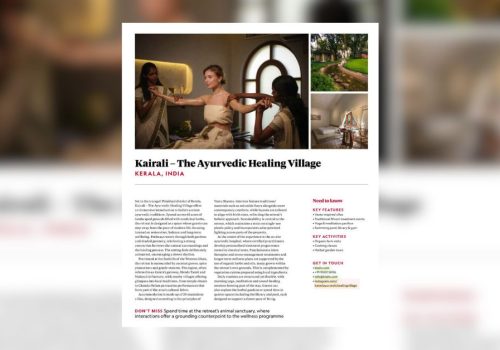
At Kairali – The Ayurvedic Healing Village in Palakkad, Kerala, care begins with a physician assessment and is individualised according to the person’s presentation, constitution, stage of life, digestion, sleep, mobility and other relevant factors. Kairali is an NABH-accredited Ayurvedic hospital, and therapies are undertaken within a supervised clinical setting.
This distinction matters because two people arriving with the same conventional diagnosis may not necessarily receive the same Ayurvedic programme.
How Ayurveda Approaches Spondylitis and Arthritis
Modern medicine uses terms such as arthritis and spondylitis to describe different groups of musculoskeletal and inflammatory conditions. These diagnoses can have very different causes, levels of severity and treatment requirements.
Ayurveda uses a different framework.
Rather than relying on the disease label alone, an Ayurvedic physician assesses the individual pattern in which symptoms are appearing. The evaluation may consider the location and nature of discomfort, stiffness, mobility, digestion, sleep, appetite, strength and constitution, alongside the broader clinical history.
This does not replace an existing medical diagnosis. For an international patient, particularly someone already under the care of a rheumatologist, orthopaedic specialist or other physician, Ayurvedic care is best understood as a complementary system that requires proper clinical assessment.
The purpose of the consultation is therefore not to assign every person with joint or spinal discomfort to a standardised “arthritis package”. It is to determine what kind of supervised Ayurvedic programme, if any, is appropriate for that individual.
What Happens When You Arrive at an Ayurvedic Retreat for Joint or Spinal Concerns?
A residential stay generally begins with a consultation rather than a treatment.
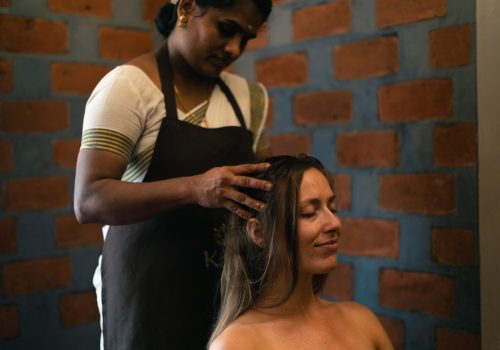
The Ayurvedic physician reviews the guest’s health concerns and decides which interventions are appropriate. Depending on the individual assessment, the programme may combine external oil-based therapies, localised procedures, elements of Panchakarma, dietary guidance, rest, gentle movement and changes to the daily routine.
The programme can also change during the stay.
A therapy that is suitable at one stage may not be appropriate at another, and the intensity of treatment depends on factors such as age, strength, symptoms and clinical response.
This is one reason a physician-led Ayurvedic programme differs substantially from choosing treatments from a spa menu.
Therapies That May Be Considered
Several Ayurvedic procedures are traditionally used within musculoskeletal care. At KTAHV, the physician may consider therapies such as the following where clinically appropriate.
Abhyanga
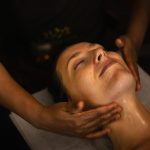
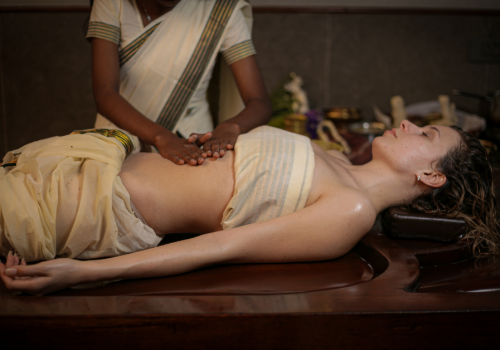
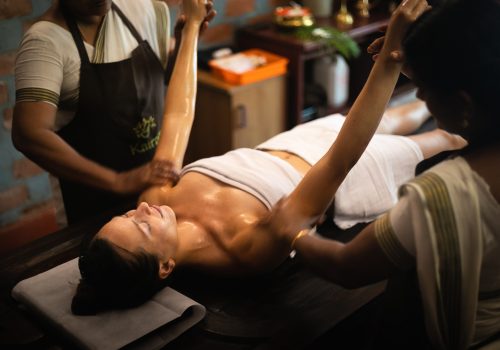
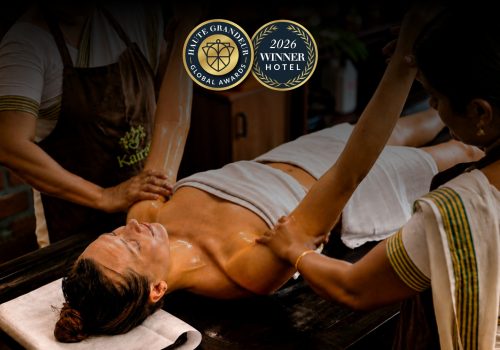
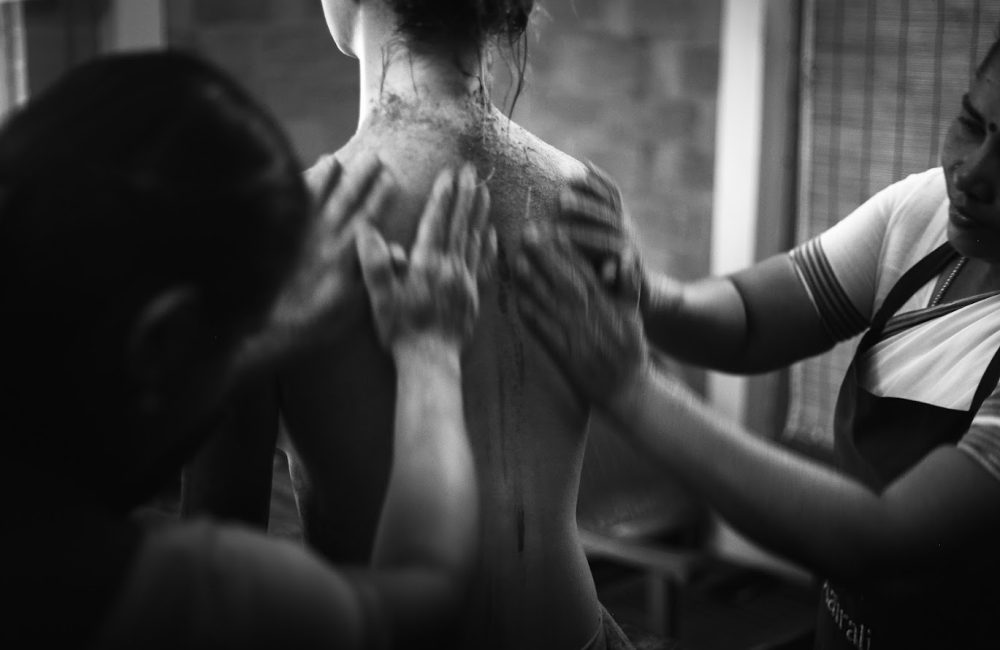
Abhyanga is an Ayurvedic oil application performed by trained therapists. The oils and method used are selected according to the physician’s assessment rather than applied identically to every guest.
For someone experiencing stiffness or restricted movement, external oil therapies may form one part of a broader programme. They should not, however, be understood as a standalone treatment for an underlying medical condition.
Kati Basti
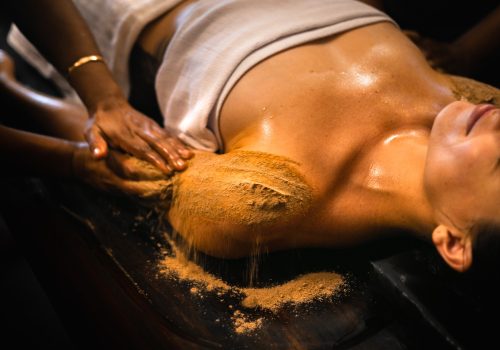
Kati Basti is a localised oil procedure traditionally used in Ayurvedic practice for the lower back.
Warm medicated oil is retained over a defined area for a prescribed period under supervision. Whether the procedure is appropriate depends on the location and nature of the person’s symptoms and the physician’s assessment.
Despite its frequent appearance on wellness menus, Kati Basti is not automatically prescribed simply because someone reports back pain.
Pizhichil
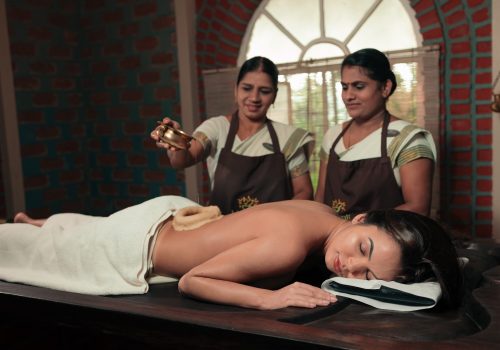
Pizhichil involves the controlled application of warm medicated oil over the body and is traditionally incorporated into selected Ayurvedic treatment programmes.
It is a more involved procedure than a conventional massage and is not suitable for every patient. Its inclusion, duration and sequencing are determined by the physician.
Basti and Other Panchakarma Procedures
In classical Ayurveda, Basti refers to the supervised administration of medicated preparations through the rectal route. It is one of the principal procedures described within Panchakarma and may be considered by an Ayurvedic physician in selected cases.
Other Panchakarma procedures, including Virechana (therapeutic purgation), may also be considered when the physician determines that they are appropriate to the individual’s Ayurvedic assessment.
These interventions require medical supervision. They should not be presented as routine “cleansing” procedures or attempted independently.
Why the Daily Routine Matters as Much as the Therapy Room
One of the less visible parts of a residential Ayurvedic programme happens outside scheduled treatments.
Meals, sleep, activity and treatment timing are organised as part of a structured daily routine. Dietary recommendations may be adjusted according to the individual assessment and the stage of the programme.
For someone accustomed to seeking a single intervention for pain, this can initially seem indirect. Ayurveda traditionally places considerable importance on digestion, daily habits and recovery alongside localised therapies.
The practical result is that the stay is not built around an hour of treatment followed by an otherwise unchanged day.
Rest, suitable movement, physician review and food all form part of the programme.
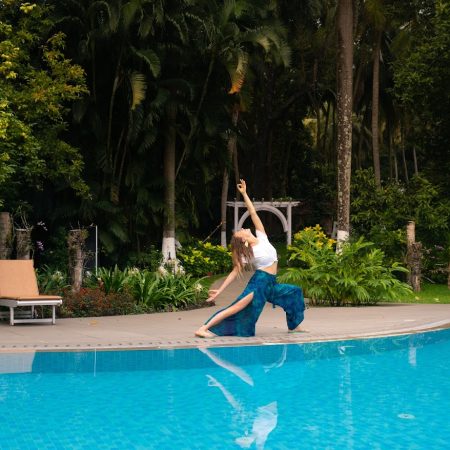
Yoga or gentle mobility practices may also be included when appropriate, but these too should be adapted to the individual’s physical capacity rather than treated as a universal prescription.
Why Individualisation Is Important
“Spondylitis” and “arthritis” are broad terms.
Arthritis alone encompasses numerous conditions, from osteoarthritis to inflammatory autoimmune diseases. Spondylitis similarly covers different disorders affecting the spine.
The appropriate care for one person may therefore be inappropriate for another.
An older guest with degenerative joint changes, limited mobility and several medications presents a very different clinical picture from a younger person with a diagnosed inflammatory condition. The fact that both experience pain does not make their treatment needs interchangeable.
This is why responsible Ayurvedic care begins with assessment rather than promises.
It is also why lists of “the best Ayurvedic treatments for arthritis” can be misleading. Therapies such as Abhyanga, Kati Basti, Pizhichil or Basti describe procedures. They do not tell us whether a particular procedure is suitable for a particular person.
What Ayurveda Can and Cannot Promise
People living with chronic musculoskeletal conditions understandably look for lasting improvement, particularly when symptoms have persisted for years.
Ayurveda should not be presented as a guaranteed cure for arthritis or spondylitis.
Some people seek supervised Ayurvedic care as part of a broader approach to comfort, mobility, daily functioning and quality of life. Others may be interested in how a structured period of diet, rest, movement and physician-led therapies affects the way they manage a long-standing condition.
Outcomes vary considerably according to the diagnosis, severity of the condition, overall health and many other factors.
For this reason, existing medical care should not be stopped or changed simply because someone is beginning an Ayurvedic programme. People with inflammatory arthritis, neurological symptoms, significant spinal disease or other established conditions should continue appropriate specialist care and discuss complementary treatment with their treating physician.
Why the Setting of a Residential Programme Matters
Kairali, The Ayurvedic Healing Village is located in Palakkad, Kerala and operates as an NABH-accredited Ayurvedic hospital.
For a residential programme, the value of the setting is not that nature itself “heals” arthritis or spondylitis. Its relevance is more practical.
Living on site allows consultations, therapies, meals, rest and daily routines to be coordinated within the same programme. Physicians can also review the guest during the stay and adapt the plan when required.
For international visitors, this continuity can be particularly important. Ayurveda is often encountered overseas through individual massages, yoga studios or wellness spas. A residential clinical programme in Kerala provides a substantially different context: the treatments sit within an Ayurvedic physician’s assessment rather than functioning as isolated wellness services.
Questions to Ask Before Choosing an Ayurvedic Programme
Anyone considering Ayurveda for persistent joint or spinal concerns should look beyond treatment names.
Useful questions include:
- Will an Ayurvedic physician assess me before treatment begins?
- What qualifications do the physicians hold?
- Is the facility accredited for Ayurvedic clinical care?
- How will my existing diagnosis and medical history be considered?
- Are therapies individually prescribed or sold as a fixed package?
- How frequently will the physician review my programme?
- What happens if a procedure is unsuitable for me?
- Can the programme work alongside my existing medical care?
These questions provide considerably more information than a long menu of therapies.
Ayurveda for Spondylitis and Arthritis Is a Process, Not a Single Treatment
For people considering an Ayurvedic stay for chronic joint or spinal concerns, perhaps the most useful expectation is also the simplest: there is no single “Ayurvedic treatment for arthritis” or universal protocol for spondylitis.
A physician-led programme may involve oil therapies, local procedures, selected Panchakarma interventions, dietary adjustments, rest and appropriate movement. But the combination depends on the individual.
That individualisation is central to the way Ayurveda is practised in a clinical setting.
For someone considering a residential programme, the most important first step is therefore not choosing between Kati Basti, Pizhichil or Panchakarma. It is having a qualified practitioner determine whether those interventions are appropriate in the first place.
Website: www.ktahv.com
Call: +91-9555156156