































A headache around the forehead. Pressure behind the eyes. A blocked nose. Sensitivity to light. Perhaps nausea as well.
It is easy to call this a “sinus headache”.
But the distinction between sinus-related symptoms and migraine is often less straightforward than it appears.
Migraine can include facial pressure and nasal symptoms, while genuine rhinosinusitis can also produce facial discomfort and headache. Research has repeatedly documented diagnostic overlap between the two. A 2025 study examining inaccurate migraine diagnosis found sinusitis among the common alternative diagnoses initially given to people who were later identified as having migraine.
That distinction matters before Ayurveda enters the conversation.
At Kairali, The Ayurvedic Healing Village in Palakkad, Kerala, the appropriate starting point is not automatically Nasya, Shirodhara or a herbal preparation. It is assessment.
Ayurveda has traditional frameworks for understanding patterns involving headache, congestion, digestion, sleep, stress and constitutional tendencies. But those frameworks should complement rather than replace appropriate medical diagnosis.
For recurring headaches and persistent sinus symptoms, the first useful question is therefore not:
Which Ayurvedic treatment should I take?
It is:
What are we actually dealing with?
“Sinus Headache” and Migraine Are Not the Same Thing
Migraine is a neurological headache disorder, not simply a severe headache.
The International Classification of Headache Disorders describes migraine without aura as recurring attacks that may last between four and 72 hours and typically include features such as pulsating or one-sided pain, moderate-to-severe intensity, worsening with ordinary activity, nausea or sensitivity to light and sound.
Sinusitis is different.
Rhinosinusitis involves inflammation affecting the nasal and sinus cavities. Depending on whether it is acute or chronic, symptoms and management differ. The American Academy of Otolaryngology–Head and Neck Surgery updated its adult sinusitis guideline in 2025 specifically to improve diagnostic accuracy and evidence-based treatment.
The confusing part is that these categories can share symptoms.
People experiencing migraine may report facial pressure, congestion or nasal discharge. In one prospective multicentre study of patients who described “sinus headache” but had no sinus disease on endoscopy or imaging, primary headaches, particularly migraine, accounted for many of the presentations.
In other words, location alone does not establish the diagnosis.
Pain around the forehead or nose does not automatically mean the sinuses are responsible.
Why This Matters in Ayurvedic Care
Ayurvedic writing can sometimes move too quickly from a symptom to a treatment.
Congestion becomes Nasya.
Headache becomes Shirodhara.
Kapha becomes a cleansing treatment.
Pitta becomes a cooling diet.
That may make an article easy to read, but it oversimplifies both medicine and Ayurveda.
A responsible Ayurvedic consultation looks at the person more broadly.
An Ayurvedic physician may consider:
- the character and timing of the symptoms
- digestion and appetite
- sleep
- daily routine
- seasonal influences
- physical and mental strain
- constitutional tendencies
- the current dosha pattern
- relevant medical history
- medicines already being taken
But Ayurvedic assessment does not remove the need for biomedical evaluation when migraine, recurrent sinusitis or another medical condition is suspected.
The two questions are different.
Modern medicine asks what condition is present and what established management it requires.
Ayurveda asks how that person’s wider pattern of function and imbalance may be understood within its traditional framework.
Good integrative care knows the difference.
How Ayurveda Traditionally Frames Nasal Congestion and Headache
Ayurveda uses the three doṣas (functional principles) of Vāta, Pitta and Kapha to organise patterns of health and disturbance.
It would be overly simplistic to say that “sinusitis equals Kapha” and “migraine equals Pitta”.
Real presentations are rarely that neat.
A physician may consider Kapha when heaviness, congestion and excess secretions predominate. Vāta may be relevant to certain patterns involving variable or intense pain. Pitta characteristics may be considered where heat and sensitivity are prominent.
These are traditional Ayurvedic interpretive patterns.
They are not equivalents of modern neurological or ear, nose and throat diagnoses.
This distinction is particularly important with migraine. Ayurveda cannot determine whether someone has migraine simply by assigning a dosha pattern. Migraine diagnosis depends on clinical headache history and recognised diagnostic criteria. NICE similarly recommends differentiating migraine, tension-type headache and cluster headache according to their characteristic features.
Ayurvedic assessment can follow.
It should not replace that step.
Where Nasya Fits
Nasya is an Ayurvedic procedure involving the administration of a prescribed substance through the nasal route.
It is traditionally used in Ayurvedic practice in relation to disorders of the head and neck, but that traditional context should not be translated into a claim that Nasya “clears sinusitis”, prevents recurrence or treats migraine.
Those are much stronger statements.
Nasya is also not a generic home remedy.
The substance used, preparation of the individual, timing and suitability of the procedure depend on physician assessment. The Kairali KB specifically requires supervised Ayurvedic procedures to be described as practitioner-led rather than converted into self-administration protocols.
At a physician-led Ayurvedic centre, the relevant question is whether Nasya has a place within the individual’s overall programme.
Not whether every person with a blocked nose should receive it.
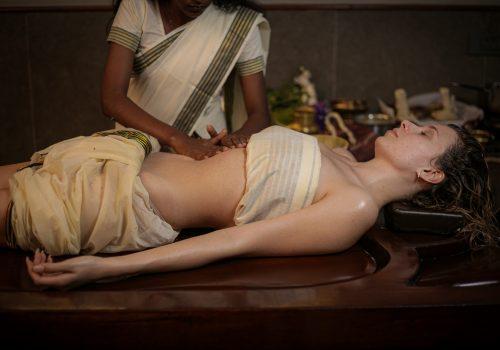
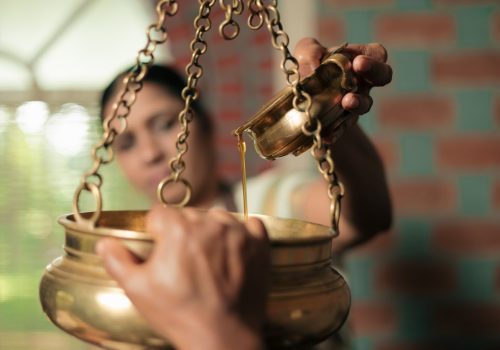
And What About Shirodhara?
Śirodhāra is another therapy frequently associated in popular wellness writing with headaches and stress.
The procedure involves the controlled flow of a liquid, commonly an oil-based preparation, over the forehead within an Ayurvedic treatment setting.
Its traditional use and experiential qualities can be discussed.
What should not be claimed is that Shirodhara provides immediate migraine relief or prevents future attacks.
Migraine is a neurological disorder with established conventional approaches to acute and preventive management. NICE maintains specific guidance for its diagnosis and treatment.
Shirodhara may be selected by an Ayurvedic physician within a broader traditional programme where appropriate, particularly when the individual’s presentation includes areas such as rest, sleep or stress that the practitioner wants to address.
That is quite different from calling it a migraine treatment.
The Problem With “Detoxifying the Sinuses”
The language of “detox” appears frequently in descriptions of Ayurvedic respiratory and sinus care.
It is usually too vague to be useful.
Neither modern sinus medicine nor careful Ayurvedic practice requires the claim that toxins are being physically flushed from the sinuses.
Contemporary management of chronic rhinosinusitis depends on establishing the diagnosis and choosing appropriate evidence-based care. The 2025 AAO-HNS guideline, for example, discusses interventions such as nasal saline irrigation and intranasal corticosteroid therapy within the management of chronic rhinosinusitis.
Ayurveda operates with its own concept of āma, often discussed as a product of impaired digestion or metabolism within traditional theory.
But āma should not simply be translated as biomedical “toxins”.
Nor should Panchakarma or steam therapies be described as cleansing infected or inflamed sinuses unless evidence specifically establishes that effect.
Terminology matters because words influence expectations.
Herbal Support Needs the Same Caution
Turmeric, Tulsi, ginger and Vāsā frequently appear in articles about Ayurvedic respiratory health. Classical formulations such as Sitopaladi may also be familiar to people already using Ayurveda.
But publishing a list of herbs beneath the heading “treatment for sinusitis and migraine” effectively turns educational content into a treatment recommendation.
That is not the role of WhyAyurveda.
Herbal selection in Ayurveda depends on more than a diagnosis. Formulation, individual constitution, digestion, current symptoms, other health conditions and concurrent medication can all affect suitability.
“Natural” is not synonymous with universally appropriate.
The more accurate editorial position is that Ayurvedic physicians may use herbal formulations as part of individualised traditional care when indicated.
The specific choice belongs to the consultation.
Yoga and Breathing Practices: Supportive, Not Curative
Yoga can also have a place in a broader conversation about recurring headaches.
Some clinical research has investigated yoga and pranayama as adjuncts to standard migraine management.
For example, a randomised study of pranayama added to standard medical treatment reported improvements in several migraine-related outcomes after three months. A separate 2025 study found improvements when a structured pranayama and relaxation programme was used alongside standard migraine therapy.
The words “alongside standard treatment” are important.
These studies do not establish breathing exercises as replacements for migraine medication or neurological assessment.
Nor should every breathing technique be prescribed indiscriminately.
A gentle, supervised breathing or relaxation practice may suit one person. A more forceful technique may not.
Individualisation applies to yoga just as it does to Ayurvedic therapy.
At Kairali, Assessment Comes Before the Therapy List
Kairali – The Ayurvedic Healing Village is an NABH-accredited Ayurvedic hospital-resort in Kodumbu, Palakkad, Kerala. Its Ayurveda programmes are physician-led rather than structured as a menu from which guests simply choose treatments.
That distinction is especially relevant when someone arrives with recurring headache or sinus-related concerns.
A treatment name is not the starting point.
The physician first needs context.
What has already been diagnosed?
How often do the headaches occur?
Are there associated symptoms?
Is the person under the care of an ENT specialist, neurologist or another physician?
What medicines are already being used?
What does the broader Ayurvedic assessment show?
Only after this does it make sense to consider whether Ayurvedic therapies, diet, routine, yoga or other supportive practices have an appropriate place.
Sometimes the most responsible Ayurvedic advice is to continue or seek conventional investigation first.
That is not a failure of Ayurveda.
It is good clinical judgement.
Why Personalisation Matters More Than the Treatment Name
Wellness content tends to emphasise recognisable treatments.
Nasya sounds specific.
Shirodhara photographs well.
Herbs can be listed neatly.
But the actual value of a clinical Ayurvedic approach lies less in the number of therapies available than in deciding when not to use them indiscriminately.
Two people describing “sinus headache” may not have the same condition.
One may have clinically established rhinosinusitis.
Another may meet the criteria for migraine.
Another may have a different headache disorder entirely.
And even two people with the same conventional diagnosis may present differently from an Ayurvedic perspective.
The programme therefore has to respond to the person rather than to the headline.
When Headaches Need Medical Assessment
Recurring headaches should not automatically be self-managed as a sinus problem.
Migraine deserves appropriate diagnosis because established treatments are available and the disorder can significantly affect daily life. NICE guidance emphasises accurate classification of headache type so that management can be appropriately targeted.
Persistent or recurrent sinus symptoms likewise deserve proper evaluation, particularly when the diagnosis is unclear or symptoms are not improving as expected. Current ENT guidelines distinguish acute from chronic rhinosinusitis and emphasise evidence-based diagnosis and management.
A sudden or unusually severe headache, new neurological symptoms or other rapidly worsening symptoms require prompt medical assessment rather than an Ayurvedic home remedy or retreat programme.
Ayurveda Does Not Need to Compete With Neurology or ENT Medicine
There is a recurring temptation in complementary medicine to establish credibility by claiming that conventional treatment provides only temporary relief while Ayurveda finds the “root cause”.
That comparison is neither necessary nor accurate.
Neurology has sophisticated approaches to migraine.
ENT medicine has established diagnostic criteria and treatments for rhinosinusitis.
Ayurveda offers a different clinical framework concerned with constitution, current imbalance, routine, digestion, sleep and individually selected traditional therapies.
The useful question is not which system wins.
It is where each belongs.
For someone dealing with recurring headaches or sinus symptoms, good care may involve conventional diagnosis and treatment alongside appropriately supervised complementary practices.
At Kairali, the Ayurvedic contribution begins with the individual assessment.
Not with a promise.
And certainly not with the assumption that every headache near the sinuses requires the same therapy.
Sometimes the most important first step in personalised care is simply making sure we are treating the right problem.
A note on headaches and sinus symptoms
Ayurveda, yoga and other complementary practices should not replace appropriate diagnosis or medical treatment for migraine, rhinosinusitis or other headache disorders. Persistent, severe, unusual or worsening symptoms should be assessed by an appropriate healthcare professional.
Speak with an Ayurvedic physician
For people interested in physician-guided Ayurveda as part of a broader wellbeing programme, speak with a qualified Ayurvedic physician about whether complementary care is appropriate alongside your existing medical care.
Website: www.ktahv.com
Call: +91-9555156156