






















Lower back pain is one of those problems that can quietly affect almost every part of the day.
Sitting at a desk becomes uncomfortable. Long drives feel harder. Sleep may be disturbed. Even simple movements such as bending, lifting, or standing for long periods can become difficult.
For some people, yoga can be a useful part of managing chronic, non-specific lower back pain. Research suggests that structured yoga programmes may offer small improvements in pain and physical function, particularly when they are adapted to the individual.
Ayurveda adds another layer to this approach by looking not only at movement, but also at daily routine, sleep, digestion, stress, and the person’s overall condition.
At Kairali – The Ayurvedic Healing Village in Palakkad, yoga may be included within a wider physician-led programme rather than used as a stand-alone treatment.
Why lower back pain needs an individual approach
There is no single cause of lower back pain.
For some people, it may be linked with prolonged sitting, reduced physical activity, muscle weakness, or repeated strain. Others may have disc problems, arthritis, nerve involvement, or another medical condition.
That is why assessment matters.
Before starting a residential programme at Kairali, guests meet an Ayurvedic physician who reviews their health, symptoms, medical history, medications, and daily habits.
From an Ayurvedic perspective, lower back discomfort is often discussed in relation to Vāta, the doṣa associated with movement and mobility. But this traditional interpretation does not replace a conventional medical diagnosis.
Persistent or severe back pain should always be properly assessed before beginning yoga or Ayurvedic therapies.
How yoga may help
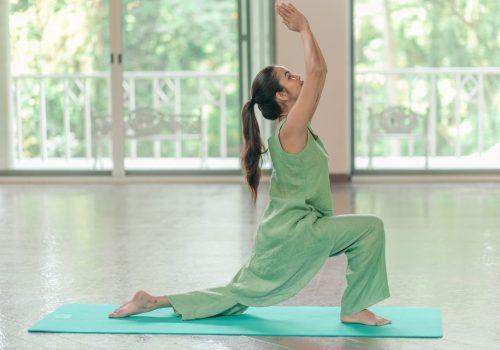
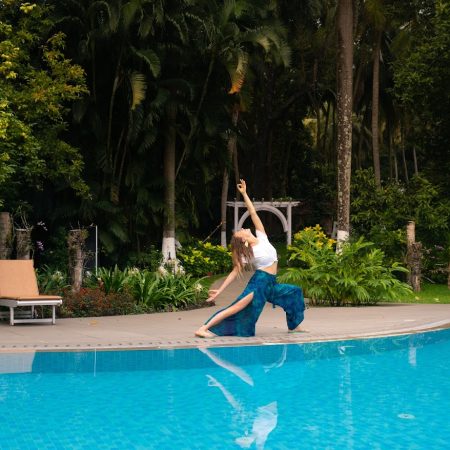
Yoga can combine gentle movement, strengthening, flexibility, breathing, and attention to posture.
For people with chronic non-specific lower back pain, this combination may help improve function and make movement feel more manageable. Clinical guidelines also recognise exercise, including mind-body approaches, as one option for people with low back pain when it is appropriate for their needs and abilities.
The important word is appropriate.
A yoga pose that feels comfortable for one person may aggravate symptoms in another.
That is why a fixed list of “best yoga poses for back pain” can be misleading.
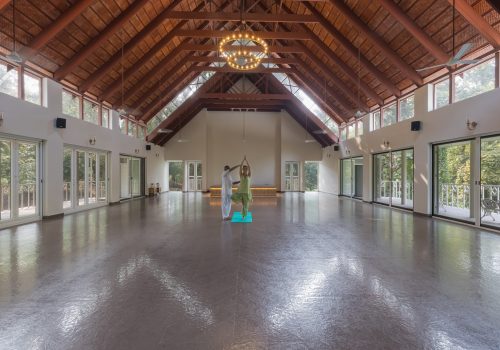
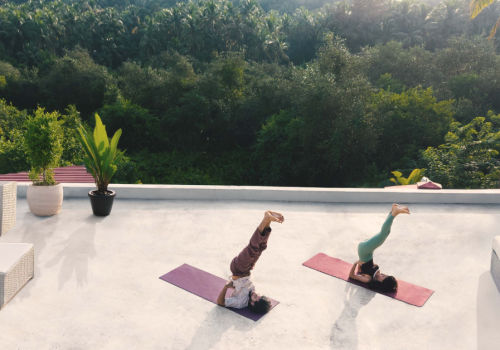
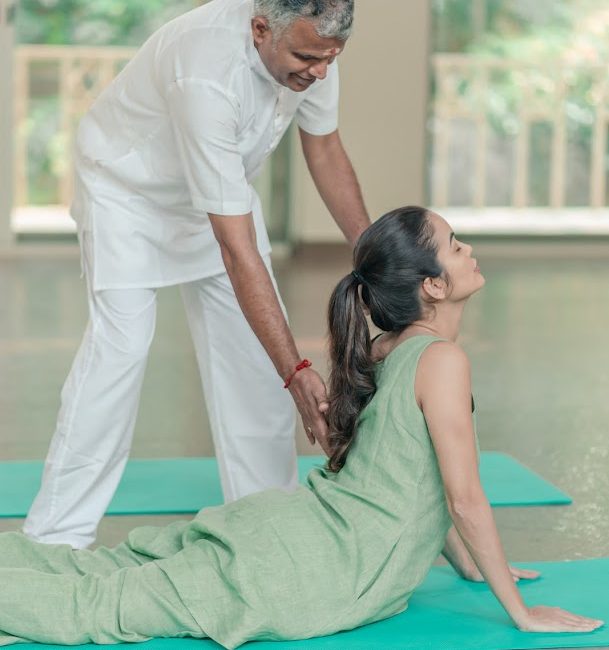
At a supervised retreat, yoga can be adjusted according to mobility, pain levels, age, strength, and medical history.
What about poses such as Cobra or Cat-Cow?
Postures such as Bhujangāsana (Cobra Pose), Marjaryāsana movements, Bālāsana (Child’s Pose), and Setu Bandhāsana (Bridge Pose) are often included in general yoga practice.
But they should not automatically be prescribed for everyone with back pain.
A person with limited spinal mobility, nerve symptoms, an acute injury, osteoporosis, or another condition may need a modified practice or may need to avoid certain movements altogether.
For this reason, the aim should not be to complete a particular pose.
It should be to move safely within the person’s current capacity.
Breathing and relaxation also matter
Lower back pain is physical, but the experience of pain is also influenced by sleep, stress, mood, and the nervous system.
This does not mean that pain is “in the mind.”
It means that persistent pain is often affected by several overlapping factors.
Breathing practices and relaxation may therefore be included alongside movement. At Kairali, yoga sessions may incorporate gentle breathing exercises or quieter practices depending on the individual.
These practices should not be described as reducing inflammation or curing chronic pain on their own.
Their more realistic role is to support relaxation, body awareness, and a more manageable daily routine.
Where Ayurveda fits
Ayurveda does not look at lower back pain only as a problem of muscles or joints.
A physician may also ask about sleep, digestion, appetite, stress, bowel habits, physical activity, and daily routine.
This broader assessment can influence how the residential programme is organised.
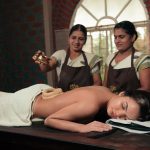
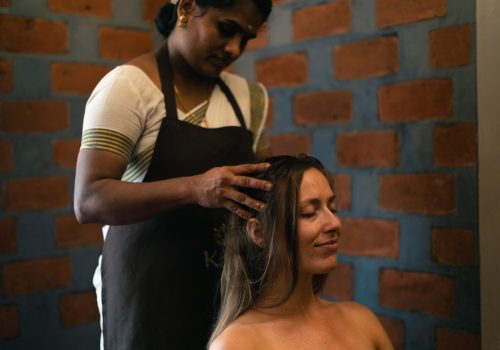
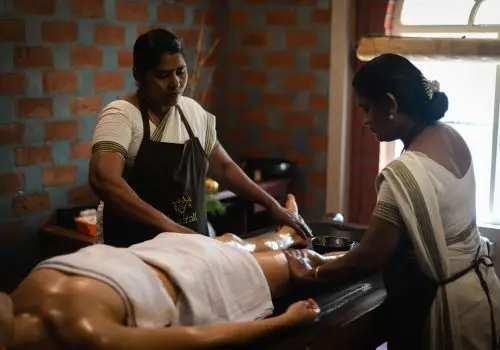
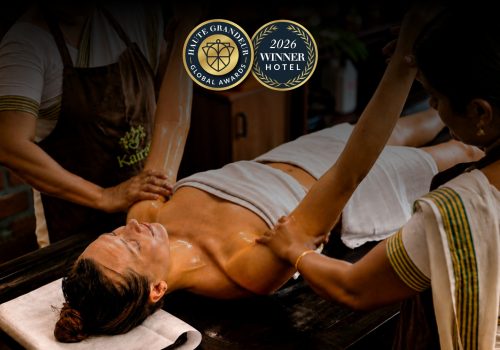
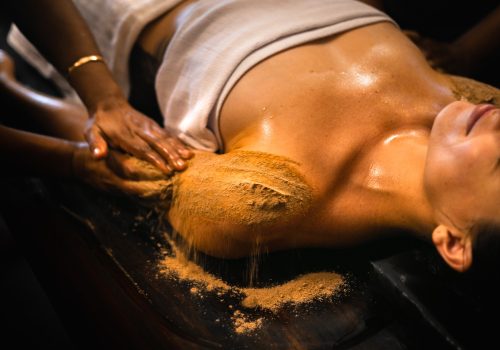
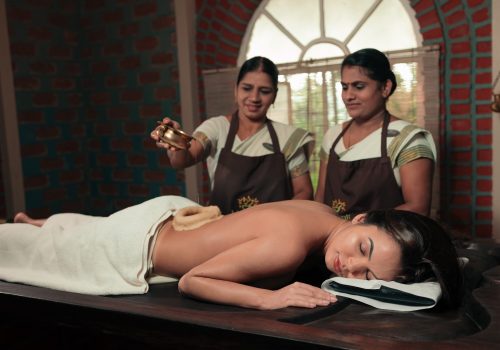
Some guests may receive external Ayurvedic therapies such as Abhyanga (oil application), Svedana (therapeutic sweating), or Kati Basti, where medicated oil is retained over the lower back for a prescribed period.
These therapies are part of traditional Ayurvedic practice, but they should not be presented as guaranteed treatments for chronic back pain.
Their suitability depends on the individual.
The value of combining movement and routine
One reason a residential programme can be useful is that movement does not happen in isolation.
Guests may follow a more regular schedule for waking, eating, therapies, yoga, and sleep.
For someone whose normal routine involves long periods of sitting, irregular meals, poor sleep, or very little movement, this change can make everyday patterns easier to notice.
The most useful lesson may not be a particular yoga pose.
It may be understanding how much movement, rest, posture, and routine influence the way the back feels from day to day.
Food and lifestyle are supportive, not curative
Ayurveda may also consider food and lifestyle as part of the wider programme.
Traditional Ayurvedic care often adjusts meals according to digestion, constitution, and current health. In a residential setting, food is generally served at regular times and can be modified according to the physician’s recommendations.
This is not the same as saying that a particular diet will cure back pain.
Food, sleep, activity, body weight, stress, and physical conditioning may all influence health, but no single lifestyle change should be presented as a guaranteed solution.
The more useful approach is to look at how these factors work together.
When back pain needs medical attention
Yoga and Ayurvedic care are not appropriate substitutes for urgent medical assessment.
Back pain accompanied by significant weakness, numbness, changes in bladder or bowel control, serious trauma, or other concerning symptoms requires prompt conventional medical evaluation.
People with persistent or worsening pain should also seek appropriate clinical assessment before starting an exercise or residential wellness programme.
Modern guidelines emphasise that treatment should be selected according to the individual’s needs, capabilities, and underlying condition.
What a Kairali programme can realistically offer
Kairali, The Ayurvedic Healing Village operates as an NABH-accredited Ayurvedic hospital within a residential setting in Palakkad, Kerala.
For a guest with lower back pain, the process begins with assessment.
Yoga may then be incorporated alongside physician-directed Ayurvedic therapies, meals, rest, and daily routine where appropriate.
The aim should not be to promise that a few yoga sessions or oil treatments will permanently remove back pain.
A more realistic goal is to help the person move more comfortably, understand which habits may be contributing to discomfort, and develop a routine that can continue after the stay.
That is also where yoga and Ayurveda can work well together.
Yoga provides a structured way to explore movement.
Ayurveda adds a broader view of the person and the way the day is lived.
For lower back pain, that combination may offer useful support, as long as it begins with proper assessment rather than a fixed list of treatments.