SURYA NAMASKAR (Sun Salutation)

A series of 12 asanas that flow together, including forward bends, backbends, and lunges. Practicing Surya Namaskar can be beneficial to stimulate the body and mind, as well as improve circulation and warm up the body. Here are the steps for performing Surya Namaskar with modifications to suit a Kapha imbalance:

Steps

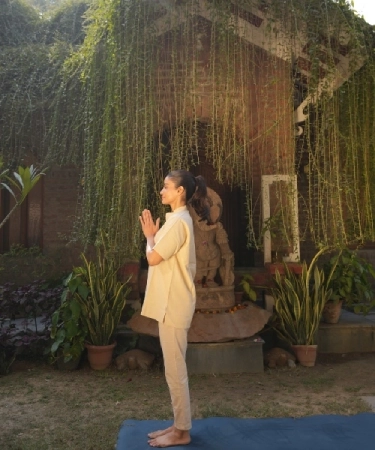
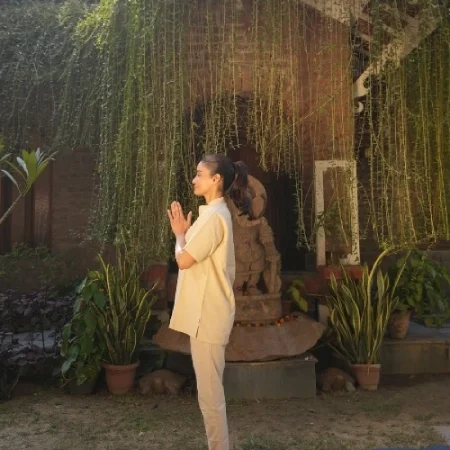
Pranamasana (Prayer pose)

Stand at the front of your mat with your feet together, palms pressed together in front of your chest. Take a few deep breaths here to centre yourself.

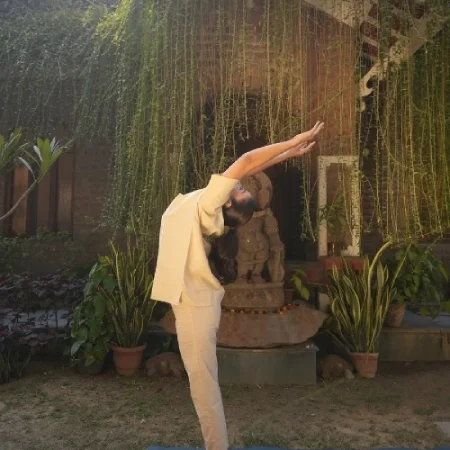
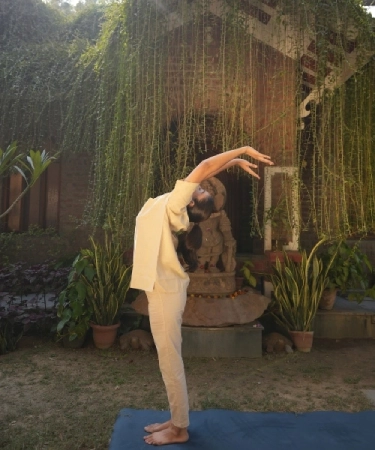
Hasta Uttanasana (Raised arms pose)

Inhale as you lift your arms up and arch back slightly, stretching the whole body. This helps invigorate the body and improve circulation.

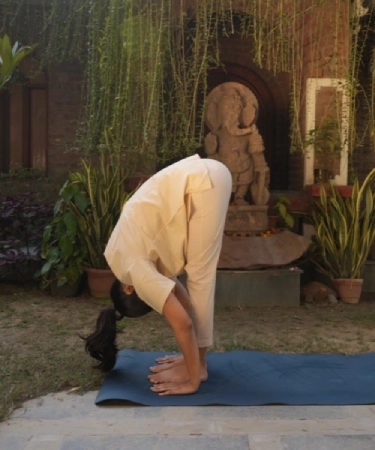
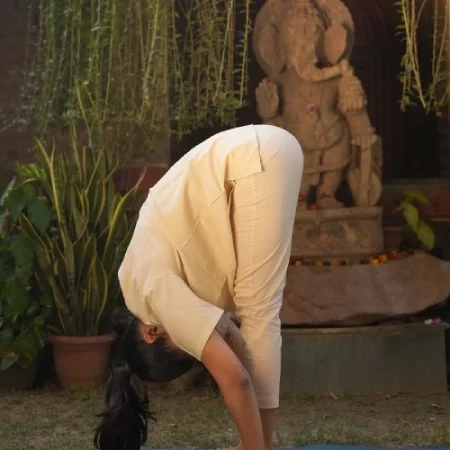
Uttanasana (Standing forward bend)

Exhale as you bend forward from the hips, keeping your back straight. Bend your knees, if necessary, to avoid any kind of strain. This pose helps to stimulate the digestive system and improve spine flexibility.

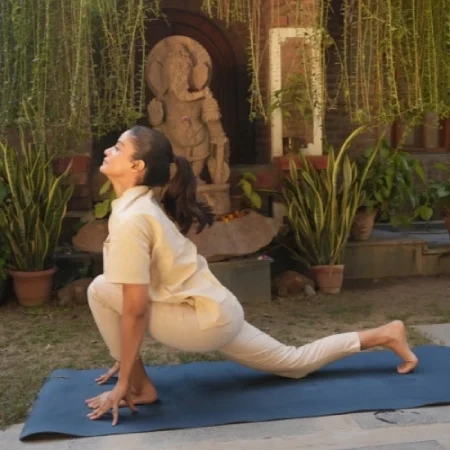
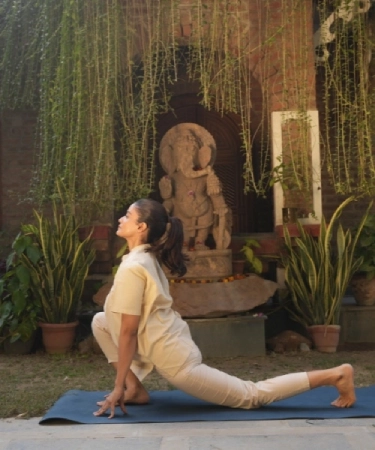
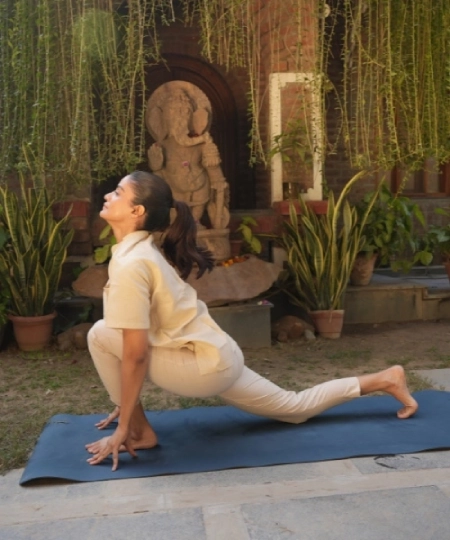
Ashwa Sanchalanasana (Equestrian pose)

Inhale as you step your right foot back into a lunge, keeping your hands on the mat on either side of your left foot. Keep your gaze forward and your chest lifted. This pose helps to strengthen the legs and improve balance

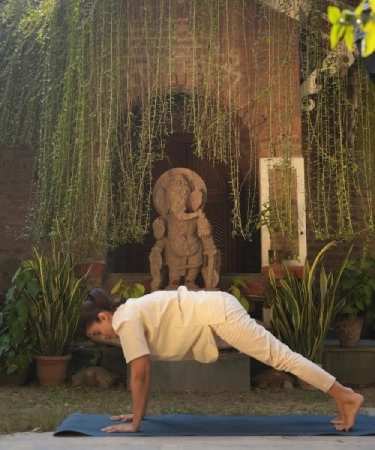
Dandasana (Plank pose)

Exhale as you step your left foot back to meet the right, coming into a plank position. Keep your body in a straight line from head to heels, engaging your core muscles. This pose helps to build strength in the arms, shoulders, and core.

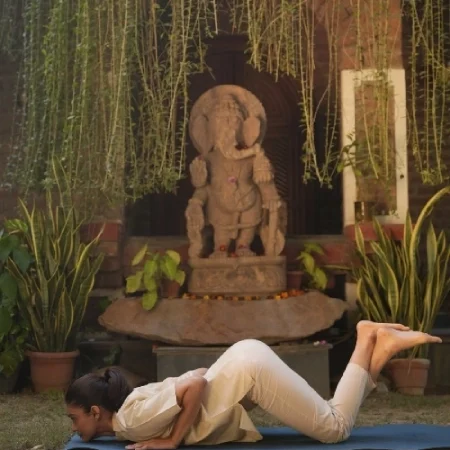
Ashtanga Namaskara (Eight-limbed pose)

Lower your knees, chest, and chin to the mat, keeping your hips lifted. This pose helps to strengthen the arms and chest.

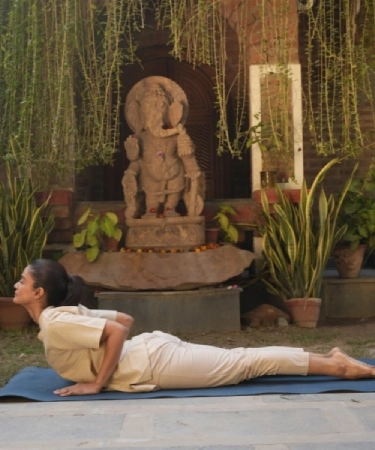
Bhujangasana (Cobra pose)

Inhale as you slide forward and straighten your arms, lifting your chest off the mat. Keep your shoulders relaxed and your elbows close to your body. This pose helps to open up the chest and improve breathing.

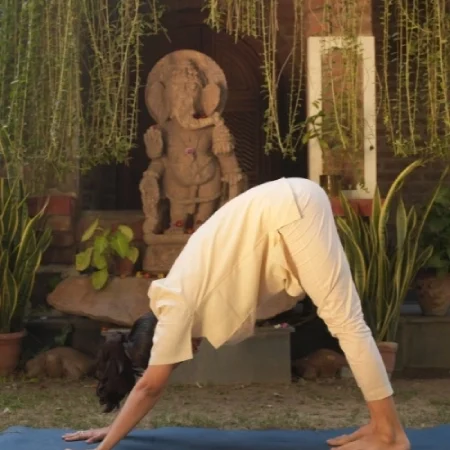
Adho Mukha Svanasana (Downward facing dog)

Exhale as you lift your hips up and back, coming into an inverted V shape with your body. Keep your heels pressed down towards the mat and your head between your arms. This pose helps to stretch the whole body and improve circulation.

Ashwa Sanchalanasana (Equestrian pose)

Inhale as you step your right foot forward between your hands, coming back into a lunge on the other side.

Uttanasana (Standing forward bend)

Exhale as you step your left foot forward to meet the right, folding forward at the hips.

Hasta Uttanasana (Raised arms pose)

Inhale as you sweep your arms out to the sides and up, coming back to a standing position with your arms overhead.

Pranamasana (Prayer pose)

Exhale as you bring your palms together in front of your chest, returning to the starting position. Take a few deep breaths here to complete the sequence.

VATA DOSHA

Focus on grounding and stabilizing movements. Perform each pose with slow, deliberate movements for stability and groundedness. Emphasize smooth and deep breathing to calm the nervous system and reduce anxiety. Modify poses to ensure they are comfortable and sustainable, avoiding overexertion or strain.

PITTA DOSHA

Focus on cooling and calming movements. Perform each pose with a sense of ease and relaxation, avoiding overexertion. Emphasize slow, steady breathing to cool the body and mind, reducing excess heat and intensity. Modify poses to maintain a comfortable body temperature and prevent overheating.

KAPHA DOSHA

Focus on energizing and invigorating movements. Perform each pose with dynamic and fluid movements to stimulate circulation and release stagnation. Emphasize deep and rhythmic breathing to increase energy and uplift the mood. Modify poses to incorporate more strength and intensity, avoiding sluggish or lethargic movements.
KAPHA DOSHA ​

Focus on energizing and invigorating movements. Perform each pose with dynamic and fluid movements to stimulate circulation and release stagnation. Emphasize deep and rhythmic breathing to increase energy and uplift the mood. Modify poses to incorporate more strength and intensity, avoiding sluggish or lethargic movements.
KAPHA DOSHA ​

Focus on energizing and invigorating movements. Perform each pose with dynamic and fluid movements to stimulate circulation and release stagnation. Emphasize deep and rhythmic breathing to increase energy and uplift the mood. Modify poses to incorporate more strength and intensity, avoiding sluggish or lethargic movements.