






























Feeling unusually full, gassy or uncomfortable after a meal is common. Sometimes the reason is straightforward: eating too quickly, having a particularly rich meal, changing your routine while travelling, or simply eating more than usual.
Ayurveda approaches digestive health by paying attention not only to what we eat, but also to how and when we eat. Regular meals, adequate movement, mindful eating and simple culinary herbs are often part of that conversation.
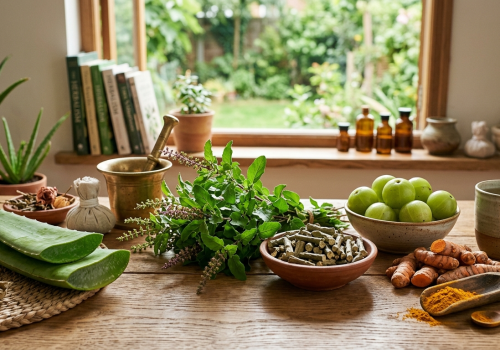
One familiar example is fennel, or saunf (Foeniculum vulgare), a seed used widely in Indian cooking and traditionally associated with digestion.
But traditional use and modern clinical evidence are not the same thing. Fennel may be a useful part of an everyday digestive routine, but persistent bloating, pain, reflux or changes in bowel habits deserve proper medical attention rather than repeated self-treatment.
Fennel and Digestion: What Do We Actually Know?
In India and several other cultures, fennel seeds are commonly chewed after meals or prepared as a warm infusion.
Traditional use has associated fennel with digestive comfort, particularly after heavier meals. Modern research has begun to investigate why this might be the case, although the evidence is still developing.
A 2025 laboratory study examining fennel tea and stomach muscle activity found that it produced different effects in different regions of the stomach, including relaxation of some smooth-muscle tissue. The researchers suggested that these findings may help explain fennel’s traditional association with digestive comfort.
There is an important limitation: this was not a human clinical trial. It therefore does not establish that fennel tea will reliably relieve bloating or indigestion in people.
That distinction matters.
Fennel is better understood as a traditional culinary and herbal practice with emerging physiological research behind it, rather than as a proven treatment for digestive disorders.
A Simple Way to Include Fennel
Fennel does not need to become an elaborate wellness ritual.
It can simply remain what it has traditionally been for many households: a culinary seed incorporated into food, chewed after meals, or prepared as a mild warm infusion.
There is no need to assume that more is better. Individual tolerance varies, and anyone who is pregnant, managing a medical condition or taking regular medication should seek professional advice before using concentrated herbal preparations.
The larger point is also easy to miss: one herb cannot compensate for a digestive routine that repeatedly works against the body.
Everyday Habits Matter More Than a Single Remedy
For occasional post-meal heaviness, a few ordinary habits can be more useful than continually adding new products or remedies.
Eat at reasonably consistent times
Long gaps followed by very large meals can be uncomfortable for some people. A more predictable eating pattern may make digestion easier to manage.
Slow down while eating
Eating quickly can mean swallowing more air and noticing fullness only after too much food has already been consumed. Sitting down, chewing properly and paying attention to the meal are simple changes, but useful ones.
Keep very heavy meals occasional
Rich, oily or highly processed foods are not automatically problematic, but consistently large and heavy meals can make digestive discomfort more noticeable.
Move after eating
A gentle walk after a meal is often more sensible than immediately lying down. It also builds movement into the day without turning digestion into another complicated health protocol.
Pay attention to your own patterns
Bloating is a symptom, not a diagnosis.
Certain foods, meal sizes, eating speeds or routines may repeatedly coincide with discomfort. Noticing those patterns can be more informative than following a generic list of supposedly “good” and “bad” foods.
Where Ayurveda Adds Another Perspective
Ayurveda places considerable emphasis on agni, commonly translated as digestive or metabolic capacity.
The idea is more nuanced than simply having “good” or “bad” digestion. Ayurvedic assessment considers appetite, regularity, food tolerance, bowel patterns and broader constitutional factors before deciding what kind of dietary or herbal intervention may be appropriate.
This is one reason a single digestive remedy is not considered universally suitable within classical Ayurvedic practice.
For everyday wellness, simple food and lifestyle habits may be enough. When symptoms are persistent or recurrent, an individual assessment is more appropriate than repeatedly experimenting with home remedies.
Where Spazyme Fits
For readers looking at Ayurvedic digestive formulations, Kairali Ayurvedic Products’ Spazyme Syrup is formulated as a digestive-wellness product.
The current formulation includes ingredients traditionally used in Ayurvedic and culinary preparations, including Rasona (garlic), ginger, Pippali (long pepper), black pepper, cumin, asafoetida, rock salt and ajowan.
Rather than viewing a formulation such as Spazyme as a substitute for better eating habits, it makes more sense to see it as one possible part of a broader digestive-care routine.
Anyone using the product should follow the directions on the pack or the advice of a qualified healthcare or Ayurvedic practitioner. Product indications and regulatory language can also differ between countries.
Fennel or a Formulation: Do You Need Either?
Not necessarily.
Occasional heaviness after an unusually large meal does not automatically require a remedy.
A useful first step is often to look at the circumstances around the symptom: Was the meal particularly large? Was it eaten quickly? Were you travelling, stressed or eating at an unusual time? Does the same problem happen repeatedly?
Fennel may fit naturally into the first category of simple food-based practices.
An Ayurvedic formulation belongs in a more considered category, particularly when it contains several active botanical ingredients.
And recurring symptoms belong in another category altogether: they should be assessed rather than continually masked.
Frequently Asked Questions
Is fennel good for bloating?
Fennel has a long history of traditional use for digestive comfort, including bloating and post-meal heaviness. Preliminary laboratory research also suggests that fennel tea can affect stomach muscle activity.
However, good-quality human clinical evidence remains limited, so fennel should not be presented as a proven treatment for bloating.
Can I drink fennel tea every day?
Fennel is widely used as a culinary ingredient and as an infusion, but suitability varies between individuals. Regular or concentrated herbal use is best discussed with a qualified practitioner if you are pregnant, have an ongoing health condition or take medication.
What can help with occasional gas or indigestion while travelling?
Start with the basics: avoid rushing meals, be cautious with unusually large portions, stay hydrated and keep moving during long travel days.
Fennel is also commonly used as an after-meal culinary seed. If you use an Ayurvedic digestive formulation while travelling, follow its label instructions and consider any medication or health conditions that may affect suitability.
When should bloating be medically assessed?
Bloating that is persistent, severe, progressively worsening or accompanied by symptoms such as unexplained weight loss, persistent vomiting, blood in the stool, fever or significant abdominal pain warrants medical evaluation.
Recurring symptoms should also be discussed with a healthcare professional rather than managed indefinitely with home remedies.
A More Sensible Approach to Digestive Care
Digestive wellness rarely comes down to finding one perfect ingredient.
Fennel offers a useful example of how Ayurveda and everyday food traditions can overlap: it is simple, familiar and traditionally associated with digestion, while modern research is only beginning to explain some of its physiological effects.
That makes it worth considering without overstating what it can do.
Start with the fundamentals: regular meals, slower eating, sensible portions and movement. Use traditional food practices such as fennel where they suit you. If you choose an Ayurvedic formulation such as Spazyme, use it according to the product directions or professional advice.
And when digestive discomfort keeps returning, treat that recurrence as information. Persistent symptoms deserve investigation, not simply a stronger home remedy.
Medical disclaimer: This article is intended for general educational purposes and does not provide medical advice, diagnosis or treatment. Digestive symptoms can have many causes. If symptoms are persistent, severe or unusual for you, consult an appropriately qualified healthcare professional. Ayurvedic products should be used according to their label and, where appropriate, under professional supervision.
Website: www.kairaliproducts.in
Call: +91-9555156156