




























Artificial intelligence is beginning to influence how people access health information. In Ayurveda, this creates both an opportunity and a responsibility.
The opportunity is clear: patients often encounter unfamiliar terminology, complex ideas about constitution and lifestyle, and conflicting information online. A well-designed digital assistant can help explain these concepts in plain language and make reliable educational material easier to navigate.
The responsibility is equally important. An AI assistant should not replace a qualified practitioner, diagnose illness, prescribe treatment, or present general information as personal medical advice.
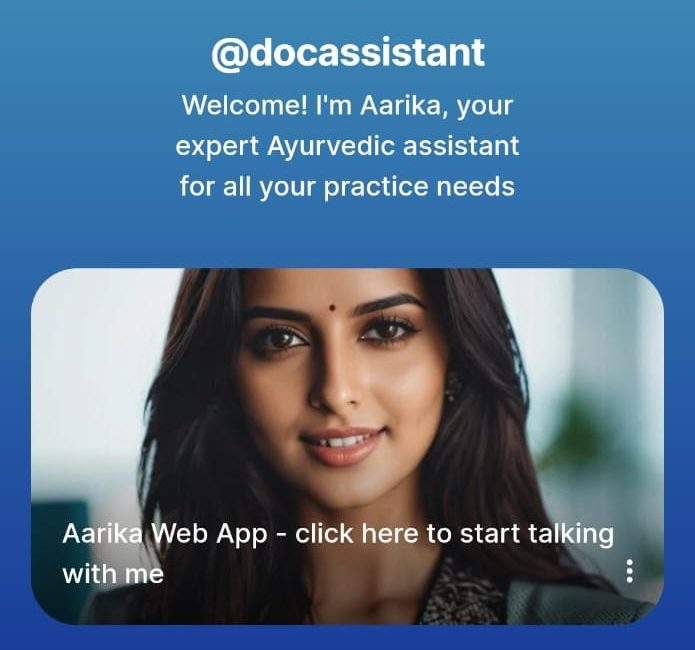
Arika, an AI assistant being developed by Kairali Ayurvedic Products, is intended to support patient education while drawing on practitioner-informed Ayurvedic knowledge. Its purpose is not to automate clinical care. It is to help people understand Ayurveda more clearly.
Why Ayurvedic information needs better explanation
Ayurveda has a detailed vocabulary for describing health, daily routine, digestion, constitution, seasonal change, and the relationship between lifestyle and wellbeing.
Terms such as prakṛti (individual constitution), doṣa (functional principles), agni (digestive and metabolic capacity), and dinacaryā (daily routine) are central to Ayurvedic thought. Yet they are often simplified in popular wellness content.
A person may complete an online quiz, receive a dosha label, and assume that the result amounts to a diagnosis. Another may read that one herb is universally suitable for sleep, stress, digestion, or immunity. Neither reflects the individualised reasoning used in formal Ayurvedic practice.
Patient education therefore requires more than definitions. It requires context.
A responsible educational tool should help users understand that Ayurvedic recommendations vary according to constitution, current imbalance, age, season, diet, existing health conditions, medication use, and practitioner assessment.
What Arika is designed to do
Arika is intended to make Ayurvedic information easier for patients to understand.
Its educational role may include explaining commonly used concepts, helping users interpret general wellness information, and presenting practitioner-informed knowledge in a more accessible format.
For example, a user may want to understand:
- what an Ayurvedic consultation usually involves;
- how daily routines are discussed in Ayurveda;
- why the same food or practice may not suit everyone;
- what a practitioner means by constitution and imbalance;
- how classical terminology relates to everyday habits;
- when professional guidance is necessary.
The value of an assistant such as Arika lies in helping users ask better questions and arrive at a consultation with a clearer understanding of the system.
It should not provide a diagnosis or create an individual treatment protocol.
Education is not the same as clinical advice
This distinction matters.
AI systems can organise information quickly, but Ayurvedic assessment depends on clinical judgement. A practitioner may consider a person’s symptoms, medical history, digestion, sleep, appetite, lifestyle, physical examination, and other contextual factors before offering guidance.
A digital assistant does not reproduce that process simply because it can describe Ayurvedic principles.
Arika should therefore be understood as an educational interface rather than a digital physician. It can support awareness, but decisions about herbs, formulations, therapies, dietary restrictions, or clinical treatment should remain with qualified professionals.
This boundary is particularly important when a user has persistent symptoms, a diagnosed medical condition, is pregnant, or is taking prescription medication.
Making Ayurveda easier to navigate
One of the practical challenges in Ayurveda is that patients are often introduced to several new ideas at once.
During a consultation, they may hear about diet, sleep timing, daily routine, seasonal adjustment, exercise, herbal preparations, and supervised therapies. Even when the practitioner explains these carefully, the amount of information can be difficult to retain.
An educational assistant can help by presenting general explanations in a structured and readable way. It may also allow users to revisit basic concepts after a consultation without relying on unverified social-media posts or oversimplified summaries.
Used responsibly, this kind of support could improve communication between patients and practitioners. A better-informed patient is more likely to understand why a recommendation has been made, what questions to ask, and which aspects of a plan require professional supervision.
The importance of clear safeguards
The credibility of an Ayurvedic AI assistant will depend as much on its limits as on its capabilities.
Arika’s responses should make clear when a question requires a practitioner. It should avoid absolute health claims, acknowledge uncertainty, and distinguish traditional Ayurvedic use from conclusions supported by modern clinical evidence.
It should also avoid presenting one formulation, product, or routine as suitable for every user.
These safeguards are not obstacles to innovation. They are what make responsible innovation possible.
In healthcare education, confidence without context can mislead. A useful assistant should be able to say not only what Ayurveda describes, but also where general information ends and individual care begins.
A more informed patient-practitioner relationship
The most constructive role for AI in Ayurveda may not be replacing clinical judgement. It may be improving the quality of the conversation around it.
Patients who understand basic terminology can describe their concerns more clearly. They may be better prepared for consultations and less likely to rely on exaggerated claims. Practitioners may spend less time correcting online misinformation and more time discussing the individual factors that matter.
Arika represents an attempt to use AI for this educational purpose: helping patients engage with Ayurvedic knowledge while keeping practitioner oversight central.
The future of Ayurvedic healthcare will not be defined by technology alone. It will depend on how carefully technology is used, what boundaries are maintained, and whether patient understanding improves as a result.
Arika’s potential lies in making Ayurveda easier to understand without pretending that a digital tool can replace the judgement, training, and responsibility of a qualified practitioner.
Get in Touch with Aarika : https://tinyurl.com/5n7n63u5
or https://linktr.ee/docassistant
Introduction to Aarika: www.youtube.com