



























Joint discomfort rarely has a single explanation.
Age, previous injury, repetitive movement, inflammatory conditions, changes in activity and several medical conditions can all affect how a joint feels and moves. That is one reason persistent pain should not be reduced to a simple search for the “best oil” or supplement.
Ayurveda takes a broader view.
Rather than considering joint discomfort only at the site where it is felt, an Ayurvedic practitioner may also look at constitution, digestion, daily routine, mobility, sleep and the wider pattern of symptoms.
Herbal formulations and medicated oils can form part of that approach. But they are only one part.
How Ayurveda understands joint discomfort
Ayurvedic discussions of joint stiffness and discomfort frequently involve Vāta doṣa, one of Ayurveda’s three organising principles.
Vāta is traditionally associated with movement and qualities such as dryness, lightness and mobility. An Ayurvedic practitioner may interpret certain patterns of dryness, stiffness or restricted movement through this framework.
That does not mean every painful joint is simply a “Vāta imbalance”.
Joint pain can have many causes, some of which require conventional medical investigation. Swelling, significant loss of movement, pain following injury, unexplained persistent symptoms or systemic illness should not be self-diagnosed using a dosha framework.
The Ayurvedic assessment is intended to add individual context, not replace appropriate diagnosis.
Why Ayurveda does not begin with one universal remedy
Two people may both describe knee stiffness and still receive different Ayurvedic recommendations.
A practitioner may consider when the discomfort occurs, whether there is swelling or heat, what movements aggravate it, how long the symptoms have been present and what other health factors are involved.
This individualisation matters when herbal preparations or medicated oils are considered.
The question is not simply: Which Ayurvedic product is for joint pain?
A more responsible question is: What is contributing to this person’s symptoms, and does a particular formulation have an appropriate place in their wider care plan?
The role of Ayurvedic oils
External oil application has a long place within Ayurvedic practice.
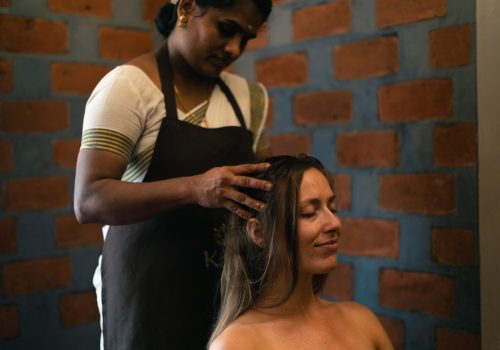
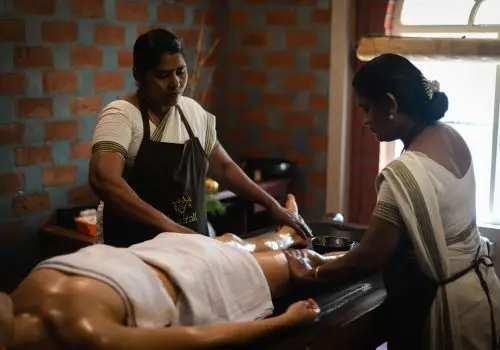
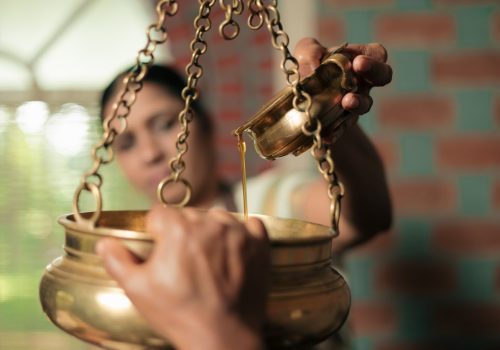
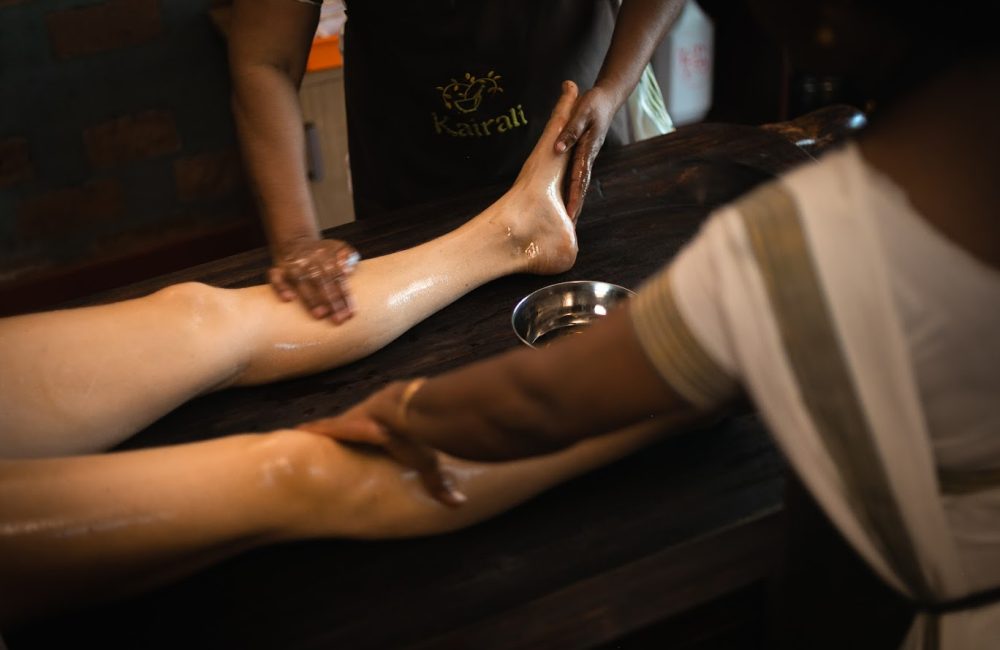
Medicated oils may be used during procedures such as Abhyanga (Ayurvedic oil application) or recommended in other practitioner-guided contexts.
For someone experiencing stiffness, the warmth, manual application and movement involved in an oil therapy may also make the experience physically comforting.
But an Ayurvedic oil should not be presented as a universal treatment for arthritis, injury or chronic pain.
Different formulations have different traditional uses, and suitability can depend on the person’s symptoms and wider health context.
This is particularly important when people attempt to choose products solely from labels or online descriptions.
Where herbal formulations fit
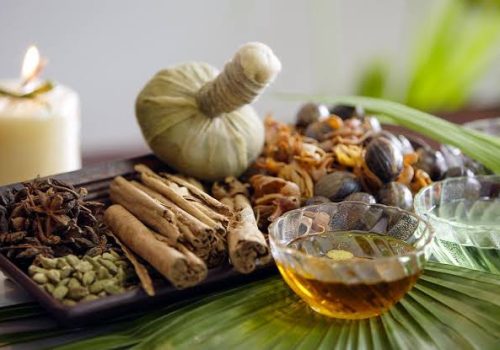
Internal Ayurvedic formulations may also be considered as part of practitioner-led care.
Kairali Ayurvedic Products Pvt. Ltd. manufactures classical and proprietary Ayurvedic formulations in a WHO-GMP-certified pharmaceutical manufacturing facility in Tamil Nadu. The certification refers to manufacturing and quality standards; it should not be interpreted as evidence that an individual product will produce a particular therapeutic result.
Within Kairali’s approach, formulations are intended to sit within a broader clinical context rather than function as isolated consumer solutions.
That distinction is particularly relevant for persistent joint symptoms.
The choice of formulation, duration of use, other medications and individual health conditions all matter.
Panchakarma is not a generic joint-pain detox
Panchakarma is also frequently promoted online as a way to “remove toxins” and relieve joint pain.
That description is too simplistic.
Panchakarma refers to a physician-supervised Ayurvedic therapeutic framework involving specific preparatory, principal and post-treatment procedures. Not every person with joint discomfort needs Panchakarma, and not everyone undergoing an Ayurvedic programme receives the same procedures.
At Kairali – The Ayurvedic Healing Village in Palakkad, Panchakarma programmes are physician-led within an NABH-accredited Ayurvedic clinical setting.
Where such procedures are considered for a person with joint concerns, the decision should follow assessment rather than a generic promise of “detoxification”.
Movement remains important
Ayurvedic care for joint health is not limited to medicines and oils.
Movement, appropriate exercise, sleep, body weight, diet and daily activity can all influence joint function.
Gentle yoga or mobility work may therefore have a place in a broader routine, depending on the person’s condition and physical capacity.
The emphasis should be on appropriate movement rather than pushing through pain.
Anyone with a recent injury, severe pain, significant swelling or diagnosed joint disease should seek professional guidance before beginning a new exercise or therapy programme.
Why “natural” does not automatically mean risk-free
Ayurvedic products are often marketed as natural alternatives to conventional medicines.
Natural origin, however, does not automatically guarantee that a formulation is suitable for every person.
Herbal preparations may interact with medications or be inappropriate in particular health circumstances. Manufacturing quality and correct identification of ingredients also matter.
For that reason, people already taking prescription medicines, managing chronic conditions, or considering several supplements at once should discuss Ayurvedic products with an appropriately qualified practitioner.
Good Ayurvedic practice involves knowing when not to prescribe as much as knowing what to prescribe.
Long-term joint care is rarely about one product
The strongest correction Ayurveda can make to contemporary wellness marketing may be this: persistent joint discomfort is rarely solved by a single bottle.
An oil can have a place.
A herbal formulation can have a place.
So can yoga, diet, sleep, weight management, rehabilitation and conventional medical treatment where appropriate.
What determines their value is context.
Ayurveda’s contribution is the attempt to understand that context at the level of the individual rather than assuming that everybody describing the same symptom should receive the same product.
For readers exploring Ayurvedic options for joint comfort, that is a more useful starting point than a promise of quick or permanent relief.
Speak with a qualified Ayurvedic physician before using an Ayurvedic formulation for persistent joint symptoms, particularly if you are taking medication or have an existing medical condition.
Website: www.kairaliproducts.in
Call: +91-9555156156