































In Ayurveda, Ahara (food) is medicine—purity (shuddhata) and freshness are non-negotiable for digestion (agni) and tissue building (dhatu poshana). Modern food safety agrees: even small adulterants can irritate the gut, aggravate Pitta/Vata, and trigger bloating or headaches. These home tests are indicative, designed for busy Indian kitchens, and help you decide whether to cook it, return it, or bin it.
5 safe home checks
1) Look & touch
- Colour & surface: Natural paneer is off-white to cream. Ultra-white, glossy sheen or visible oiling can be a red flag.
- Texture: It should crumble slightly under thumb pressure. A bouncy, stretchy, plasticky feel suggests fillers or cheese substitutes.
2) Smell
- Clean, milky, lightly sour is normal. Chemical/paint/ammonia odours? Discard immediately.
3) Hot-pan test
- Place a 1–2 cm cube on a preheated tawa without oil.
- Paneer should hold shape and brown lightly. If it melts/pools like processed cheese, you may be dealing with a substitute.
4) Crumble-in-water check
- Drop a crumbled pinch into a glass of room-temperature water.
- It should generally sink and stay cohesive. Oily film, instant disintegration, or excess foam can indicate poor quality or adulteration.
5) Optional quick indicators
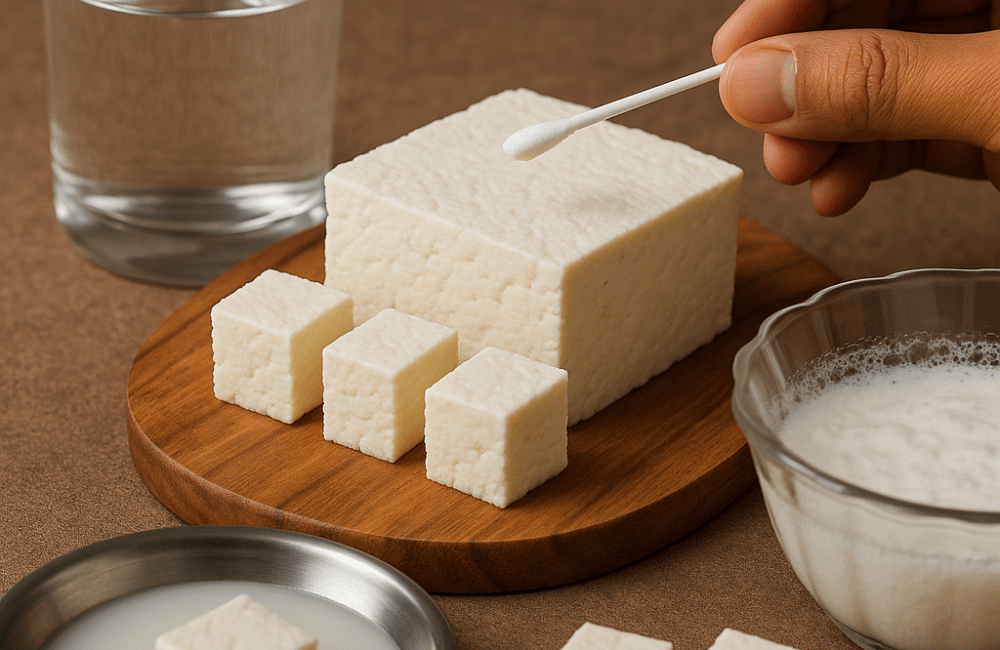
- Starch screen (if you have iodine in first-aid kit): A tiny dab on a crumbled bit turning blue/black suggests starch filler. Rinse surfaces after.
- pH strip on whey (pharmacy strips): Squeeze paneer; fresh whey is mildly acidic (~5.5–6.5). Strongly alkaline readings are suspicious.
(Skip these if you don’t have the items—they’re optional enhancers.)
What NOT to do
- Don’t taste suspicious paneer “to check.” Chemical adulterants can irritate mouth and gut.
- Don’t use open-flame or harsh reagents at home. No kerosene/bleach/ammonia tests—unsafe and inconclusive.
- Don’t judge by price alone. Discounts can be legit near the “best before” date—verify label and cold chain.
When to discard—no questions asked
- Chemical/off odour, slimy feel, green/black spots, gas bubbles, bulging packs, or leaking whey.
- Temperature abuse: paneer left >2 hours in the danger zone (above 5°C in Indian summers) after opening.
- Unknown source without manufacturing date, FSSAI license number, or storage instructions.
Smart buying & storage (India-focused)
- Label: Check FSSAI license number, manufacturing/packed-on date, batch/lot, and storage guidance.
- Cold chain: Buy from refrigerated displays (0–4 °C); choose brands with intact seals.
- At home: Refrigerate immediately; use within 24–48 hours of opening; keep covered; avoid re-freezing.
- Batch practice: If a pack fails checks, return it with the batch/lot details and notify your local food-safety authority.
Ayurvedic kitchen tips to digest paneer better (when it’s genuine)
- Spice pairing: Jeera + ginger + ajwain or a pinch of hing aids agni.
- Portion & timing: Smaller portions at lunch, not late dinner—easier on Kapha and nighttime digestion.
- Buttermilk (takra): Post-meal, lightly spiced takra can reduce heaviness and bloat.
- Swap smart: If paneer feels heavy for you, rotate with tofu, sprouted moong, horse gram (kulthi) based on your constitution and season.
A few simple checks can help you catch questionable paneer before it reaches your plate. Trust your senses, keep portions small when testing, and when in doubt—discard. Store and handle dairy cold, note batch/lot details, and report suspected adulteration to your local food-safety authority. Share the checklist so everyone in your kitchen can stay safe.