
































Food occupies a central place in Ayurveda. It is not considered merely a source of calories or fuel, but part of the wider pattern through which daily health is supported.
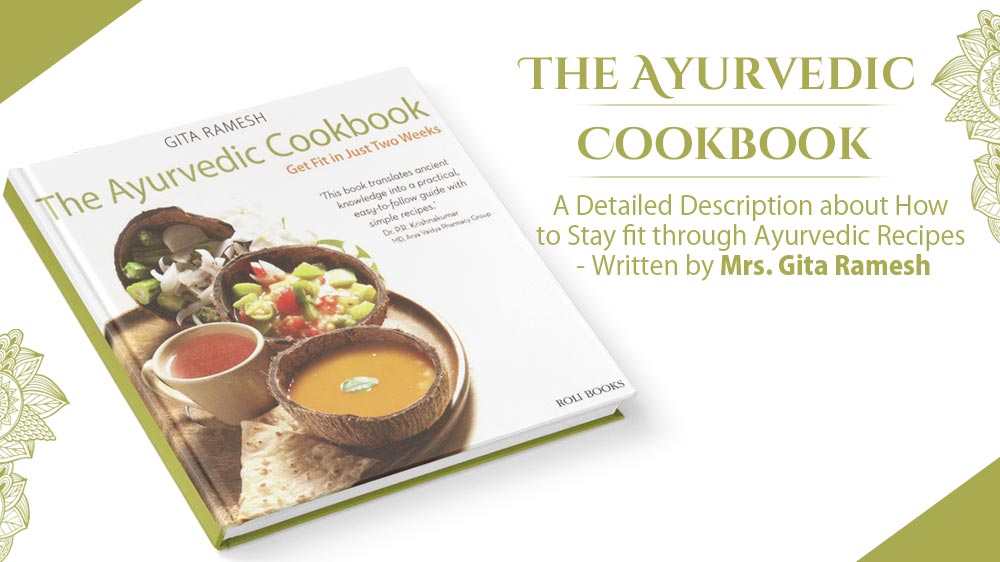
This is the idea at the centre of The Ayurvedic Cookbook by Gita Ramesh, co-founder and Joint Managing Director of Kairali Ayurvedic Group. Known for her work as an Ayurvedic chef and scholar, Ramesh presents Ayurvedic cooking as a practical discipline rather than a restrictive diet.
The book is intended for readers who want to understand how freshness, season, digestion and individual constitution can influence the way meals are prepared.
It also offers a useful reminder: eating well does not need to mean eating less, following severe restrictions or depending on complicated recipes.
Why food matters in Ayurveda
The familiar phrase “you are what you eat” captures only part of the Ayurvedic view.
Ayurveda also pays attention to how food is prepared, when it is eaten, how well it is digested and whether it is appropriate for the individual. Two meals made from similar ingredients may affect a person differently depending on freshness, portion size, cooking method and digestive capacity.
This is why Ayurvedic food guidance cannot be reduced to a single list of “good” and “bad” foods.
The emphasis is on suitability.
A meal may be nourishing for one person but too heavy for another. A dish that feels appropriate in winter may be less comfortable in summer. A raw preparation may suit one digestive pattern, while another person may respond better to warm, cooked food.
The purpose of Ayurvedic cooking is not to create fear around food. It is to encourage closer attention to how food is chosen and received by the body.
Fresh, seasonal and freshly prepared
One of the clearest ideas in Ayurvedic food practice is the preference for meals that are fresh and appropriate to the season.
Freshly cooked food is generally valued because its ingredients, texture and preparation can be adjusted more easily. Seasonal cooking also encourages people to respond to changes in temperature, appetite and local availability.
This does not mean that every ingredient must be grown nearby or that packaged food must be avoided completely. Modern life does not always allow that level of control.
The more useful principle is to make freshness and simplicity the default where possible.
A warm meal prepared from whole ingredients may often be more satisfying and easier to understand than a highly processed alternative containing many additives. The value lies not in moralising the choice, but in making food more recognisable and regular.
A practical introduction to Ayurvedic recipes
The Ayurvedic Cookbook presents mostly Indian-style vegetarian recipes intended to make Ayurvedic eating more approachable.
The recipes emphasise:
- freshly prepared meals;
- vegetarian ingredients;
- straightforward cooking methods;
- digestibility;
- the use of fruits, vegetables and spices;
- adaptation to different body types.
The book also includes information about the nutritional and traditional uses of common ingredients.
For readers new to Ayurveda, this practical structure may be more useful than beginning with theory alone. Cooking allows concepts such as seasonality, digestive capacity and balance to become part of daily experience.
Rather than asking readers to master the whole Ayurvedic system before entering the kitchen, the book begins with meals.
More than a weight-loss cookbook
The title and earlier descriptions of the book place considerable emphasis on becoming fit and managing weight. That may be one reason some readers first encounter it.
However, Ayurvedic cooking should not be reduced to rapid weight loss.
Body weight is influenced by many factors, including diet, physical activity, sleep, medication, hormonal health, age and diagnosed medical conditions. No cookbook can responsibly promise a fixed result within a set period.
The more credible value of the book lies in helping readers develop regular eating habits and a more thoughtful relationship with food.
A well-planned meal may support satiety, routine and dietary variety. Preparing food at home may also make portions and ingredients easier to understand. These habits can form part of a wider approach to health, but they are not a guaranteed method of losing a particular amount of weight.
Readers with medical conditions or significant weight concerns should seek qualified clinical guidance rather than relying on a general meal plan alone.
The two-week structure
The cookbook includes a two-week chart designed to help readers organise the recipes into a manageable routine.
This structure can be useful for someone who feels overwhelmed by the idea of changing how they eat. Instead of attempting a complete dietary overhaul, the reader can work through a defined period and become familiar with new combinations, cooking methods and meal rhythms.
The chart should be understood as a practical guide, not as a universal prescription.
Ayurveda traditionally individualises food according to factors such as prakṛti (constitution), vikṛti (current imbalance), agni (digestive and metabolic capacity), season, appetite and health status.
A two-week plan can provide organisation. It cannot account for every individual need.
Cooking for different constitutions
One of the most widely recognised features of Ayurvedic food practice is the idea that different people may need different approaches.
Ayurveda describes three doṣas, or functional principles: Vata, Pitta and Kapha. These concepts are used within a broader clinical framework to understand patterns in the body.
In popular wellness culture, doshas are often simplified into personality categories. In clinical Ayurveda, the assessment is more detailed.
Food choices may be considered according to qualities such as:
- warm or cooling;
- light or heavy;
- dry or oily;
- sharp or mild;
- dense or fluid.
The aim is not to assign every person a rigid dosha menu. It is to notice which combinations are more appropriate for their digestion, environment and current state.
The cookbook’s body-type approach introduces readers to this principle while keeping the recipes practical.
The role of spices
Spices are central to Indian cooking, but Ayurveda does not use them only for flavour.
Ingredients such as cumin, coriander, ginger, turmeric, fennel and black pepper are traditionally selected according to the qualities they bring to a dish.
The amount and combination matter.
More spice is not necessarily better. A preparation that is overly hot, oily or pungent may be unsuitable for some people. A milder blend may be preferred depending on appetite, season and tolerance.
This is another area where the cookbook’s everyday approach is useful. It encourages readers to see spices as part of the structure of a meal rather than as miracle ingredients with isolated health claims.
Vegetarian food without unnecessary restriction
The recipes in The Ayurvedic Cookbook are vegetarian.
For many readers, vegetarian cooking can expand the range of vegetables, pulses, grains and spices used at home. It can also encourage greater variety in texture and preparation.
A vegetarian diet is not automatically balanced, however. Protein, iron, vitamin B12 and other nutritional needs still require attention, especially for people following a fully plant-based diet or managing specific health concerns.
Ayurvedic dietary principles and modern nutritional assessment need not be treated as opposing approaches. One offers a traditional framework for qualities, digestion and suitability; the other helps evaluate nutrient adequacy and clinical requirements.
Used together, they can support more informed food choices.
Gita Ramesh’s approach to the Ayurvedic kitchen
Gita Ramesh’s work is grounded in the practical side of Ayurveda: how ideas about food, season and digestion are translated into meals that people can prepare and enjoy.
As co-founder and Joint Managing Director of Kairali Ayurvedic Group, she has contributed to the organisation’s food-led approach to Ayurvedic care. The Group was founded in 1989 by Gita Ramesh and K.V. Ramesh and draws on four generations of Ayurvedic practice in the founders’ family.
Her strength as an author lies in making the kitchen the starting point.
Ayurvedic food can sometimes appear complicated because of unfamiliar terminology and highly individualised guidance. A cookbook cannot replace practitioner assessment, but it can make the principles less abstract.
The reader learns by preparing, tasting and observing.
How to use the book responsibly
A cookbook is most useful when it supports attention rather than rigid compliance.
Readers can begin by selecting a small number of recipes and noticing:
- whether the meal feels satisfying;
- how hunger changes between meals;
- whether the portion feels appropriate;
- how the food affects comfort and digestion;
- whether the recipe suits the season;
- which preparations are realistic to repeat.
There is no need to change every meal at once.
It is also important not to interpret descriptions such as “therapeutic” as promises to treat disease. Food can contribute to general health, but medical conditions often require individual assessment, treatment and nutritional advice.
People who are pregnant, taking prescription medication, managing an eating disorder or living with a diagnosed condition should consult an appropriate healthcare professional before making substantial dietary changes.
Eating well without turning food into punishment
The most useful lesson in Ayurvedic cooking may be its emphasis on regularity and attention.
Healthy eating does not require starvation. Nor does it require turning every meal into a test of discipline.
A sustainable meal should be nourishing, appealing and realistic enough to prepare again. Food that is technically “healthy” but unpleasant, inaccessible or unnecessarily restrictive is unlikely to remain part of daily life.
The Ayurvedic Cookbook offers readers a structured introduction to this more measured approach. Its recipes provide a way to explore vegetarian Ayurvedic cooking while learning how freshness, season, digestion and constitution influence food choices.
The value of the book is not a promise of becoming fit in two weeks.
It is the possibility of using two weeks to begin paying closer attention to how one cooks, eats and responds.