














Yoga is increasingly entering a technological age.
Apps can build practice schedules. Wearable devices can measure movement and heart rate. AI-enabled tools are beginning to analyse posture and provide real-time feedback. Yet at the same time, some of the practices associated with yoga and Ayurveda continue to depend on something technology cannot easily reproduce: individual observation.
That tension was at the centre of a WION special series ahead of International Day of Yoga 2024, which explored both the growing role of artificial intelligence in yoga and the continuing practice of Ayurveda in Kerala.
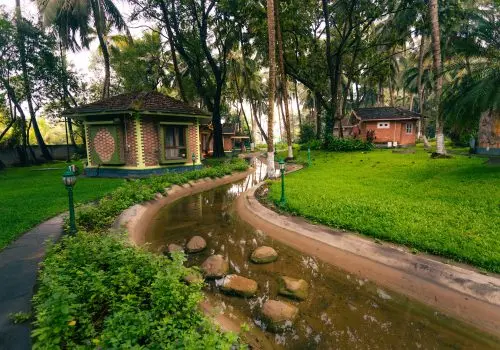
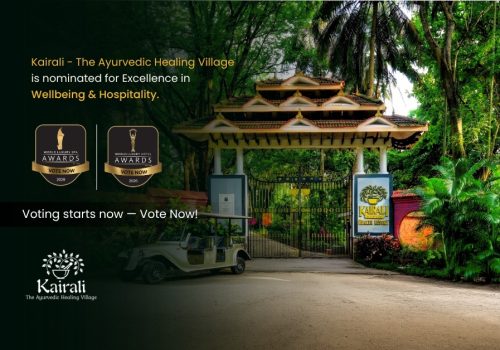
As part of the series, WION visited Kairali – The Ayurvedic Healing Village in Palakkad, offering viewers a look at yoga, Ayurvedic care and the wider infrastructure behind the tradition.
Yoga beyond the exercise mat
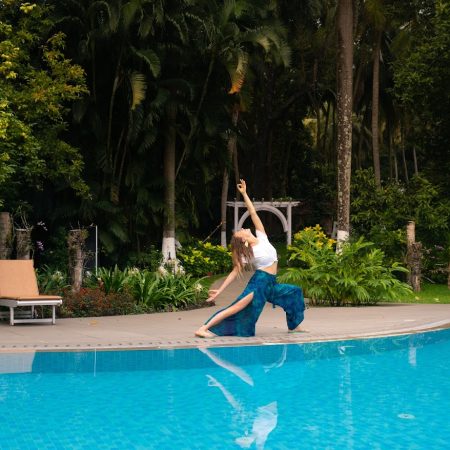
For much of the world, yoga is now encountered primarily as physical exercise.
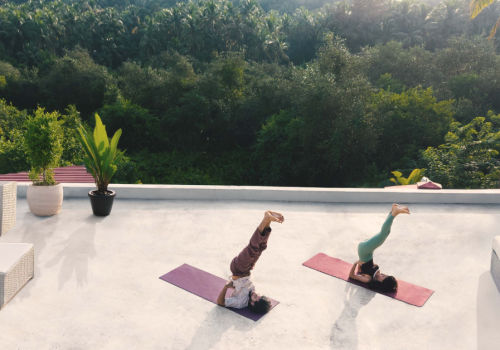
Āsana (physical postures) is certainly one part of yoga, but the tradition also encompasses breathing practices, meditation and disciplines concerned with attention and behaviour.
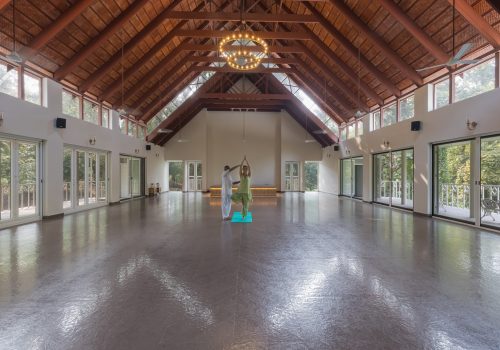
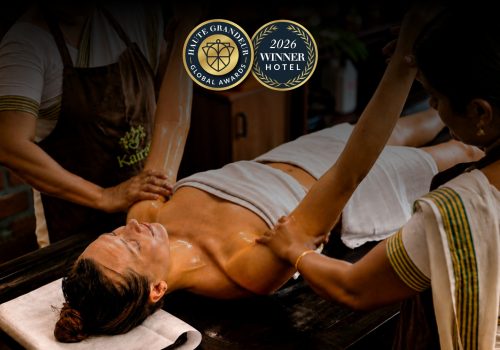
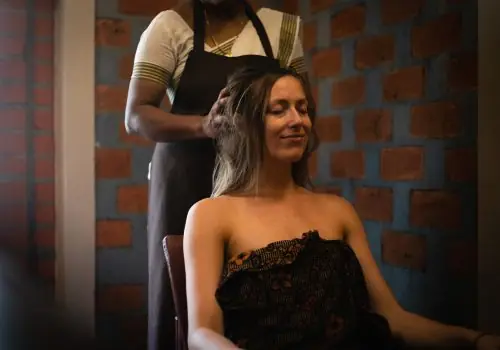
At a residential Ayurvedic setting such as Kairali, yoga is approached as part of a wider daily structure rather than simply as a standalone fitness class.
That relationship between Ayurveda and yoga was particularly relevant to WION’s International Yoga Day coverage.
The two traditions are distinct, but they have long existed within overlapping Indian philosophical and health contexts. In contemporary residential programmes, this can mean yoga sessions taking place alongside Ayurvedic consultations, therapies, meals and periods of rest.
What WION saw in Palakkad
WION journalist Johan Castell visited Kairali, The Ayurvedic Healing Village while examining the opportunities and challenges surrounding Ayurveda. The report also included a visit to an Ayurvedic medicine manufacturing facility, giving the programme a perspective beyond the retreat experience itself.
That broader view matters.
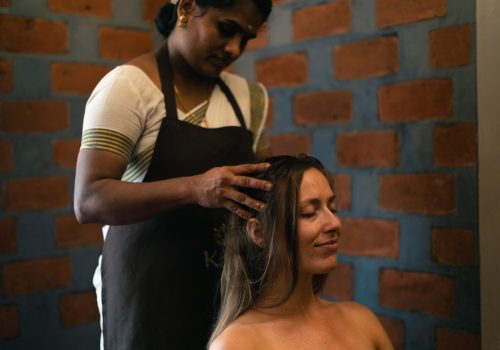
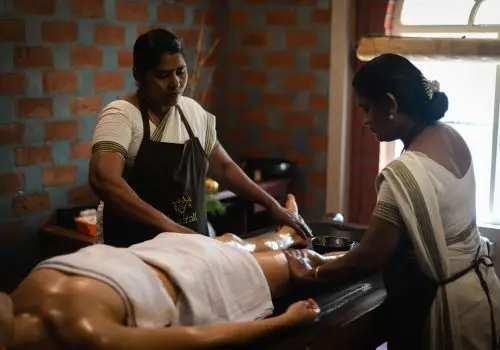
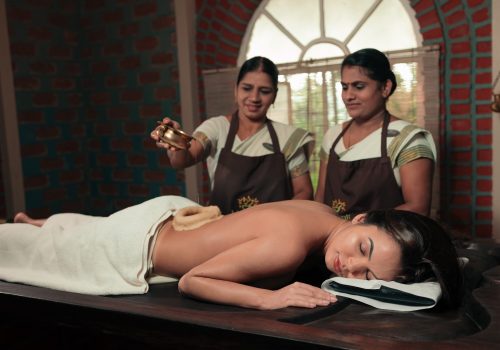
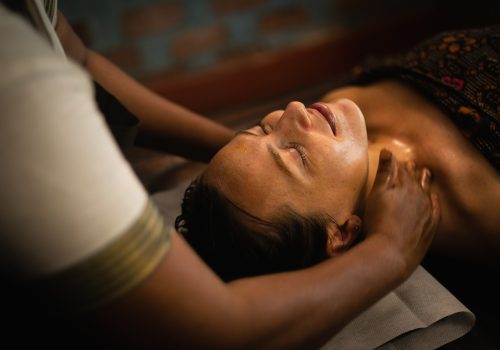
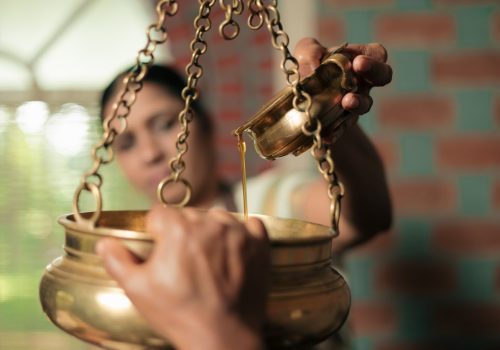
Ayurveda is sometimes represented internationally through a small number of highly recognisable images: herbal oils, massage tables, Shirodhara and tropical retreat settings.
But a functioning Ayurvedic system involves considerably more than the treatment room.
There are physicians making clinical assessments, therapists carrying out prescribed procedures, pharmaceutical manufacturing and quality processes, dietary practices, and the everyday routines that surround residential care.
Seeing some of these different elements together makes it harder to reduce Ayurveda to a spa experience.
And then there is AI
Another part of WION’s series examined how artificial intelligence is beginning to influence the practice of yoga, including the emergence of technologies such as smart yoga mats and digitally assisted practice.
It raises an interesting question.
How much of a traditional practice can technology meaningfully assist, and where does human judgement remain essential?
AI can potentially recognise a posture from a camera feed. Sensors can detect weight distribution. An application can remember routines, provide prompts and make practice more accessible to people who do not have an instructor beside them.
Those are useful capabilities.
But measurement is not the same thing as understanding an individual.
A technically correct posture may still be inappropriate for someone with an injury, limited mobility or a particular medical concern. Similarly, an Ayurvedic treatment cannot responsibly be selected simply because an algorithm has identified someone’s supposed “dosha type” from an online questionnaire.
The technology may support practice. It does not automatically replace qualified judgement.
Personalisation means more than an algorithm
This distinction becomes particularly clear in Ayurveda.
An Ayurvedic consultation can consider prakriti (individual constitution), vikriti (the person’s present pattern of imbalance), digestion, appetite, sleep, lifestyle and other aspects of health.
Treatment decisions are then intended to respond to that assessment.
Artificial intelligence is remarkably good at finding patterns in information. It may eventually become useful in organising records, supporting research or helping practitioners recognise patterns across large datasets.
But Ayurveda’s claim to personalisation should not be confused with the contemporary technology industry’s use of the same word.
A personalised app may mean an algorithm has modified a recommendation based on several data points.
In clinical Ayurveda, personalisation is supposed to involve practitioner assessment, context and ongoing observation.
The words may be the same. The processes are not.
Tradition does not have to reject technology
There is also a danger in presenting this as a simple contest between traditional practice and modern technology.
It does not need to be one.
Yoga has changed as it has travelled across countries, languages and cultures. Ayurveda is also being documented, researched and communicated through tools that its classical practitioners could never have imagined.
Digital technology can make information more accessible. AI can potentially help researchers analyse data or allow educational material to reach people who would otherwise have little access to it.
The relevant question is not whether Ayurveda or yoga should remain untouched by technology.
It is whether the technology preserves the distinctions that matter.
Can an educational tool distinguish traditional use from established scientific evidence? Can it recognise when a health question requires a clinician rather than an automated recommendation? Can it assist an instructor without implying that analysing body geometry is equivalent to understanding the person practising the posture?
Those are more useful questions than asking whether AI is simply “good” or “bad” for yoga.
Why WION’s Kairali visit matters
WION’s 2024 coverage brought two apparently different stories together: the continuing practice of Ayurveda in Kerala and the growing technological transformation of yoga.
That juxtaposition may be more significant than it first appears.
Ayurveda and yoga are no longer insulated traditions encountered only within India. They operate in an international environment of wellness tourism, digital platforms, scientific scrutiny, wearable technology and, increasingly, artificial intelligence.
The challenge is not merely to preserve old practices because they are old.
Nor is it to modernise them simply because technology makes modernisation possible.
The more difficult task is to identify what technology can improve without losing the practitioner judgement, context and individual assessment that give these systems their structure.
WION’s cameras arrived in Palakkad during a period when that question was becoming increasingly difficult to ignore.
Two years later, it is even more relevant.
Website: www.ktahv.com
Call: +91-9555156156