




















Modern life makes regular movement surprisingly difficult.
Long hours at a desk, irregular meals, poor sleep and persistent stress can gradually change the way we feel throughout the day. Energy becomes less predictable. Movement becomes less frequent. Exercise gets pushed to the end of the priority list.
Yoga offers one practical way to interrupt that pattern.
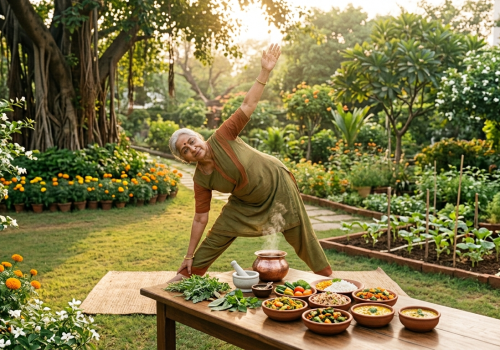
Its value does not come from a single posture or a promise to correct a medical condition. It comes from combining movement, breathing, body awareness and routine in a practice that can be adapted to different levels of fitness.
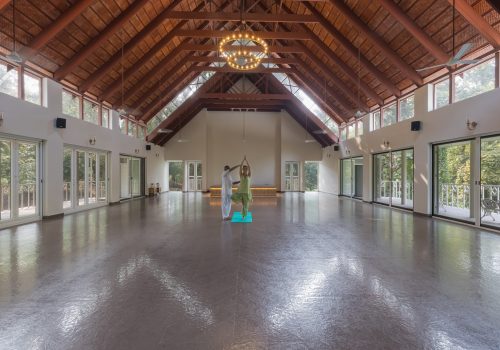
At Kairali, The Ayurvedic Healing Village in Palakkad, yoga is used as one part of a wider physician-led Ayurvedic programme. The aim is not to prescribe the same sequence to every guest, but to consider movement alongside food, sleep, stress and daily habits.
Why regular movement matters
Yoga is sometimes discussed as though it works through a special set of postures.
The simpler explanation is more useful.
Regular movement helps maintain mobility, strength and physical confidence. A structured practice can also make people more aware of how much time they spend sitting and how little movement may be built into an ordinary day.
That awareness matters.
For someone who spends most of the day at a desk, even a gentle daily practice may create a more consistent relationship with movement.
The goal is not intensity for its own sake.
It is regularity.
Yoga is not one exercise
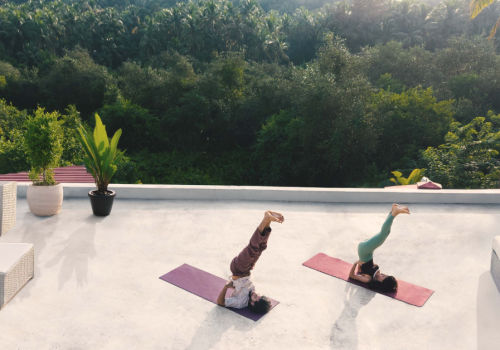
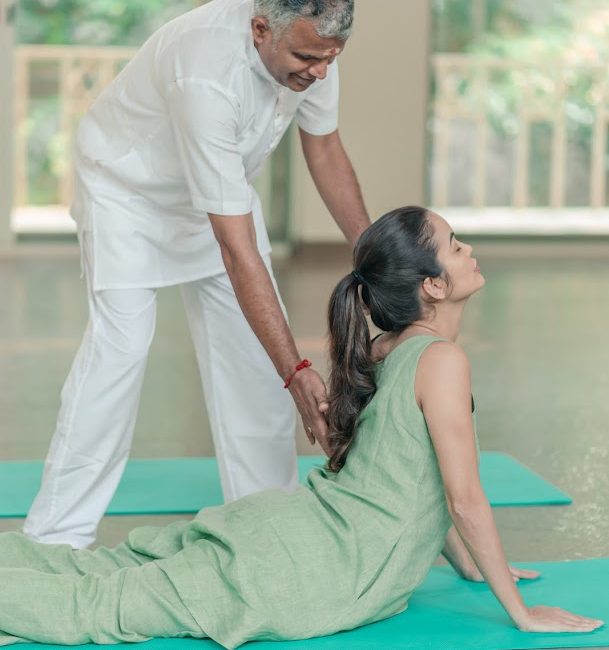
One reason yoga works well in a residential setting is that it can be adjusted.
A younger, active guest may be comfortable with a more dynamic sequence. Someone older, less mobile or recovering from a period of inactivity may need a slower practice.
That is why lists of “best yoga poses” can be misleading.
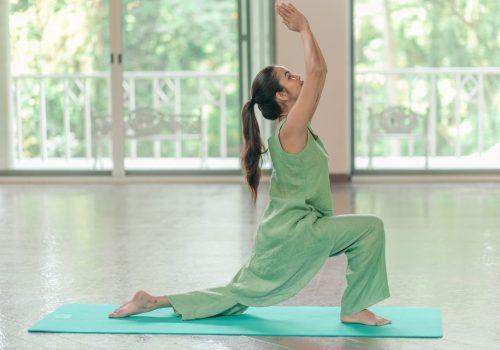
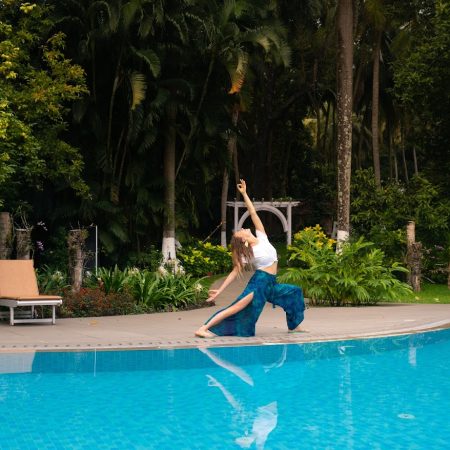
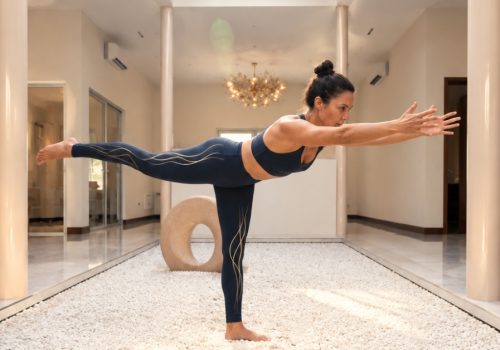
Postures such as Sūrya Namaskāra (Sun Salutation), Bhujangāsana (Cobra Pose), Setu Bandhāsana (Bridge Pose) or seated twists may appear in a general yoga session, but they are not automatically suitable for everyone.
The posture should follow the person.
Not the other way around.
The overlooked role of breathing
Yoga also brings attention to breathing.
Most people do not spend much time noticing how they breathe unless they are exercising, anxious or short of breath.
A slower practice can create time to observe breathing without trying to force it.
Breathing exercises, or prāṇāyāma, may be included in a supervised yoga programme depending on the individual.
Their role should not be exaggerated.
They are better understood as tools for attention, relaxation and establishing a calmer rhythm to the practice.
Stress changes how we live
Stress is not only an emotional experience.
It often changes behaviour.
People sleep later, eat more irregularly, move less and spend longer periods sitting. When that becomes the normal pattern, health habits can become progressively harder to maintain.
Yoga does not remove those pressures.
What it can do is create a regular period in the day where movement and attention are deliberate.
That may sound modest.
It is also more realistic than claiming that a particular breathing technique or posture will correct a complex health condition.
Ayurveda looks beyond the yoga mat
Ayurveda approaches daily health through a wider framework.
Movement is one part of it.
Food, digestion, sleep, appetite, stress and daily routine are also considered.
This is why yoga at an Ayurvedic residential centre is not usually treated as a stand-alone intervention.
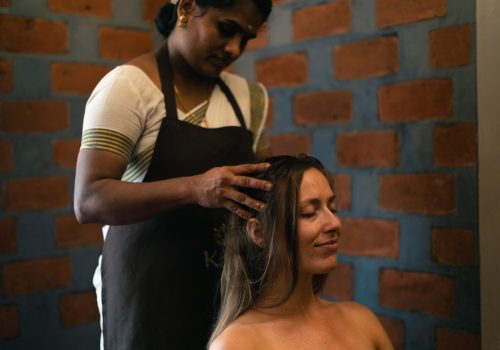
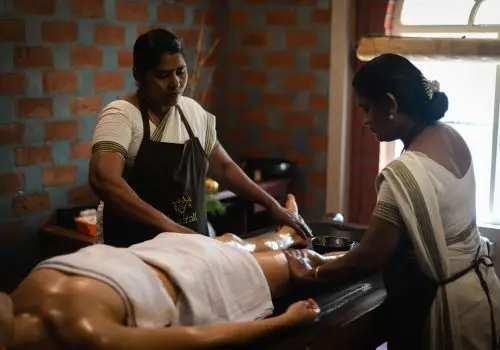
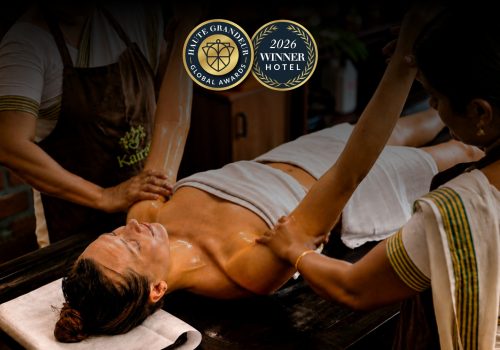
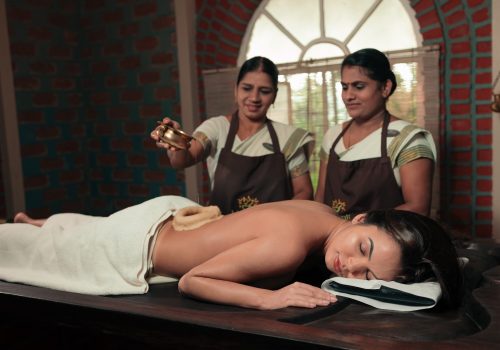
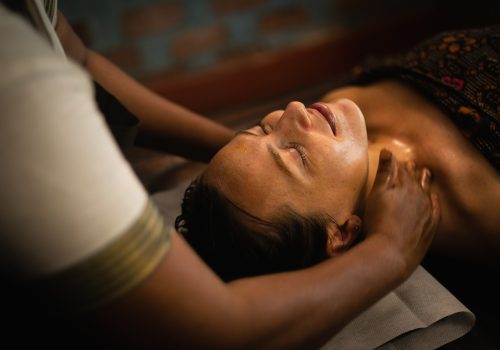
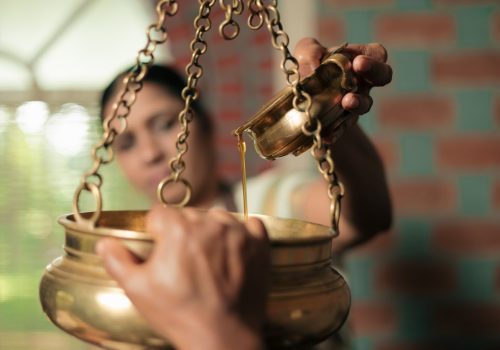
At Kairali, guests first meet an Ayurvedic physician. The wider programme may then include yoga, physician-directed therapies, meals, rest and changes to daily routine where appropriate.
The exact combination differs from person to person.
Why routine may be the most useful part
A residential stay makes routine visible.
Guests wake at a more regular time. Meals follow a schedule. Yoga and therapies happen at defined points in the day. There is also time for rest.
None of these habits is particularly dramatic.
Together, however, they can reveal how irregular an ordinary routine may have become.
A person who normally skips breakfast, sits for most of the day, eats late and sleeps inconsistently may notice the difference when those patterns change.
That observation can be more valuable than any single yoga pose.
Food, movement and sleep belong in the same conversation
Wellness content often separates these topics.
One article discusses exercise. Another talks about diet. A third focuses on sleep.
In daily life, they overlap.
Poor sleep can make movement feel harder. An irregular workday can lead to delayed meals. Stress can affect both activity and appetite.
Ayurveda has traditionally looked at these areas together rather than treating them as isolated habits.
That broader perspective is useful even for people who are not following an intensive Ayurvedic programme.
Instead of asking which one practice will “fix” health, a better question is whether the entire day supports it.
What yoga should not promise
Yoga is often promoted with claims that go far beyond what a responsible practice should promise.
A posture does not guarantee weight loss.
A breathing exercise does not correct a medical condition.
A short retreat does not reset the body.
That does not make yoga less useful.
It simply puts the practice in a more credible place.
Yoga can support regular movement, flexibility, strength, relaxation and body awareness. For many people, those are valuable goals on their own.
The Kairali approach
Kairali – The Ayurvedic Healing Village is an NABH-accredited Ayurvedic hospital-resort in Kodumbu, Palakkad. Its residential programmes combine physician-led Ayurveda with structured daily routines that may include yoga where appropriate.
The important point is that yoga is not treated as a universal prescription.
The physician and yoga team consider the guest’s age, mobility, health and wider programme before deciding what is suitable.
That is a more useful way to think about yoga in Ayurveda.
Not as a collection of poses designed to target one number or one condition.
But as one part of a larger approach to movement, routine and daily wellbeing.