














Kerala has become one of the places most closely associated with Ayurveda.
The state’s climate, long-established Ayurvedic institutions and continued use of traditional therapies have helped create a large wellness-tourism sector. Today, travellers can choose from Ayurvedic hospitals, physician-led retreats, spa resorts and hotels that include a few Ayurvedic treatments within a broader wellness menu.
From the outside, they can look remarkably similar.
They are not.
For someone considering an Ayurvedic stay, the more useful question is not simply, “Which is the best Ayurvedic resort in Kerala?” It is:
How seriously is Ayurveda practised there?
That distinction matters because an Ayurvedic programme is very different from booking a massage at a wellness hotel.
Resort Ayurveda and clinical Ayurveda are not the same thing
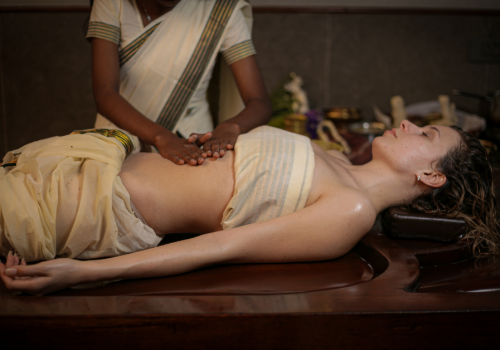
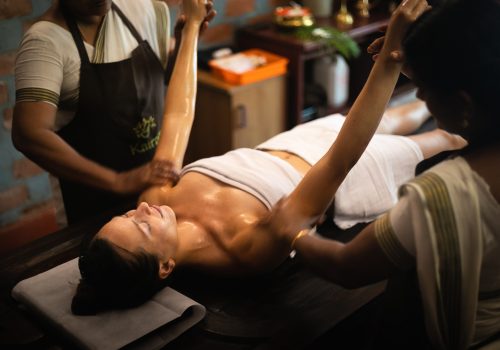
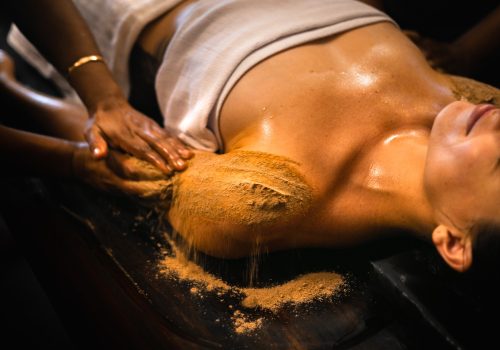
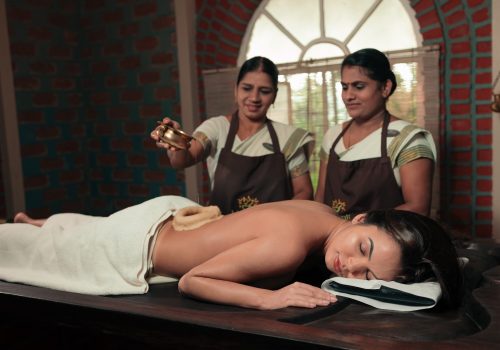
Ayurvedic treatments have become common across Kerala’s hospitality industry.
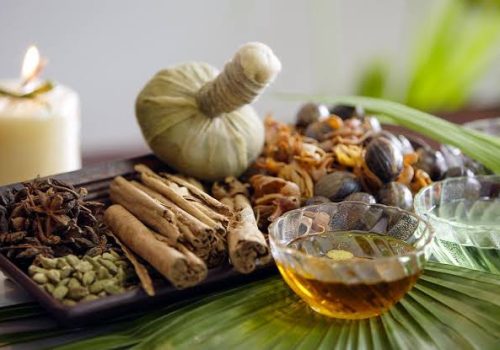
An oil massage, yoga class or herbal steam session can certainly form part of a relaxing holiday. But the presence of Ayurvedic therapies on a hotel menu does not necessarily mean the property operates according to a physician-led Ayurvedic model.
In a more clinically structured setting, the process usually begins with consultation.
An Ayurvedic physician considers factors such as prakriti (individual constitution), vikriti (current imbalance), digestion, sleep, appetite, routine and relevant health history before deciding whether particular therapies are appropriate.
Treatment is therefore not selected simply because it is popular or included in a package.
The difference is important for anyone seeking more than relaxation.
Look for qualified practitioners
The quality of an Ayurvedic retreat depends heavily on the people responsible for the care.
Guests should be able to understand who is conducting the consultation, what qualifications the physicians hold and how treatments are supervised.
This becomes particularly important for programmes involving Panchakarma or other therapies that traditionally require individual assessment and sequencing.
A good retreat should also be willing to explain when a treatment is not appropriate.
That is often a stronger indicator of clinical seriousness than an extensive list of promised benefits.
Accreditation can help distinguish facilities
For international travellers, evaluating an unfamiliar healthcare system can be difficult.
Accreditation offers one useful reference point.
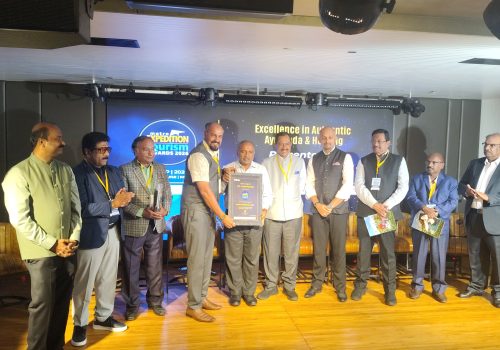
Kairali – The Ayurvedic Healing Village in Kodumbu, Palakkad, is an NABH-accredited Ayurvedic hospital and holds the Government of Kerala’s Green Leaf Certification.
NABH accreditation relates to healthcare quality and patient-safety standards. Green Leaf is the Government of Kerala’s highest classification for Ayurveda centres.
Credentials do not by themselves guarantee a particular outcome, but they provide travellers with something more concrete to assess than promotional language.
Ayurveda works best when the environment supports the programme
The surroundings of an Ayurvedic retreat matter, although perhaps not for the reasons wellness advertising often suggests.
The purpose is not simply to provide attractive scenery.
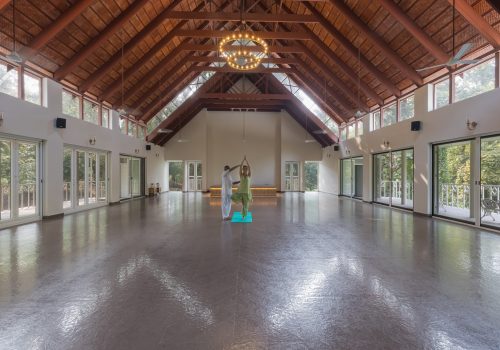
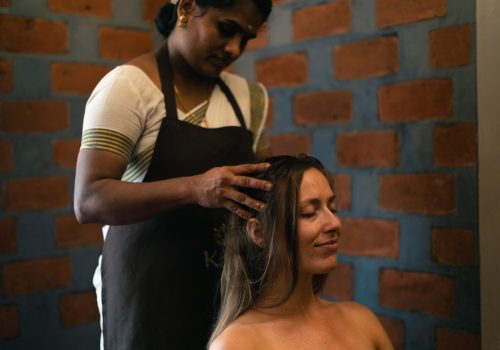
Ayurvedic programmes often involve regulated meals, periods of rest, prescribed therapies, yoga or gentle movement and a comparatively structured daily routine. An environment that reduces unnecessary stimulation can make it easier to follow that schedule.
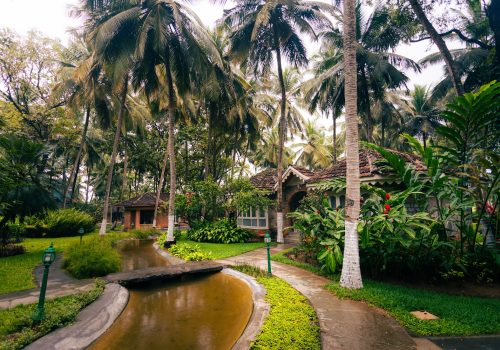
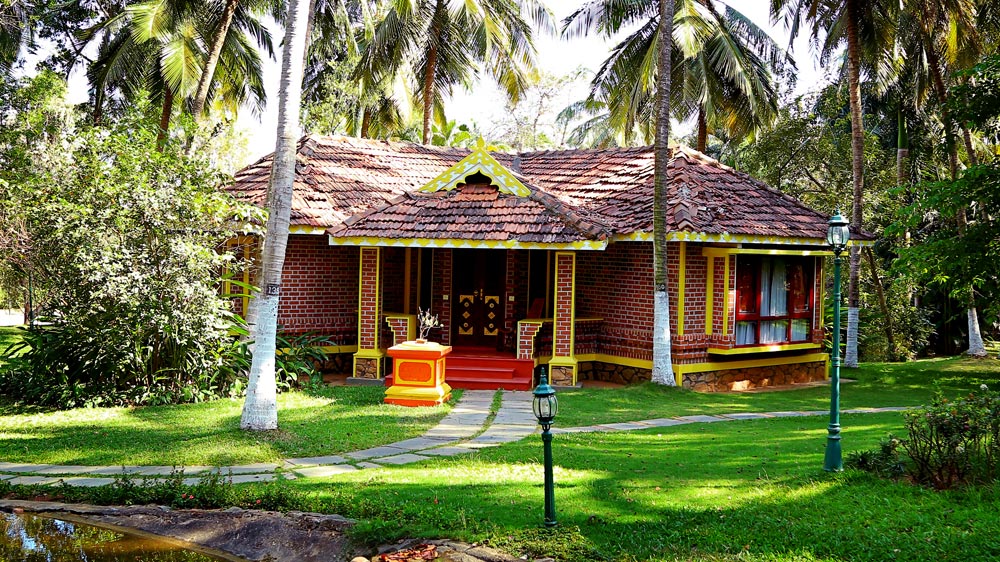
At Kairali – The Ayurvedic Healing Village in Palakkad, the retreat setting is deliberately separated from the pace of conventional tourism.
Yoga, meditation, Ayurvedic therapies and vegetarian meals prepared according to Ayurvedic principles are part of the broader daily routine.
The aim is not to fill every hour with wellness activities.
A serious Ayurvedic stay often requires the opposite: enough space for treatment, meals, rest and observation.
Food is part of the programme, not an added amenity
At many resorts, food and spa treatments occupy completely separate parts of the guest experience.
Ayurveda traditionally does not make that separation.
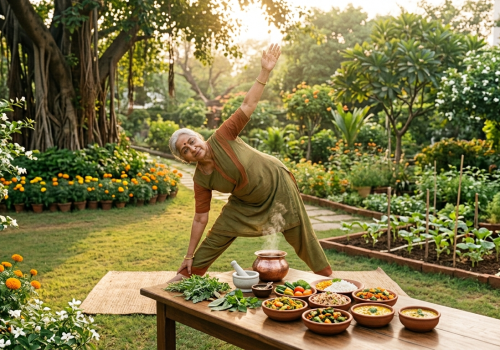
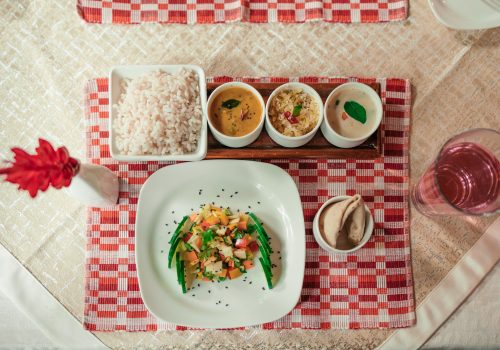
Diet, digestion and treatment are closely connected within Ayurvedic practice. What a guest eats may therefore change depending on the programme being followed and the physician’s recommendations.
This is one reason an Ayurveda-focused retreat may feel quite different from a luxury resort.
The menu is not designed solely around indulgence or variety. It forms part of the overall routine.
For travellers considering a longer Ayurvedic stay, it is worth asking how closely the kitchen and medical teams work together.
Yoga should complement the programme
Yoga is another feature widely advertised by wellness resorts, but here too, context matters.
Within an Ayurvedic retreat, yoga does not need to be strenuous or performance-oriented.
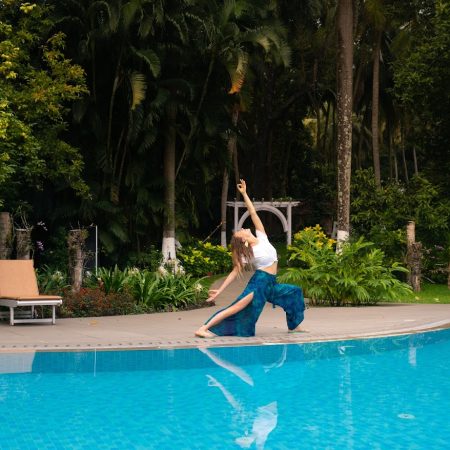
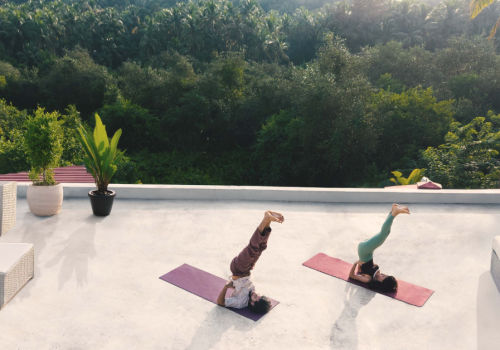
Sessions may be adapted according to age, mobility, health considerations and the wider programme being followed. Breathing practices, meditation and slower movement can be as relevant as physical postures.
Guests should not feel pressure to keep up with an advanced class simply because yoga is included in their stay.
The appropriate practice is the one that fits the individual.
More treatments do not necessarily mean better treatment
Long therapy menus can be impressive.
They can also be misleading.
Ayurveda is not built around trying as many therapies as possible. A physician-led approach may involve fewer interventions, selected for a specific reason and modified during the stay depending on how the individual responds.
For prospective guests, useful questions include:
- Will I have a consultation before treatments begin?
- Are therapies prescribed individually or selected from a fixed package?
- Who supervises the programme?
- Can the programme be modified during the stay?
- What happens if a treatment is considered unsuitable for me?
- How does the retreat handle existing medications or medical conditions?
- What qualifications do the physicians and therapists hold?
The answers tell you considerably more than a brochure photograph.
What about Ayurvedic hospitals?
For some travellers, the word “resort” may not describe what they actually need.
There is a meaningful difference between travelling primarily for relaxation and entering a medically supervised Ayurvedic programme.
Anyone dealing with an existing health condition should first discuss travel and treatment plans with the appropriate healthcare professionals. Ayurvedic care should not be used to delay necessary diagnosis, medication, emergency treatment or surgery.
Where someone chooses Ayurveda as part of a broader approach to health, a physician-led facility can provide a more structured environment than a conventional spa resort.
This is why understanding whether a property functions primarily as a hotel, wellness retreat, clinic or Ayurvedic hospital is important before booking.
Choosing an Ayurvedic retreat is really about choosing a standard of practice
Kerala offers an enormous range of Ayurvedic experiences.
That variety is useful, provided travellers understand what they are choosing.
Someone seeking a quiet holiday with massages and yoga may be perfectly satisfied with a wellness resort.
Someone seeking a structured Ayurvedic programme should look further: practitioner qualifications, clinical supervision, accreditation, individual consultation, treatment planning, dietary integration and clear safety procedures.
The distinction is not between luxury and simplicity.
It is between Ayurveda used as an amenity and Ayurveda practised as the organising principle of the stay.
At Kairali – The Ayurvedic Healing Village, that distinction shapes the entire programme: physician consultation, Ayurvedic therapies, food, yoga, rest and daily routine are considered together rather than offered as disconnected wellness experiences.
For travellers evaluating Ayurveda in Kerala, that may be the most useful place to begin.
Considering an Ayurvedic stay in Kerala? Book a free consultation with a Kairali Ayurvedic physician to understand the available programmes and whether one may be appropriate for you.