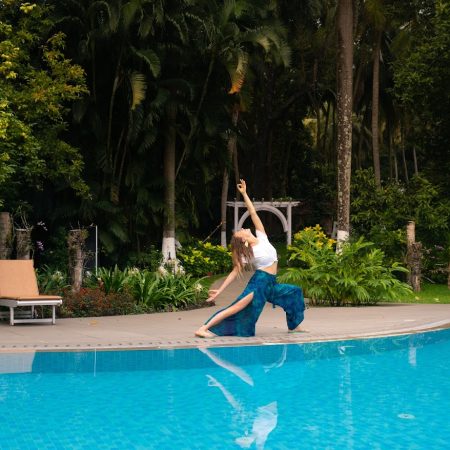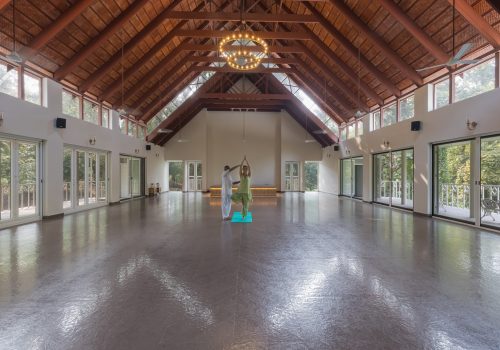
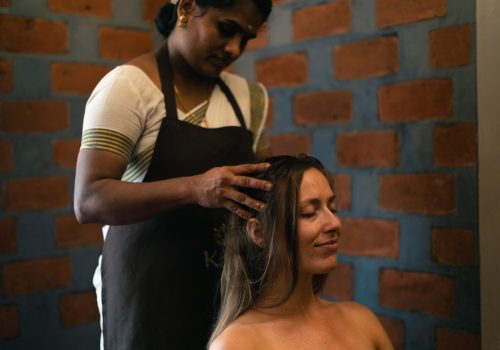
















Kairali – The Ayurvedic Healing Village in Palakkad has changed considerably in recent years. The reception is new. Rooms have been refreshed to bring in more natural light. Treatment areas have been redesigned, and a new yoga pavilion has been added.
What is more interesting, however, is what has not changed.
The property still works around the same basic idea on which it was built: guests stay within an environment structured around physician-led Ayurveda, with treatments, food, rest and daily routines forming part of the same programme.
That distinction matters at a time when many wellness properties are becoming increasingly difficult to tell apart.
A resort built around Ayurvedic care
Kairali Ayurvedic Group was founded in 1989 by K.V. Ramesh and Gita Ramesh and draws on four generations of Ayurvedic practice in the founders’ family. Kairali – The Ayurvedic Healing Village was subsequently established in Palakkad as a residential setting where Ayurvedic care could take place over a sustained period rather than during brief visits to a treatment centre.
Today, the Healing Village operates as an NABH-accredited Ayurvedic hospital-resort in Kodumbu, Palakkad. It also holds the Government of Kerala’s Green Leaf Certification.
That clinical identity is easy to overlook when arriving at the property.
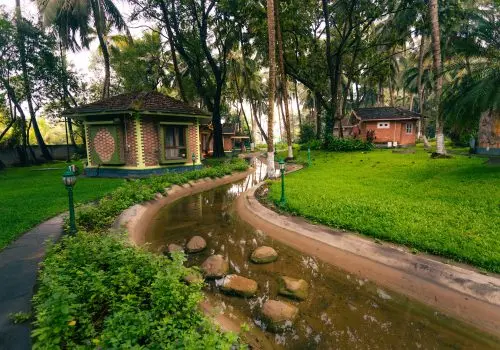
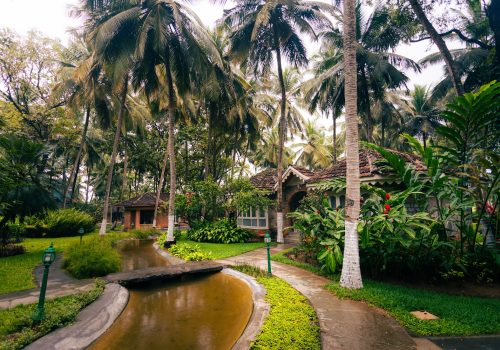
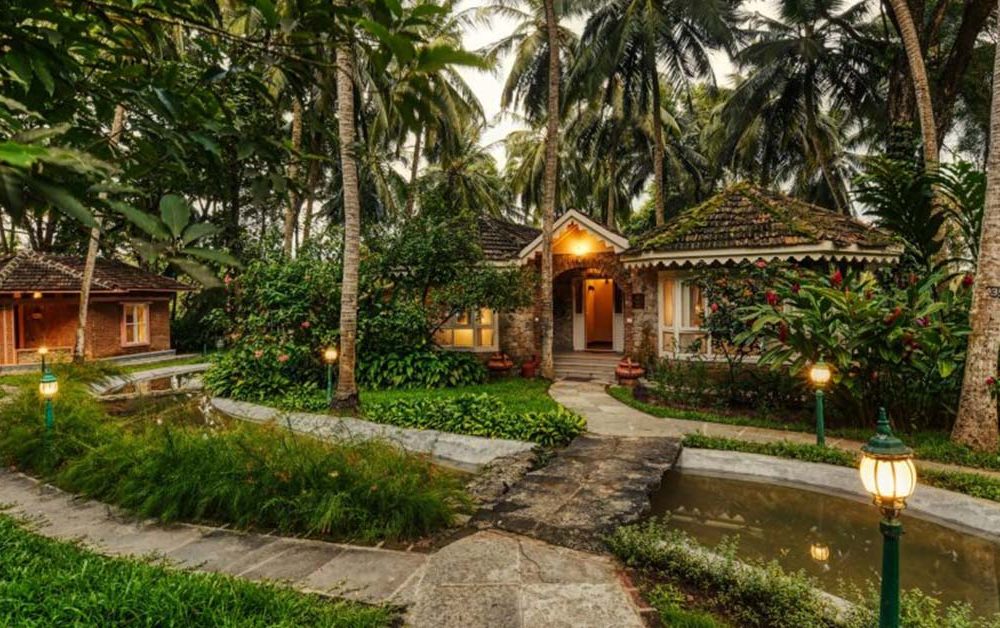
The landscape is green and expansive, villas are dispersed rather than concentrated in hotel blocks, and water channels run through parts of the grounds. The architecture has deliberately remained understated. Exposed brick and simple forms give many of the buildings a character that feels distinctly different from contemporary luxury-resort design.
The recent renovation has largely worked within that framework rather than replacing it.
New interiors, without erasing the old architecture
The most visible changes are inside the villas.
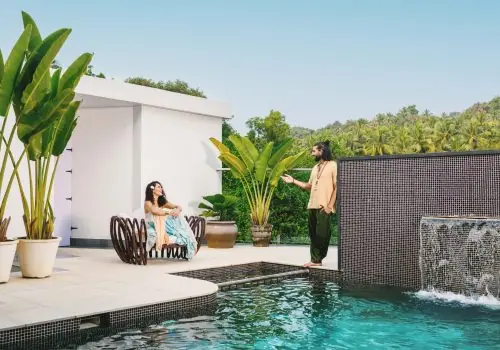
While much of the exterior architecture has been retained, interiors have been updated with lighter spaces, redesigned bathrooms and more comfortable areas for sitting and reading. Improved lighting gives rooms a noticeably brighter quality.
This is perhaps the most successful aspect of the renovation: the rooms feel more contemporary without becoming anonymous.
There is a wider lesson here for Ayurvedic hospitality. Modernisation does not necessarily require turning a clinical wellness property into a conventional spa resort. Comfort matters, particularly for guests staying for several weeks, but it does not need to become the dominant experience.
At Kairali, the accommodation remains secondary to the reason most guests are there.
The treatment centre has changed most
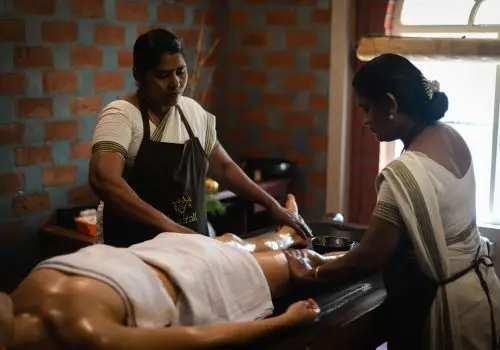
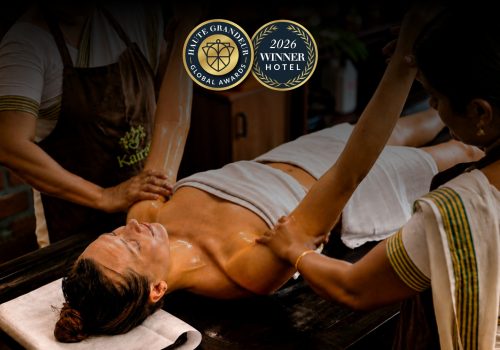
One of the most significant additions is the redesigned relaxation area in the women’s treatment wing.
Treatment days in a residential Ayurvedic programme can involve considerable periods of preparation, therapy and rest. The spaces surrounding those treatments therefore matter more than they might in a hotel spa, where a massage is typically an isolated appointment.
Creating places where guests can sit quietly before or after a therapy improves the experience without changing the therapy itself.
The new reception follows a similar principle. Its larger proportions and high roof make arrival feel more considered, but the architectural intervention remains relatively restrained.
This balance between physical comfort and clinical purpose is important because Kairali occupies an unusual category. It is a resort in setting, but its treatment model is physician-led. The NABH accreditation is therefore more meaningful than a generic wellness credential: it reflects the property’s role as an Ayurvedic healthcare facility rather than simply a destination offering Ayurvedic-inspired spa treatments.
What a typical day looks like
Life at the Healing Village is intentionally structured.
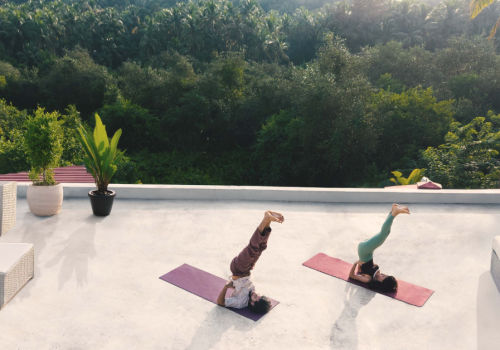
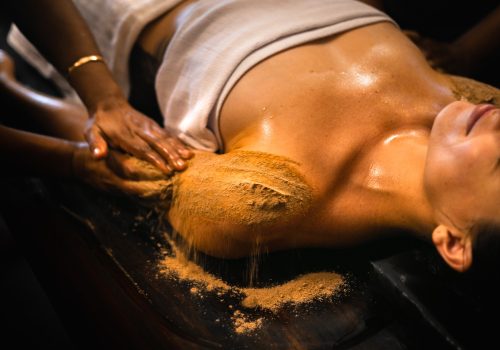
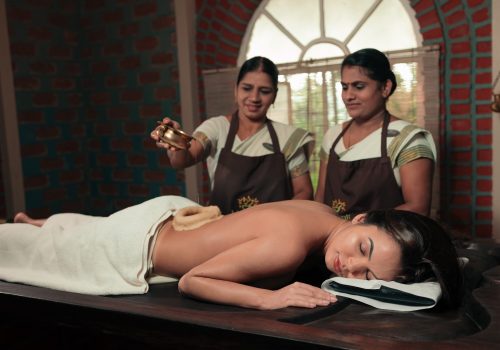
A morning may begin with yoga, followed by breakfast and the day’s prescribed programme. Ayurvedic therapies are scheduled according to the physician’s assessment rather than chosen from a conventional spa menu.
Meals are also part of that structure.
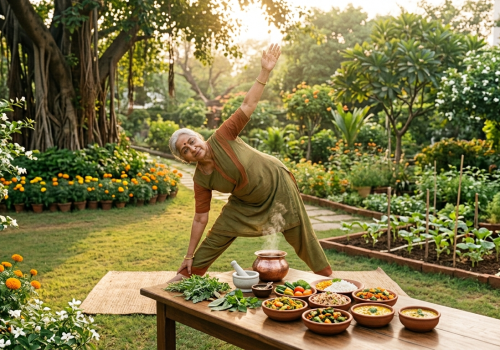
Breakfast, lunch and dinner are generally simple, vegetable-led meals, with portions and preparations adapted according to the programme and medical advice provided to the individual guest. The emphasis is less on restaurant variety and more on consistency.
Between treatments there is time to rest, walk through the grounds or simply do very little.
Evenings may include meditation, talks on Ayurveda or occasional cultural programmes.
For travellers accustomed to filling holidays with activities, this can require some adjustment. A residential Ayurvedic programme deliberately reduces the number of decisions a guest makes each day. Treatment, diet, movement and rest follow a rhythm rather than an itinerary.
Why longer stays change the experience
Panchakarma remains one of the central programmes associated with Kairali.
Pañcakarma (Sanskrit, “five actions”) refers to a group of classical Ayurvedic procedures used within a supervised therapeutic programme. In practice, a residential Panchakarma stay can involve preparation, physician-directed treatments, dietary adjustments and periods of rest rather than a single treatment performed in isolation.
This is one reason longer stays are common.
The value of a residential setting is not simply that guests receive more treatments. It is that daily routines become easier to control. Food, sleep, activity and therapies can be considered together.
That does not mean every guest will require Panchakarma, nor should the term be used as a catch-all for every Ayurvedic retreat. Programmes should be determined by qualified practitioners based on an individual’s health history, constitution and clinical requirements.
A different idea of luxury
Perhaps the clearest change at Kairali is that the physical environment now better reflects the expectations of contemporary wellness travellers.
Bathrooms matter during a three-week stay. So does natural light. So does having somewhere comfortable to sit between treatments.
Yet those improvements become problematic when design begins to overshadow medicine.
Kairali’s renovation appears to have taken the opposite approach. Rather than repositioning the Healing Village as a lifestyle resort with Ayurveda added to it, the property has upgraded the spaces surrounding an existing Ayurvedic model.
That is a subtle difference, but an important one.
The international wellness sector has become increasingly sophisticated in its design, food and hospitality standards. Ayurvedic institutions cannot reasonably ignore those expectations. At the same time, adopting the vocabulary and aesthetics of luxury wellness too aggressively can strip Ayurveda of the clinical discipline that distinguishes it from a spa treatment.
The more useful question is therefore not whether an Ayurvedic hospital should feel luxurious.
It is whether greater comfort helps guests follow the programme for which they came.
At Kairali, the answer is visible in the details: brighter rooms, quieter treatment areas, better spaces for rest and a more considered arrival experience, while the daily structure continues to revolve around physicians, therapies, food and time.
The makeover is noticeable.
The underlying model is not supposed to be.