














Knee osteoarthritis is easy to describe as “wear and tear”.
For the person living with it, the experience is rarely that simple.
Pain while walking, stiffness after rest, reduced mobility and difficulty with ordinary movements can gradually affect how someone works, exercises, travels and manages daily life. Osteoarthritis is the most common form of arthritis, and the knee is one of the joints most frequently affected.
That makes knee osteoarthritis an important clinical subject for both conventional medicine and Ayurveda.
In June 2022, Kairali Ayurvedic Group brought that discussion into its Continuing Medical Education programme through a webinar on the Ayurvedic management of knee osteoarthritis, led by Dr Sathya N. Dornala.
Rather than presenting Ayurveda as a simple alternative to conventional orthopaedic care, the session explored a more useful question:
How does Ayurveda understand knee osteoarthritis, and what does responsible management look like in actual clinical practice?
Why knee osteoarthritis deserves attention
Osteoarthritis develops as the structures within a joint change over time.
Cartilage, bone and surrounding tissues can all be involved. In the knee, this can lead to pain, stiffness and reduced movement, with symptoms varying considerably between individuals.
Age is an important risk factor, but it is not the only one.
Research has associated knee osteoarthritis with factors including previous joint injury, excess body weight, occupational loading and genetic susceptibility. An Indian population study published in 2016 reported a knee osteoarthritis prevalence of 28.7% in the population examined, with age, female sex, obesity and sedentary work among the associated factors.
Globally, a 2020 systematic review estimated the prevalence of knee osteoarthritis in people aged 20 and above at approximately 16%, although prevalence varies considerably according to age, population and diagnostic criteria.
This variability is worth remembering.
Knee osteoarthritis is not one uniform experience, and management should not be reduced to a single medicine or procedure.
How Ayurveda frames knee osteoarthritis
Within Ayurveda, knee osteoarthritis is commonly discussed in relation to Jānu Sandhigata Vāta.
Jānu refers to the knee, sandhi to the joint, and Vāta to the Ayurvedic functional principle traditionally associated with movement, dryness and degeneration, among other qualities.
This is not a claim that the Ayurvedic and biomedical diagnoses are identical.
They come from different medical frameworks.
But the comparison gives Ayurvedic physicians a way to interpret patterns such as pain, stiffness, restricted movement and degenerative change through classical diagnostic principles.
Published Ayurvedic literature has explored Sandhigata Vāta and knee osteoarthritis using combinations of internal medicines, external procedures and Panchakarma-based interventions. The evidence base, however, remains considerably smaller than that available for standard conventional management.
That distinction matters whenever Ayurveda is discussed responsibly.
The challenge is management, not terminology
It is relatively easy to say that knee osteoarthritis corresponds to Sandhigata Vāta.
The harder question is what the physician does next.
That was one of the central themes of Dr Dornala’s Kairali CME session.
According to the webinar material supplied by Kairali, he organised the management discussion around three broad clinical objectives:
- Symptom-modifying approaches
- Structure-focused approaches
- Disease-modifying approaches
The terminology reflects an attempt to think beyond immediate relief and consider how the patient’s function and progression are being assessed over time.
The webinar also covered the anatomy of the knee, clinical presentation, classification and the broader objectives of management before moving into Ayurvedic therapeutic reasoning.
This sequence is important.
Treatment should follow assessment.
It should not begin with the assumption that every person with knee pain requires the same oil, medicine or Panchakarma procedure.
Ayurveda does not have one knee-osteoarthritis protocol
One of the more useful points to emerge from the session is that Ayurvedic management is not meant to be formulaic.
Classical therapeutic categories discussed in the webinar included approaches traditionally described as śūla praśamana for pain, vedanāsthāpana for discomfort and śothahara approaches associated with swelling.
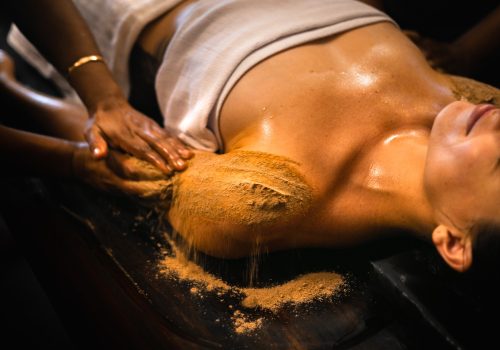
Dr Dornala also discussed Guggulu-based formulations and Panchakarma procedures used within traditional practice.
These should not be read as a home-treatment list.
The choice of an Ayurvedic formulation or procedure depends on individual assessment, stage of disease, general health, digestive status and other clinical factors.
For readers, the practical takeaway is simpler:
A treatment named in an article is not automatically an appropriate treatment for a particular knee.
Individualised assessment remains essential.
What does modern research say?
The modern evidence for Ayurveda in knee osteoarthritis is promising in places, but it is not yet definitive.
A randomised controlled trial published in 2018 compared an individualised Ayurvedic treatment programme with conventional conservative care for knee osteoarthritis. The researchers reported greater improvement in symptoms in the Ayurveda group, while also concluding that further research was needed to confirm the magnitude of the effect and clarify which components of the multimodal programme contributed to the outcome.
Other studies have investigated Ayurvedic formulations or multimodal treatment programmes, but differences in intervention design, sample size and study quality make broad conclusions difficult.
This is an area where Ayurveda communication often becomes too confident.
A positive trial does not prove that Ayurveda “reverses osteoarthritis”.
Nor does it establish that every Panchakarma procedure or herbal formulation will produce the same result.
The evidence supports continued investigation.
It does not support cure claims.
Why diet and daily habits entered the discussion
Dr Dornala’s webinar also addressed pathya and apathya: the Ayurvedic distinction between dietary and lifestyle practices considered supportive or unsuitable in a particular clinical context.
This can sound secondary when a patient is primarily concerned about knee pain.
In Ayurveda, it is not.
Food, digestive function, activity and daily routine are traditionally considered part of the management environment rather than separate lifestyle add-ons.
Modern osteoarthritis guidelines likewise recognise that management often extends beyond medication. Exercise, physical activity and weight management where appropriate are commonly part of conservative knee osteoarthritis care.
The reasoning systems are different, but both approaches challenge the idea that management is simply a matter of taking something for pain.
Ayurveda and conventional treatment should not be framed as enemies
The source article originally described modern treatment as being restricted mainly to symptom relief and surgery.
That framing is too narrow.
Conventional knee osteoarthritis management can include exercise and rehabilitation, weight-management strategies where relevant, topical and oral medicines, injections in selected circumstances, assistive devices and, for some people with advanced disease, surgery.
Ayurveda therefore becomes more credible when it is not presented as the opposite side of a contest.
The useful question is where Ayurvedic care may contribute to symptom management, function, lifestyle support and overall quality of life, while recognising when orthopaedic evaluation, imaging, physiotherapy or surgery may be necessary.
A patient with severe or rapidly worsening knee pain should not delay appropriate medical assessment while attempting self-treatment.
A CME programme should create better questions
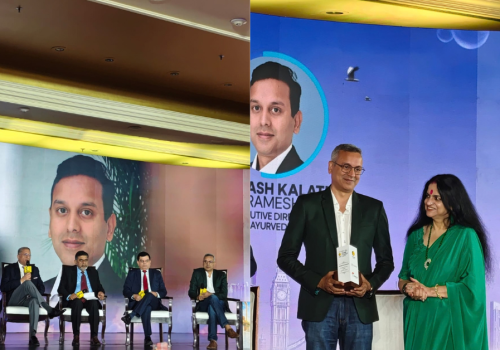
The Kairali webinar was held on 2 June 2022 and, according to the event information supplied by the team, drew more than 2,000 registrations from Ayurveda physicians, students, entrepreneurs, distributors and others across India.
The session was introduced by representatives of Kairali Ayurvedic Group before Dr Dornala took participants through knee anatomy, osteoarthritis, Ayurvedic interpretation and clinical-management principles.
A question-and-answer session followed.
According to the event record supplied for this article, participants submitted more than 80 questions, reflecting how much uncertainty still surrounds the practical management of osteoarthritis within Ayurvedic practice.
Those numbers matter less than what they suggest.
Practitioners do not need another webinar telling them that Ayurveda has a treatment for arthritis.
They need opportunities to discuss which patient, which stage, which intervention, what outcome and what limits.
That is the difference between promotion and continuing medical education.
About Dr Sathya N. Dornala
The webinar was led by Dr Sathya N. Dornala, an Ayurveda physician whose supplied profile includes postgraduate training in Kayachikitsa, Panchakarma and counselling, alongside extensive teaching and clinical work.
The original event material also lists a number of awards, academic appointments, publications and professional affiliations.
WhyAyurveda does not reproduce professional credentials that have not been independently checked.
What this webinar tells us about the future of Ayurveda education
The most useful Ayurveda education is not the education that produces the longest list of therapies.
It produces better clinical judgement.
Knee osteoarthritis is a good example.
There are classical formulations.
There are external therapies.
There are Panchakarma procedures.
There is emerging clinical research.
But there is also variation between patients, uncertainty within the evidence and a clear need to recognise when other forms of medical care are appropriate.
That complexity is not a weakness.
It is what serious medicine looks like.
For Kairali, continuing medical education should therefore be less about proving that Ayurveda has an answer and more about improving the quality of the questions Ayurvedic practitioners ask before choosing that answer.
The June 2022 webinar on knee osteoarthritis was one such conversation.
And as research around integrative approaches to musculoskeletal health continues to develop, those conversations will become increasingly important.



Hello there! I simply want to offer you a huge thumbs up for the great information you have here on this post. I will be coming back to your web site for more soon.
What’s up to all, the contents present at this web site are in fact awesome for people experience, well,
keep up the nice work fellows.
Hello every one, here every one is sharing such experience, so it’s nice to read this web site, and I used to pay a quick visit this web site daily.