






























Dasamularishtam is a fermented polyherbal Ayurvedic formulation traditionally used in physician-led care, particularly where weakness, reduced appetite or impaired recovery are part of the clinical picture. Its traditional reputation is extensive, but modern clinical evidence for many widely advertised benefits remains limited.
Dasamularishtam is frequently described online as a remedy for almost everything: joint pain, digestive problems, low immunity, disturbed sleep, anxiety, skin disorders, cardiovascular health and fatigue.
That breadth should prompt caution.
A formulation cannot be assumed to produce every effect associated with each herb that may appear in it. Nor does the traditional use of an ingredient automatically establish that the finished preparation will prevent or resolve a modern medical condition.
The more useful question is not, “What are all the benefits of Dasamularishtam?” It is, “What is this formulation, how has Ayurveda traditionally used it, and what can the available evidence genuinely support?”
What is Dasamularishtam?
Dasamularishtam, also written as Dashamularishta or Dasamoolarishtam, belongs to the Ayurvedic category of ariṣṭa: liquid formulations produced through a controlled fermentation process.
Its name refers to daśamūla, or “ten roots,” a classical grouping of medicinal plants used in several Ayurvedic preparations. Dasamularishtam is not simply a decoction of those ten roots, however. Classical formulations may contain a considerably broader group of plant ingredients and substances used in fermentation.
The Ayurvedic Formulary of India establishes official formulations and notes that preparations made under a named formulary reference should follow its stated ingredients and quantities.
This matters because online descriptions often present a loose collection of familiar Ayurvedic herbs as though every manufacturer uses the same recipe. A product label should be checked rather than assuming that ingredients such as guggulu, triphala, manjistha, ashwagandha, arjuna or shankhapushpi are present in every Dasamularishtam preparation.
How Ayurveda traditionally understands it
In Ayurvedic practice, Dasamularishtam is generally considered a compound formulation rather than a single-purpose supplement.
A physician may evaluate it in contexts involving reduced strength, poor appetite, digestive weakness or recovery following physical strain or illness. Some traditions and commercial references also associate it with postnatal care, although suitability after childbirth must be assessed individually rather than treated as routine advice.
Traditional indication does not mean universal recommendation.
Ayurvedic prescribing takes account of factors such as:
- the person’s constitution and present imbalance
- appetite and digestive capacity
- age and physical strength
- current symptoms
- other medicines being taken
- the formulation’s ingredients and concentration
- the stage and purpose of treatment
Dasamularishtam should therefore not be treated as a general tonic that everyone can add to a daily routine.
Does Dasamularishtam support joint health?
Dasamula-based preparations have traditionally been used in settings where pain, stiffness or Vata-related disturbance is part of the Ayurvedic assessment.
This is not the same as proving that Dasamularishtam treats arthritis or rheumatism.
The original claim that the formulation contains guggulu and therefore works as an anti-inflammatory and analgesic is also unreliable unless the exact product formula confirms that ingredient. Even when an individual herb has been studied, its findings cannot automatically be transferred to a complex fermented preparation.
At present, there is not enough robust clinical evidence to describe Dasamularishtam as an established treatment for joint disease.
A person with persistent swelling, pain, loss of movement or unexplained stiffness should obtain an appropriate medical assessment rather than rely on a tonic formulation.
Can it improve digestion?
Digestive support is one of the more plausible traditional contexts in which an arishta preparation may be considered.
Ayurvedic physicians may use fermented formulations when poor appetite, heaviness or reduced digestive capacity form part of the clinical picture. The Ayurvedic Pharmacopoeia identifies Dashmularishta as an important formulation in relation to single drugs with traditional indications that include impaired digestion and loss of appetite.
That reference documents traditional usage; it does not prove that Dasamularishtam relieves constipation, bloating or every digestive symptom.
Constipation and abdominal distension can have many causes. Persistent symptoms, blood in the stool, unexplained weight loss, severe pain or a major change in bowel habits require medical evaluation.
Does it boost immunity?
“Boosts immunity” is one of the most common and least precise claims in wellness writing.
The immune system is not a single function that should always be increased. Different immune conditions require different responses, and stimulating immune activity is not automatically beneficial.
Some plants used in Ayurvedic medicine have been investigated for immunological effects in laboratory or early-stage studies. That does not demonstrate that Dasamularishtam prevents infection or strengthens immunity in people.
The formulation may traditionally be used as part of recovery-oriented care, but it should not be presented as protection against illness.
What about stress, anxiety and sleep?
There is insufficient evidence to claim that Dasamularishtam relieves anxiety, treats depression or corrects insomnia.
These claims are often constructed by naming herbs associated with calming or adaptogenic effects and then assigning those effects to the entire formulation. This reasoning overlooks several issues:
- the herb may not be present in every version
- the amount may differ between preparations
- fermentation changes the final product
- research on a single extract does not establish the effect of the compound formula
- anxiety and sleep disorders have varied causes and levels of severity
A physician may still prescribe the preparation where tiredness, disrupted routine or reduced recovery coexist with other findings. That is an individual clinical decision, not evidence that Dasamularishtam is a general sleep aid.
Persistent anxiety, depression or insomnia should be discussed with an appropriately qualified healthcare professional.
Claims about skin and cardiovascular health
Statements that Dasamularishtam “purifies the blood,” clears eczema or psoriasis, lowers blood pressure, reduces cholesterol or improves circulation should not be presented as established benefits.
“Blood purification” is a traditional expression that does not correspond to a single measurable process in modern medicine. Skin disorders also differ considerably in their causes and treatment needs.
Similarly, cardiovascular claims require direct clinical evidence for the completed formulation. The presence of a plant traditionally associated with the heart would not prove that Dasamularishtam lowers blood pressure or cholesterol.
People taking medication for blood pressure, heart disease or cholesterol should not replace or alter it on the basis of such claims.
Does Dasamularishtam increase energy?
Some people may be prescribed Dasamularishtam during periods of reduced strength or convalescence. This traditional use is sometimes translated into the broader marketing claim that it “boosts energy” or improves physical performance.
The wording is too certain.
Fatigue may be related to inadequate sleep, anaemia, thyroid disorders, infection, nutritional deficiency, medication, mental health or several other factors. A tonic cannot be assumed to address the underlying cause.
When fatigue persists, the first requirement is appropriate assessment.
Fermentation and naturally occurring alcohol
Because Dasamularishtam is an arishta, fermentation may produce a naturally occurring alcohol content. This has a functional role in the preparation and extraction of plant constituents, but it is also relevant to safety.
People who avoid alcohol for medical, religious or personal reasons should inspect the product information and consult the prescribing practitioner.
Additional caution may be needed for:
- children
- pregnancy and breastfeeding
- liver conditions
- alcohol sensitivity or dependency
- people taking sedating medicines
- those using medicines that may interact with herbal preparations
The precise alcohol content and ingredient profile should be obtained from the manufacturer’s label or quality documentation rather than assumed.
Quality matters
The name Dasamularishtam does not guarantee that every product is identical.
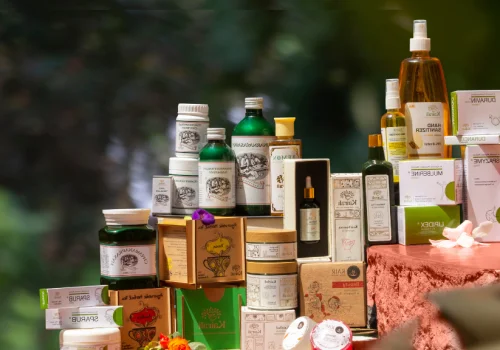
Manufacturing quality, botanical identification, fermentation control, storage and testing can affect the finished preparation. Consumers should look for products made by appropriately licensed manufacturers and should check the full ingredient list, batch details and directions on the label.
Kairali Ayurvedic Products Pvt. Ltd. operates a WHO-GMP-certified Ayurvedic pharmaceutical manufacturing facility. That manufacturing credential should be applied specifically to KAPPL production, not used as evidence that the formulation itself has been clinically proven for every claimed benefit.
Should you take Dasamularishtam every day?
Dasamularishtam should not be described as an automatic addition to a daily health regimen.
Whether it is suitable depends on why it is being considered, the person’s health, the specific formulation and the prescribing physician’s assessment. Its fermented nature and multi-ingredient composition make professional review particularly important.
The practitioner should also know about all prescription medicines, over-the-counter products and supplements being used.
No online article can determine an appropriate dose, duration or treatment combination for an individual reader.
The evidence-aware conclusion
Dasamularishtam is a recognised classical category of Ayurvedic formulation with a long history of traditional use. That history deserves careful documentation, not inflated promises.
Its most defensible description is as a fermented polyherbal medicine used by Ayurvedic physicians in selected clinical contexts, often involving weakness, appetite, digestion or recovery. Claims that it treats arthritis, skin disease, depression, insomnia, high blood pressure or other specific conditions require evidence that is currently insufficient or has not been established for the formulation as a whole.
Traditional use and modern evidence answer different questions.
Responsible Ayurvedic communication should present both, while being clear about the limits of each.